
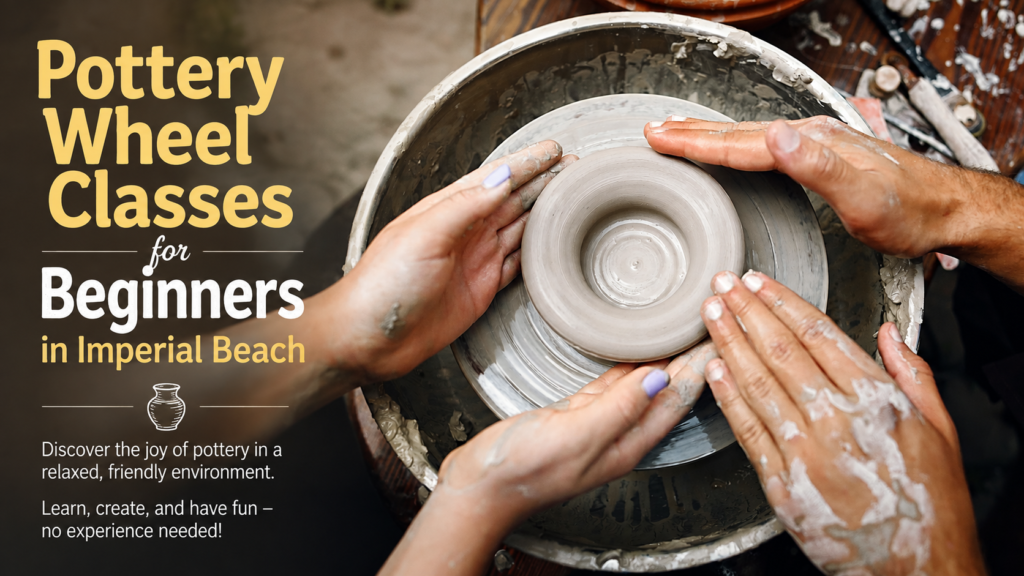
If you have ever searched for pottery wheel classes for beginners near me in Imperial Beach, private pottery classes near me, or a pottery wheel class in San Diego, you are not alone. Pottery has become a popular creative activity for people who want to learn a new skill, spend time with friends, enjoy a unique date, or simply take a break from everyday routines.
For beginners, pottery offers something special. You do not need previous artistic experience to get started. Instead, an experienced instructor can guide you through preparing clay, centering it on the wheel, shaping a basic form, and creating pieces such as bowls, cups, or small vases.
Located in Imperial Beach, Art Wheel provides hands-on pottery experiences for people who want to explore the creative possibilities of clay. The studio offers pottery wheel experiences, handbuilding, creative workshops, private experiences, and group activities. Its pottery sessions introduce beginners to wheel throwing and clay forming in a relaxed studio environment.
Whether you are completely new to ceramics or simply looking for a fun creative activity around San Diego, this guide will help you understand what to expect from a beginner pottery class and how to choose the right experience.
What Is a Pottery Wheel Class?
A pottery wheel class is a hands-on ceramics experience where students learn how to shape clay using a rotating pottery wheel.
Unlike painting an already-made ceramic object, wheel throwing allows you to create a form from a lump of clay. As the wheel rotates, you control the clay with your hands and gradually shape it into a bowl, cup, vase, or another form.
Beginners typically learn techniques such as:
- Preparing and wedging clay
- Centering clay on the wheel
- Opening the clay
- Pulling the clay walls upward
- Shaping bowls and cups
- Creating basic forms
- Removing pieces from the wheel
- Trimming pottery
- Understanding drying and firing
- Learning basic glazing techniques
The process can feel challenging during your first few attempts. However, that challenge is also part of the fun. With practice and guidance, pottery gradually becomes easier and more enjoyable.
Pottery Wheel Classes for Beginners Near Me in Imperial Beach
If you are searching for pottery wheel classes for beginners near me in Imperial Beach, Art Wheel can be a convenient option for exploring pottery in a relaxed environment.
The studio’s pottery experiences introduce participants to the fundamentals of wheel throwing while allowing them to create their own ceramic pieces. In addition, the beginner-friendly approach can make the experience more comfortable for people who have never worked with clay before.
Art Wheel is located in Imperial Beach, California, making it a convenient choice for people looking for a creative activity in the San Diego area.
A beginner experience can be a great starting point if you have never touched a pottery wheel before. Rather than worrying about whether you are “good at art,” focus on learning the process.
Your first piece may not look perfect, and that is completely normal. Instead, the goal is to learn, experiment, and enjoy working with clay.
Why Choose a Beginner Pottery Class?
Taking a structured class can make learning pottery much easier than trying to figure everything out by yourself.
An instructor can demonstrate proper hand positions, explain how much pressure to apply, and help you understand how clay behaves during each stage of the process. As a result, beginners can learn through both practice and direct guidance.
A beginner pottery class can help you in several ways.
Learn the Fundamentals
You can learn the basic techniques required to operate a pottery wheel and shape clay effectively. These skills also provide a strong foundation for future pottery projects.
Build Confidence
The first few attempts may be difficult. However, instructor guidance can help you understand what went wrong and how to improve your technique.
Create Something Yourself
One of the most rewarding parts of pottery is seeing a simple piece of clay become something functional or decorative. Even a small bowl or cup can feel special because you created it with your own hands.
Take a Break From Screens
Pottery is a hands-on activity. Therefore, it can provide a welcome break from phones, computers, and other daily distractions.
Meet Other Creative People
Group classes can also provide an opportunity to connect with people who share an interest in art and creativity. Consequently, pottery can become both a creative and social experience.
Private Pottery Classes Near Me
If you prefer a more personal experience, you may want to search for private pottery classes near me.
Private pottery experiences can be useful for people who want more individualized instruction or are celebrating a special occasion. They may also work well for:
- Couples
- Friends
- Families
- Birthdays
- Anniversaries
- Date nights
- Small groups
- Corporate activities
- Private celebrations
Art Wheel offers private lessons and group experiences among its pottery options. Therefore, visitors can explore pottery in a more personalized setting.
A private pottery experience can also give the instructor more time to focus on your specific questions, interests, and skill level.
Pottery Wheel Class San Diego: What Can You Learn?
When people search for a pottery wheel class San Diego, they may be looking for anything from a one-time introductory experience to a multi-week ceramics course.
The right choice depends on your goals.
If you simply want to try pottery, a one-time wheel experience may be ideal. On the other hand, a longer course or open studio membership may be more appropriate if you want to develop advanced pottery skills.
San Diego-area studios offer different formats, including single-session wheel experiences and multi-week beginner courses. Similarly, Art Wheel provides hands-on wheel experiences and other creative formats for people who want to explore clay.
The most important thing is to choose an experience that matches your current skill level and personal goals.
What Happens During a Beginner Pottery Wheel Class?
If you have never attended a pottery class, you may wonder what actually happens when you arrive.
Although every class is different, a typical beginner pottery experience often follows several stages.
Step 1: Introduction to the Studio
Your instructor usually explains the pottery wheel, basic tools, clay, and general process.
You may also learn simple studio safety practices and how to keep your workspace organized. As a result, you can feel more comfortable before starting your first project.
Step 2: Preparing the Clay
Clay needs to be prepared before it can be successfully used on the wheel.
One important process is called wedging. This technique helps create a more consistent piece of clay and can reduce unwanted air pockets.
Step 3: Centering the Clay
Centering is one of the most important beginner pottery skills.
You place the clay in the middle of the spinning wheel and use controlled pressure to help it rotate evenly. At first, this can take practice. However, centering becomes easier as your hands begin to understand the movement of the clay.
Step 4: Opening the Clay
Once the clay is centered, the instructor demonstrates how to create an opening in the middle.
This opening is where your future bowl, cup, or vessel begins to take shape. From there, you can gradually develop the form.
Step 5: Pulling the Walls
Next, you gradually pull the clay upward to create the walls of the vessel.
This step requires patience, steady movement, and consistent pressure. Therefore, beginners often need several attempts before feeling comfortable with the technique.
Step 6: Shaping Your Piece
Once the basic walls are formed, you can begin shaping your pottery.
Depending on your skill level, you might create a bowl, cup, cylinder, or another simple form. Your instructor can also help you understand how small changes in hand pressure affect the final shape.
Step 7: Finishing the Piece
Finally, your instructor may show you how to remove the pottery from the wheel and prepare it for drying.
Afterward, the piece may go through additional stages such as trimming, glazing, and firing before becoming a finished ceramic object.
Ceramics Beginner Class: Is Pottery Difficult?
One of the most common concerns beginners have is:
“What if I am not artistic?”
You do not need to be an experienced artist to enjoy a ceramics beginner class.
Pottery is primarily a skill that develops through practice. Your first attempt might collapse, while your second piece might be uneven. However, your third piece may surprise you.
That is part of the learning process.
A good beginner class focuses on teaching the fundamentals rather than expecting students to create perfect pottery immediately. Therefore, patience and a willingness to experiment are more important than previous artistic experience.
Pottery Wheel vs. Handbuilding
Pottery is not limited to the wheel. In fact, there are several ways to work with clay.
Two common approaches are wheel throwing and handbuilding.
Wheel Throwing
Wheel throwing uses a rotating pottery wheel to shape clay.
It is commonly used to create:
- Bowls
- Cups
- Mugs
- Vases
- Plates
- Cylindrical forms
This technique can feel exciting because you watch the clay change shape while the wheel is spinning.
Handbuilding
Handbuilding involves shaping clay primarily with your hands and simple tools.
Common handbuilding techniques include:
- Pinch pottery
- Coil building
- Slab construction
- Sculpting
- Press molding
Art Wheel also offers handbuilding experiences where participants can create pottery pieces, decorative objects, or simple sculptures without relying only on the wheel.
If you are unsure which method is right for you, trying both can help you discover which type of ceramics you enjoy most.
Free Pottery Classes San Diego: Are They Available?
Many people search for free pottery classes San Diego because they want to try ceramics without making a major financial commitment.
Completely free instructor-led pottery wheel classes can be difficult to find. After all, pottery involves specialized equipment, clay, glazes, kiln firing, studio space, and instructor time.
However, there may be other ways to reduce the cost of getting started.
You can look for:
- Community art programs
- Local workshops
- Introductory events
- Art center programs
- Trial classes
- Student discounts
- Community studio programs
- Special promotions
- Open studio opportunities
It is also important to compare what is included in the advertised price.
For example, a lower-cost pottery class may not include firing or glazing. In contrast, a more complete experience may include materials and finishing. Therefore, comparing the entire package can be more useful than comparing the headline price alone.
What Is the Average Cost of a Pottery Class?
The answer to “What is the average cost of a pottery class?” depends heavily on the type of experience you choose.
A single introductory wheel session may cost considerably less than a multi-week ceramics course. Similarly, private instruction often has different pricing from group classes.
Current San Diego-area examples range from lower-cost one-time wheel experiences to several hundred dollars for multi-week beginner courses.
Pricing can depend on:
- Class duration
- Number of sessions
- Amount of clay provided
- Instructor experience
- Glazing
- Kiln firing
- Studio access
- Tools
- Group size
- Private instruction
- Type of pottery experience
When comparing classes, always ask what the price includes.
A class that appears more expensive at first may actually provide better value if clay, tools, glaze, and firing are included.
What Should I Wear to a Beginner Pottery Class?
If you are wondering what should I wear to a beginner pottery class, the simplest answer is:
Wear comfortable clothes that you do not mind getting dirty.
Clay can get on your hands, arms, clothing, and shoes. Therefore, it is best to choose practical clothing that allows you to move comfortably.
Good choices include:
- Comfortable T-shirts
- Casual pants
- Leggings
- Jeans
- Comfortable closed-toe shoes
- Clothes that allow easy movement
Avoid expensive clothing or anything that you would be upset to stain.
If you have long hair, tying it back can also make working at the wheel easier. Additionally, keeping your fingernails relatively short may help you control the clay more comfortably.
What Should You Bring to a Pottery Class?
For a beginner class, you generally do not need to purchase a large collection of pottery tools before attending.
Many studios provide the basic materials and equipment. Depending on the experience, your class may include:
- Clay
- A pottery wheel
- Basic tools
- Water containers
- Glazes
- Kiln firing
Always check the class details before attending.
For most beginners, purchasing expensive equipment before the first class is unnecessary. Instead, start with the experience and decide whether you want to continue before investing in your own pottery tools.
Is Pottery Good for Stress Relief?
Pottery can be an excellent way to slow down and focus on a physical creative activity.
Working with clay requires attention. You need to observe the movement of the wheel, control your hands, monitor the clay, and make small adjustments throughout the process.
As a result, that concentration can help you temporarily step away from everyday distractions.
The repetitive motion of working with clay can also feel calming and satisfying. For this reason, pottery may appeal to people who are looking for more than simply an art lesson.
A relaxed pottery environment can provide an opportunity to create, focus, and enjoy the present moment.
Pottery Classes for Couples and Date Nights
Looking for something different from dinner and a movie?
A pottery class can make an interesting date-night activity.
Instead of sitting across a restaurant table, you can work together on a creative project. Moreover, learning something new can make the experience more memorable.
A pottery date can involve:
- Learning something new together
- Laughing at your first attempts
- Creating handmade pieces
- Taking photos
- Enjoying a relaxed environment
- Making a memorable experience
Art Wheel offers different group and creative experiences that can provide an alternative to a traditional date night.
Pottery Classes for Friends and Groups
Pottery can also be a great group activity.
Friends can attend a class together, compare their creations, and enjoy the experience without requiring previous artistic experience.
Group pottery activities can be suitable for:
- Birthday celebrations
- Friend gatherings
- Team activities
- Family experiences
- Couples
- Small celebrations
- Creative social events
A small-group environment can be particularly helpful for beginners because participants can receive guidance while still enjoying the social side of the activity.
Why Art Wheel in Imperial Beach Is a Great Option for Beginners
Art Wheel focuses on creative experiences involving pottery and art in the Imperial Beach area.
The studio provides opportunities for beginners and experienced participants to explore clay through hands-on activities. Its pottery experiences also focus on creativity, craftsmanship, and an inviting environment.
For beginners, several features can make the experience appealing.
Beginner-Friendly Environment
You do not have to arrive already knowing how to throw pottery.
Instead, the experience can introduce you to the basic process and help you become familiar with working with clay.
Hands-On Learning
Rather than simply watching someone demonstrate pottery, you get an opportunity to work directly with clay.
This hands-on approach can help beginners understand how the material responds to pressure and movement.
Different Creative Experiences
Art Wheel offers pottery wheel experiences as well as handbuilding and other creative activities.
Therefore, you can explore more than one approach to working with clay.
Small-Group Experiences
Smaller groups can make it easier to ask questions and receive guidance.
This type of setting may also help beginners feel more comfortable while learning.
A Unique Imperial Beach Experience
Working with clay near the beach can provide a different kind of creative experience from a conventional classroom environment.
Where Can I Find a Beginner Pottery Class in San Diego?
If you are asking where can I find a beginner pottery class in San Diego, there are several types of places to consider.
You can search for:
- Pottery studios
- Ceramic schools
- Community art centers
- Independent artists
- Art workshops
- Open studios
- Private instructors
However, not every pottery class is designed for absolute beginners.
Before booking, check whether the class says:
- Beginner-friendly
- No experience required
- Introductory
- All levels welcome
- First-time students accepted
Choosing a class with clear beginner guidance can make your first pottery experience more enjoyable and less intimidating.
How to Choose the Right Pottery Class
Before booking a class, consider the following questions.
Is It Beginner-Friendly?
If this is your first class, choose a session that teaches the fundamentals.
Look for phrases such as “no experience required” or “beginner-friendly.” This can help ensure that the class matches your current skill level.
How Long Is the Class?
A short introductory experience is useful for trying pottery.
However, a multi-week course may be better if you want structured skill development and more practice.
What Is Included?
Check whether the class includes:
- Clay
- Tools
- Glazing
- Kiln firing
Understanding what is included can also help you compare different classes more accurately.
How Large Is the Group?
Smaller groups may provide more opportunities for personalized instruction.
On the other hand, larger groups can create a more social atmosphere. Consider which type of experience you prefer.
Is It Wheel Throwing or Handbuilding?
Choose wheel throwing if you specifically want to learn how to use a pottery wheel.
Alternatively, choose handbuilding if you prefer shaping clay with your hands and simple tools.
Is It Private or Group-Based?
Private classes can provide more personalized instruction, while group classes can offer a more social experience.
Your choice will depend on your goals and the type of occasion you are planning.
What Happens to Your Finished Pottery?
Ask whether your piece will be glazed and fired and when it will be available for pickup.
This information is important because pottery is usually not ready to take home immediately after the class.
What Happens to Your Pottery After Class?
Your pottery is generally not finished when you leave the studio.
Freshly shaped clay must go through several additional stages before becoming a finished ceramic object.
The process can include:
Wheel throwing → Drying → Trimming → Bisque firing → Glazing → Final firing → Finished pottery
This process is one of the reasons pottery is so interesting.
You create the initial form, but the final result develops over time. Depending on the studio’s process, you may need to return later to collect your finished piece.
Beginner Pottery Mistakes Are Normal
Do not be discouraged if your first piece collapses.
Common beginner challenges include:
- Clay becoming too thin
- Losing the center
- Making walls uneven
- Using too much water
- Applying too much pressure
- Making the opening too wide
- Pulling the walls too quickly
These mistakes are part of learning.
The important thing is to understand why something happened and then try again. With practice, your hands gradually learn how much pressure and movement are required.
Therefore, mistakes should be seen as part of the process rather than a reason to give up.
Pottery Is More Than Making a Bowl
Although bowls and cups are common beginner projects, pottery can become a much larger creative discipline.
As you develop your skills, you can explore:
- Sculptural ceramics
- Decorative pottery
- Functional tableware
- Vases
- Planters
- Mugs
- Plates
- Textured ceramics
- Ceramic art
- Handbuilt sculptures
- Custom pottery
The possibilities expand as your confidence and skills grow.
For some people, a single beginner class may simply be a fun creative activity. For others, that first experience can become the beginning of a long-term interest in ceramics.
Frequently Asked Questions
Are pottery wheel classes suitable for complete beginners?
Yes. Beginner pottery wheel classes are designed to introduce students to the fundamentals of wheel throwing. Therefore, you do not need previous pottery experience to get started.
Where can I take pottery wheel classes in Imperial Beach?
Art Wheel offers pottery wheel experiences in Imperial Beach. The studio provides opportunities for beginners to explore wheel throwing and clay forming in a creative environment.
Can I take private pottery classes?
Yes. Private pottery experiences can provide a more personalized way to learn and may also be suitable for couples, friends, families, or special occasions.
What is the average cost of a pottery class?
Costs can vary considerably. One-time introductory experiences may cost less, while multi-week ceramics courses can cost several hundred dollars. The final price often depends on the duration, materials, group size, and whether firing and glazing are included.
Are there free pottery classes in San Diego?
Completely free pottery classes are uncommon because studios must cover clay, equipment, kiln firing, studio space, and instructor costs. However, community programs, introductory events, and occasional promotions may provide lower-cost opportunities.
What should I wear to pottery class?
Wear comfortable clothing that you do not mind getting dirty. Casual shirts, comfortable pants, and closed-toe shoes are often practical choices. Shorter fingernails can also make some wheel techniques easier.
Do I need to bring my own pottery tools?
Usually not for an introductory class. Many studios provide the basic equipment and materials. However, it is always a good idea to check with the studio before attending.
Is pottery difficult for beginners?
Pottery has a learning curve, especially when learning how to center clay. However, beginners can learn the fundamentals through instruction, patience, and practice.
Can children take pottery classes?
Age requirements vary by studio and by the specific experience. Therefore, always check the class requirements before booking.
Is pottery a good date-night activity?
Yes. Pottery provides a hands-on activity that couples can experience together. As a result, it can be a fun alternative to more traditional date-night activities.
Can I make pottery that I can use at home?
Yes. Depending on the class, you may create functional pieces such as cups, bowls, plates, and other ceramic objects. However, the pottery must be properly finished, fired, and glazed before being used for its intended purpose.
Start Your Pottery Journey at Art Wheel in Imperial Beach
If you have been searching for pottery wheel classes for beginners near me in Imperial Beach, private pottery classes near me, or a pottery wheel class in San Diego, Art Wheel offers an opportunity to experience the creative process of working with clay.
You do not need to be an experienced artist. Instead, you only need curiosity and a willingness to try something new.
From learning how to center clay to creating your first bowl or cup, pottery gives you the opportunity to turn a simple piece of clay into something uniquely yours.
Whether you choose a beginner wheel experience, a private session, handbuilding, or a group activity, working with clay can be both creative and rewarding. Most importantly, your first pottery experience can be the beginning of a new skill, hobby, or creative passion.