
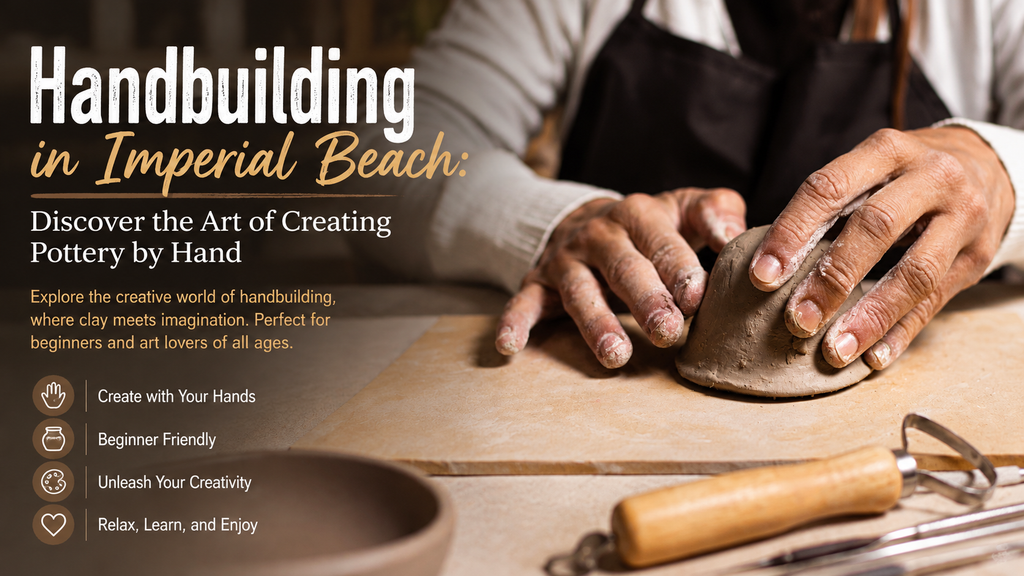
Have you ever wanted to create something beautiful with your own hands? Handbuilding in Imperial Beach offers a creative and relaxing way to explore pottery without using a pottery wheel.
From simple clay bowls to decorative sculptures, handbuilding allows you to shape clay using your hands, basic tools, and your imagination. It is a great activity for beginners, experienced artists, families, couples, and anyone looking for a hands-on creative experience.
At Art Wheel, pottery is made approachable and enjoyable. Whether you want to learn basic clay techniques or create your own handmade pottery piece, handbuilding gives you the freedom to turn an idea into something real.
In this guide, you’ll learn what handbuilding is, how the process works, the main handbuilding techniques, why this pottery method is popular, and which places around the world are known for ceramic production.
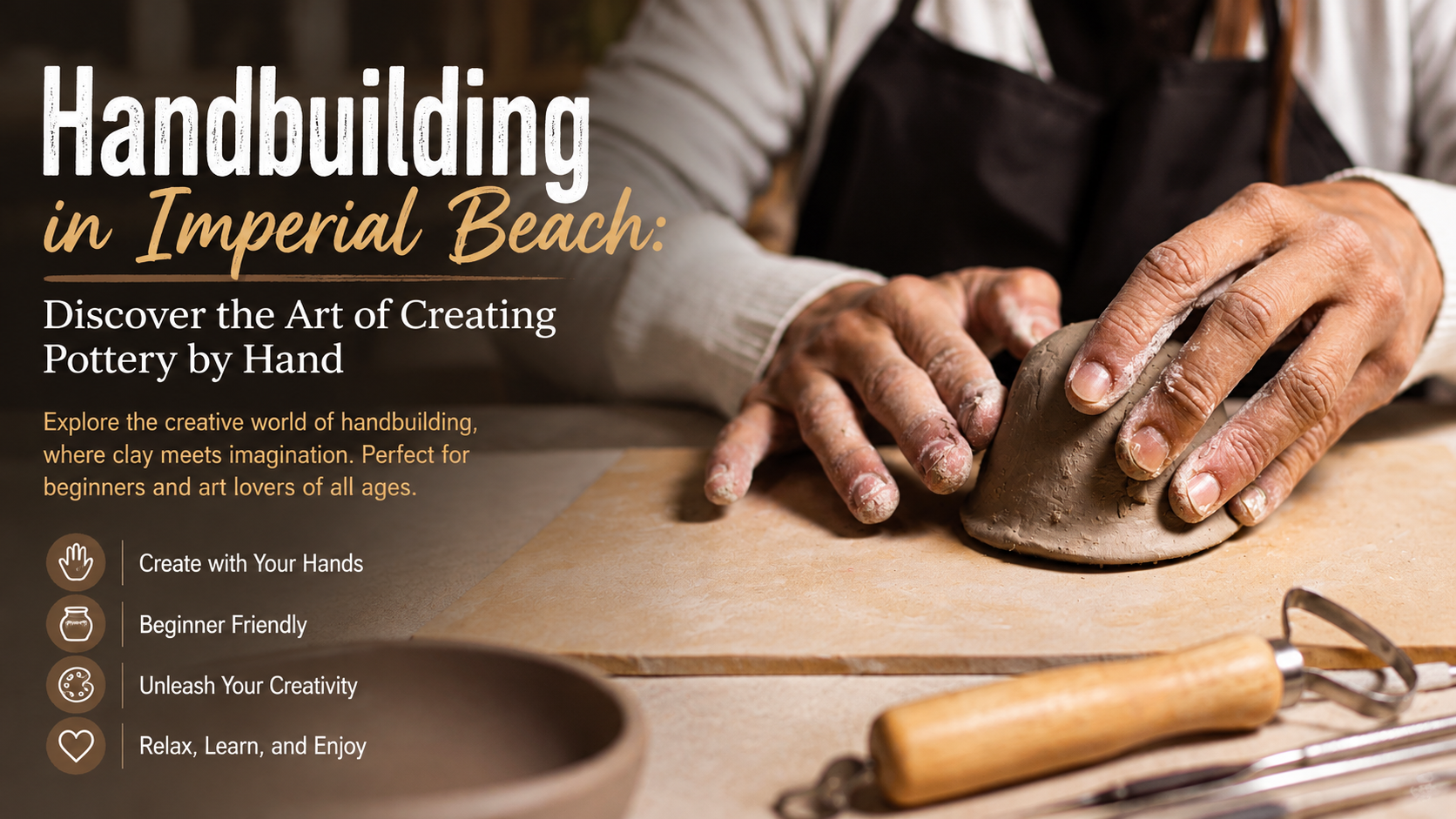
What Is Handbuilding in Pottery?
Handbuilding is a pottery-making method that uses your hands and simple tools instead of a pottery wheel.
In simple terms, handbuilding means making pottery by hand.
Artists can pinch, press, roll, cut, shape, and join clay to create different forms. Unlike wheel throwing, handbuilding does not require every piece to have a perfectly symmetrical shape.
As a result, artists have more freedom to experiment with organic, abstract, and personalized designs.
Handbuilding is also one of the oldest ways of working with clay. People have used handbuilding techniques for thousands of years to create both functional and decorative objects.
Today, the technique remains popular because it is:
- Beginner-friendly
- Creative and flexible
- Relaxing
- Suitable for different age groups
- Ideal for creating unique pottery
- Great for personal expression
If you are looking for a creative activity in Southern California, handbuilding in Imperial Beach can be a wonderful way to explore pottery and discover the satisfaction of making something yourself.
What Is It Called When You Make Pottery by Hand?
Making pottery without a wheel is generally called handbuilding.
There are three primary handbuilding techniques:
- Pinch pottery
- Coil pottery
- Slab pottery
Each technique works differently and offers unique creative possibilities.
Let’s take a closer look at each method.
1. Pinch Pottery
Pinch pottery is one of the simplest ways to start working with clay.
First, you begin with a ball of clay. Then, you use your fingers and thumb to press and shape the clay into the form you want.
This technique can be used to make:
- Small bowls
- Cups
- Decorative containers
- Miniature sculptures
- Small planters
- Trinket dishes
Pinch pottery is especially useful for beginners because it helps you understand how clay responds to pressure.
It is also a fun introduction to pottery for children and first-time pottery students.
2. Coil Pottery
Coil pottery uses long, rope-like pieces of clay called coils.
The coils are placed on top of one another to gradually build the walls of a pottery piece.
Afterward, artists can blend the coils together or leave some of the texture visible as part of the design.
Coil pottery can be used to create:
- Vases
- Bowls
- Large vessels
- Sculptural forms
- Decorative pottery
Because coils can be built up gradually, this technique gives artists greater freedom to create larger and more organic shapes.
3. Slab Pottery
Slab pottery involves rolling clay into flat sheets.
These slabs can then be cut, shaped, folded, bent, and joined together to create a finished form.
Slab handbuilding works particularly well for:
- Plates
- Trays
- Mugs
- Boxes
- Wall art
- Decorative objects
- Planters
This technique is especially useful when you want to create geometric or structured designs.
What Is Clay Work?
Clay work is the process of shaping and creating objects from clay.
It is a broad term that can include many different activities, such as:
- Pottery
- Ceramics
- Sculpting
- Handbuilding
- Wheel throwing
- Modeling
- Decorating
- Glazing
Clay work can be artistic, practical, educational, or simply a relaxing hobby.
For many people, working with clay is about more than creating an object. It is also an opportunity to slow down, focus on the process, and enjoy a hands-on creative activity.
Why Is Handbuilding So Popular?
Handbuilding gives artists a great deal of creative freedom.
When you work on a pottery wheel, you learn to control clay while it spins. With handbuilding, however, you can shape the clay in many different ways without relying on a rotating surface.
As a result, you can create pieces that are symmetrical, irregular, organic, or completely abstract.
The small differences in handmade pottery can also make each piece feel more personal.
Handbuilding Encourages Creativity
Handbuilding allows you to experiment with different shapes, textures, and designs.
For example, you can create:
- Organic shapes
- Abstract sculptures
- Personalized gifts
- Home décor
- Functional ceramics
- Decorative artwork
Every piece can reflect your own creative decisions.
It Is Beginner-Friendly
You do not need previous pottery experience to try handbuilding.
Instead, you can begin with a simple project and gradually learn more advanced techniques as your confidence grows.
It Can Be Relaxing
Working with clay encourages you to focus on the task in front of you.
The process of pressing, shaping, smoothing, and decorating clay can provide a relaxing break from screens, work, and everyday routines.
You Can Create Something Unique
Handmade pottery does not have to look factory-perfect.
Instead, its character often comes from the small details created during the making process. The shape, texture, and decoration can all reflect your personal style.
Handbuilding in Imperial Beach: A Creative Experience for Beginners
Imperial Beach offers a relaxed coastal setting that can make it an enjoyable place to explore creative activities.
A pottery session can be a great choice when you want to step away from your regular routine and spend time doing something with your hands.
At Art Wheel, handbuilding provides an opportunity to explore clay in a welcoming and creative environment.
You do not need to be a professional artist to enjoy pottery. Instead, you simply need curiosity and a willingness to try something new.
Handbuilding can be a great activity for:
- Beginners
- Couples
- Friends
- Families
- Creative individuals
- Team activities
- Special events
- Anyone looking for a relaxing hobby
What Is the Basic Handbuilding Process?
Although every pottery project is different, the handbuilding process usually follows several basic stages.
Step 1: Prepare the Clay
First, the clay needs to be prepared so it has a workable consistency.
Potters may knead or wedge the clay to improve its consistency and reduce the risk of unwanted air pockets.
Step 2: Choose a Technique
Next, choose the handbuilding method that fits your project.
You can work with:
- Pinch
- Coil
- Slab
The right technique depends on the shape, size, and style you want to create.
Step 3: Shape the Clay
Now the creative process begins.
Use your hands and appropriate pottery tools to build the basic form. Take your time and make gradual adjustments rather than trying to create the final shape immediately.
Step 4: Add Details
Once the basic shape is ready, you can add details.
For example, you might add:
- Texture
- Patterns
- Handles
- Decorative elements
- Carved designs
- Stamps
This is an opportunity to personalize your pottery.
Step 5: Let the Clay Dry
The finished piece needs to dry before it can be fired.
Drying should be done carefully because uneven or overly rapid drying can cause problems with some pottery pieces.
Step 6: Fire the Pottery
After the clay has dried sufficiently, it can be fired in a kiln.
The high temperature changes the clay and turns the fragile dried piece into a stronger ceramic object.
Step 7: Apply Glaze
Depending on the project, glaze can be applied to add color, texture, or a protective surface.
The pottery may then be fired again to finish the piece.
The result is a handmade ceramic creation that reflects the artist’s design and effort.
Which City Is Most Famous for Ceramic Production?
There is no single city that can be considered the only most famous ceramic center. However, Jingdezhen in China is widely recognized as one of the world’s most important historical centers for porcelain and ceramic production.
For centuries, Jingdezhen has been closely associated with fine porcelain. Its long history of ceramic craftsmanship has made it an important name in the global pottery tradition.
The city is often known as the “Porcelain Capital” because of its significant role in the history and development of Chinese porcelain.
Other cities and regions famous for ceramics include:
- Stoke-on-Trent, England
- Faenza, Italy
- Delft, Netherlands
- Deruta, Italy
- Mashiko, Japan
- Arita, Japan
- Khurja, India
- Jaipur, India
Each location has developed its own materials, techniques, traditions, and artistic styles.
Which Place in India Is Famous for Pottery?
India has a long and diverse history of pottery and clay craftsmanship.
Several regions are particularly well known for their ceramic and pottery traditions.
Khurja, Uttar Pradesh
Khurja is one of India’s best-known centers for pottery and ceramics.
The city is particularly recognized for:
- Ceramic tableware
- Decorative ceramics
- Glazed pottery
- Hand-painted ceramic products
Over time, Khurja has developed a strong identity around ceramic craftsmanship.
Jaipur, Rajasthan
Jaipur is famous for many traditional arts and crafts, including decorative pottery.
The city is especially known for Jaipur blue pottery, which features distinctive blue and white patterns and a unique decorative style.
Molela, Rajasthan
Molela is known for its traditional terracotta art.
Local artisans create clay plaques and sculptures that often feature religious, cultural, and traditional themes.
Other Pottery Regions in India
Pottery traditions can also be found throughout many other parts of India, including:
- West Bengal
- Gujarat
- Uttar Pradesh
- Rajasthan
- Tamil Nadu
- Odisha
The variety of pottery styles across India reflects the country’s long relationship with clay and traditional craftsmanship.
What Is the Difference Between Pottery and Ceramics?
The terms pottery and ceramics are often used interchangeably. However, they can have slightly different meanings.
What Is Pottery?
Pottery generally refers to objects made from clay that are shaped and fired.
Common examples include:
- Bowls
- Cups
- Plates
- Vases
- Pots
What Are Ceramics?
Ceramics is a broader term.
It can include pottery as well as other objects made from clay and ceramic materials that are shaped and fired at high temperatures.
Therefore, pottery is generally considered part of the larger field of ceramics.
Handbuilding vs. Wheel Throwing
Both handbuilding and wheel throwing are popular pottery techniques. However, they provide different creative experiences.
Handbuilding
Handbuilding uses your hands and simple tools to shape clay.
Common methods include:
- Pinching
- Coiling
- Slab building
Handbuilding is particularly useful for:
- Beginners
- Sculptural pieces
- Organic shapes
- Personalized designs
- Decorative pottery
Wheel Throwing
Wheel throwing uses a spinning pottery wheel to shape clay.
It is commonly used to create:
- Bowls
- Cups
- Plates
- Vases
- Symmetrical vessels
Wheel throwing requires practice and coordination. However, it can also be a rewarding way to develop pottery skills.
At Art Wheel, exploring different pottery techniques can help you discover the creative process that works best for you.
What Can You Make with Handbuilding?
One of the biggest advantages of handbuilding is the variety of projects you can create.
Beginners can start with simple pieces such as:
- Small bowls
- Trinket dishes
- Jewelry holders
- Mugs
- Plates
- Candle holders
As your skills improve, you can experiment with:
- Planters
- Vases
- Decorative sculptures
- Wall art
- Custom home décor
- Personalized gifts
The possibilities are extensive because handbuilding does not limit you to one particular shape.
Is Handbuilding Good for Beginners?
Yes. Handbuilding is an approachable way to begin learning pottery.
You do not have to immediately learn how to control clay on a spinning pottery wheel. Instead, you can first focus on understanding how clay feels and behaves.
As a beginner, you can learn about:
- Clay texture
- Basic shaping
- Joining pieces
- Building forms
- Adding texture
- Surface decoration
Once you become comfortable with these fundamentals, you can explore more advanced pottery techniques.
Why Choose Art Wheel for Handbuilding?
At Art Wheel, pottery is about more than simply creating a finished object.
It is about enjoying the creative process from beginning to end.
Handbuilding allows you to slow down, work with your hands, and turn an idea into something tangible.
Whether you’re completely new to pottery or already enjoy creative activities, a handbuilding session can give you an opportunity to experiment with clay in a supportive environment.
A pottery experience can help you:
- Learn a new skill
- Express your creativity
- Relax and focus
- Create something handmade
- Spend quality time with others
- Explore different pottery techniques
Handbuilding as a Creative Activity in Imperial Beach
If you’re searching for handbuilding in Imperial Beach, pottery can be a meaningful way to spend time away from screens and everyday distractions.
The process doesn’t need to be rushed.
You can start with a simple piece, learn how the clay behaves, and gradually add your own creative ideas.
For families, friends, couples, and individuals, the experience can be both social and relaxing.
Most importantly, you don’t have to worry about creating a perfect piece. Handmade pottery is often valued because every piece has its own character.
Tips for Your First Handbuilding Experience
If you’re new to pottery, a few simple tips can make your first session more enjoyable.
Start With a Simple Project
A small bowl, dish, or cup can be a good first project.
Don’t Rush the Clay
Clay responds better when you work gradually. Take your time when shaping and smoothing the surface.
Experiment With Texture
Simple tools and household objects can create interesting textures and patterns.
Embrace Imperfections
Handmade pottery does not need to look machine-made. Small imperfections can become part of the character of your piece.
Enjoy the Process
The goal isn’t only to create a finished object. The process of working with clay can be just as rewarding.
Frequently Asked Questions About Handbuilding and Pottery
What is handbuilding in pottery?
Handbuilding is the process of creating pottery using your hands and simple tools instead of a pottery wheel.
What is it called when you make pottery by hand?
It is generally called handbuilding.
What are the three main handbuilding techniques?
The three primary techniques are pinch pottery, coil pottery, and slab pottery.
What is clay work in simple terms?
Clay work is the process of shaping and creating objects from clay. It can include pottery, sculpture, handbuilding, modeling, and other ceramic activities.
Is handbuilding easier than using a pottery wheel?
Handbuilding can be more approachable for beginners because you don’t need to learn how to control clay on a spinning wheel. However, both techniques require practice and patience.
What can beginners make from clay?
Beginners can make simple objects such as bowls, dishes, mugs, candle holders, planters, and small decorative pieces.
Which city is famous for ceramic production?
Jingdezhen in China is one of the world’s most famous historical centers for porcelain and ceramic production.
Which place in India is famous for pottery?
Khurja in Uttar Pradesh is one of India’s best-known pottery and ceramic centers. Jaipur is also famous for its traditional blue pottery.
Can children try handbuilding?
Yes. Handbuilding can be an enjoyable creative activity for children when the project and materials are appropriate for their age and supervised by an adult or instructor.
What is better for beginners: handbuilding or wheel throwing?
Handbuilding can be a comfortable starting point because it allows beginners to learn basic clay techniques without immediately using a pottery wheel. However, the best choice depends on the type of pottery you want to create.
Discover Handbuilding in Imperial Beach
Handbuilding in Imperial Beach is a simple and creative way to discover the world of pottery.
You don’t need to be an experienced artist. With some clay, basic techniques, and a little imagination, you can transform a simple piece of material into something meaningful.
From ancient pottery traditions in places such as Jingdezhen and Khurja to modern pottery studios, working with clay continues to connect people with creativity, craftsmanship, and culture.
At Art Wheel, you can explore hands-on pottery experiences and discover the satisfaction of creating something yourself.
So, whether you’re looking for a new hobby, a relaxing activity, a creative experience with friends, or simply want to try something different, handbuilding in Imperial Beach can be a great place to start.
Take a piece of clay, shape your idea, and enjoy the creative process.