
Looking for a fun and creative activity in Imperial Beach, California? Painting pottery and learning to use a pottery wheel are great ways to enjoy art, relax, and make something special. Whether you are planning a day out with friends, a family activity, or a unique date, pottery offers an experience that goes beyond ordinary entertainment.
At Art Wheel Studio, you can explore hands-on pottery experiences in a welcoming creative space. Beginners can discover how clay feels, learn basic pottery techniques, and create their own designs. You do not need previous art experience to enjoy the process.
If you are searching for paint your own pottery in Imperial Beach, CA, you may want to decorate a ceramic piece with your favorite colors. If you prefer a more hands-on challenge, a pottery wheel session lets you shape wet clay into a bowl, cup, or other ceramic form.
This guide explains both experiences, answers common questions about pottery, and shares ideas to help you get started.
What Is Paint Your Own Pottery?
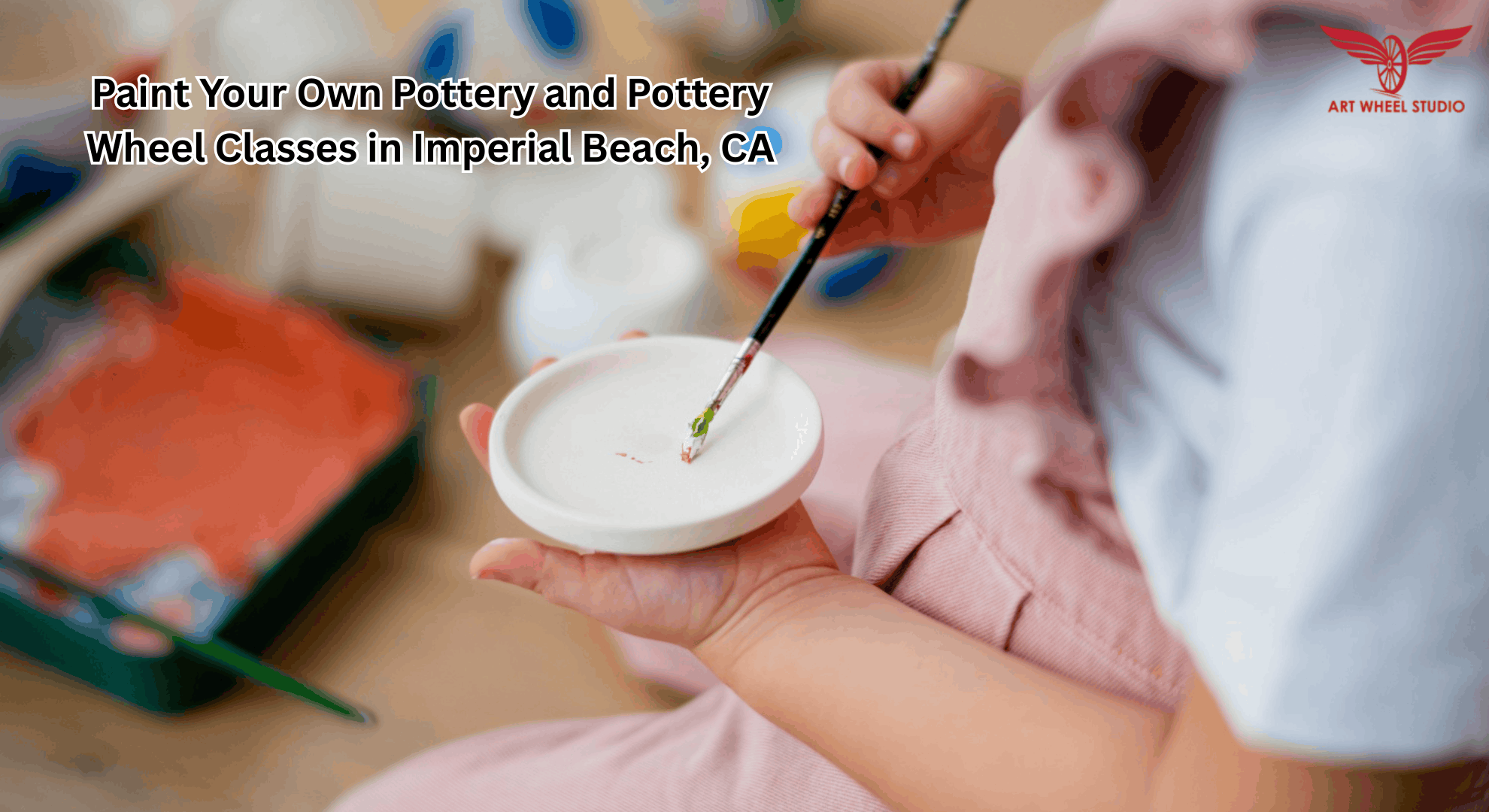
Paint-your-own pottery is a creative activity where you decorate a ceramic piece using special ceramic colors or glazes. Instead of shaping wet clay, you start with an existing item, such as a mug, bowl, plate, or decorative figure.
You can choose colors, add patterns, paint simple designs, or create something that reflects your personality. After decorating, the piece may need to be glazed and fired according to the studio’s process.
This activity is popular because it is easy to enjoy at almost any skill level. You can follow a simple design or experiment with your own ideas.
Why Try Paint Your Own Pottery?
There are several reasons to give pottery painting a try.
- Easy for beginners: You can enjoy painting without learning how to shape clay on a wheel.
- A personal creation: Every painted piece can have its own colors, patterns, and details.
- A relaxing activity: Focusing on a creative project can offer a welcome break from daily routines.
- A social experience: Friends and families can spend time together while making individual pieces.
- A thoughtful gift: A decorated mug or bowl can become a meaningful handmade present.
You do not need to be an experienced artist. Start with a simple idea and enjoy the process of bringing it to life.
Paint Your Own Pottery or Pottery Wheel: Which Should You Choose?
Both activities involve pottery, but they offer different experiences. Your choice depends on whether you want to decorate a finished shape or create a shape from clay.
Paint-Your-Own Pottery
This option is ideal if you enjoy colors, patterns, and decorative details. You begin with a ready-made ceramic piece and focus on its appearance.
You can paint flowers, geometric shapes, abstract patterns, initials, or seasonal designs. It is also a good choice if you want a creative activity without learning several new techniques at once.
Pottery Wheel Throwing
Wheel throwing involves shaping soft clay while it spins on a pottery wheel. You use your hands to center the clay, open the middle, and gradually form the walls of a vessel.
This process takes practice, but it can be rewarding for beginners. You may start by making a small bowl or cup and gradually learn to create more consistent shapes.
Which Experience Is Best for Beginners?
Choose paint-your-own pottery if you prefer decorating and experimenting with colors. Try wheel throwing if you want to learn how ceramic forms are made from raw clay.
You can also explore both activities over time. Each offers a different way to express your creativity.
What Is It Called When You Use Clay on a Pottery Wheel?
The process of shaping clay on a spinning pottery wheel is called wheel throwing.
During wheel throwing, the potter places a ball of workable clay on the wheel and centers it. The clay then spins while the potter uses steady hand pressure to open and shape it.
This technique is commonly used to make round ceramic objects, including mugs, bowls, plates, vases, and small planters.
How Does Wheel Throwing Work?
Wheel throwing usually involves several basic steps.
1. Preparing the clay
The clay must have the right moisture level and consistency. Depending on the clay, it may also need wedging to prepare it for shaping.
2. Centering the clay
The potter presses the clay into a balanced position in the middle of the spinning wheel. Centering helps prevent the clay from wobbling as the piece takes shape.
3. Opening the clay
The potter presses into the center to create an opening. This becomes the inside of the bowl, cup, or other vessel.
4. Pulling up the walls
Using controlled pressure, the potter gradually raises the clay to form the sides of the piece. This step requires patience because too much pressure can cause the walls to collapse.
5. Shaping and finishing
The potter adjusts the height, width, and curves. Once the piece firms up, it may be trimmed and prepared for drying, glazing, and firing.
These steps sound simple, but they require practice. A beginner-friendly pottery class can help you learn the basic movements with guidance from an instructor.
Is Wheel Throwing an Expensive Hobby?
Wheel throwing can be affordable to try, but the total cost depends on how often you practice and whether you use a shared studio or set up your own workspace.
The good news is that you do not need to purchase a pottery wheel to experience your first class. Joining a studio session lets you try the activity before investing in equipment.
Trying Pottery at a Studio
A beginner class may include access to a pottery wheel, clay, basic tools, and instruction. Some sessions also include glazing and firing for a finished piece, while others charge separately for these services.
Before booking, ask what the session includes. This makes it easier to compare the full cost of different experiences.
Setting Up a Home Pottery Studio
Practicing at home involves more expenses. You may need a pottery wheel, work surfaces, clay, tools, storage, and suitable cleaning supplies.
You may also need access to a kiln or a professional firing service. A kiln can add a significant cost, and firing requires the correct equipment and safety procedures.
Other ongoing expenses include replacement tools, glazes, electricity, and clay.
How to Enjoy Pottery on a Budget
You can control costs by starting small and learning the basics before buying equipment.
- Join an introductory pottery class.
- Use studio equipment instead of buying your own wheel.
- Ask whether clay, glazing, and firing are included.
- Practice basic shapes before attempting larger pieces.
- Reuse suitable clay scraps when your studio permits it.
- Consider a class package if you plan to attend regularly.
For many beginners, a studio experience is a practical way to explore wheel throwing without the cost of maintaining a home setup.
What Kind of Clay Is Best for a Pottery Wheel?
The best clay for a pottery wheel depends on your experience, the object you want to make, and the studio’s firing process.
For many beginners, smooth stoneware clay is a useful starting point. It is generally workable and can be used to create common items such as cups, bowls, and small vases.
However, there is no single clay that works best for every pottery project. Always choose clay that matches the studio’s kiln temperature and recommended glazes.
1. Stoneware Clay
Stoneware is a popular choice for functional pottery. It is available in different colors and textures and can produce durable finished pieces when properly fired.
Smooth stoneware is often a good option for beginners because it is easier to shape than many coarse clay bodies.
It can be used to make mugs, bowls, plates, and planters. The final strength and water resistance depend on the clay body, firing temperature, and glaze.
2. Porcelain Clay
Porcelain is known for its fine texture and often bright white appearance after firing. It can create delicate, elegant pottery.
However, porcelain can be more challenging to control on the wheel. It may require better moisture control and more consistent hand pressure.
Beginners can explore porcelain later, after they become comfortable centering clay and forming basic shapes.
3. Earthenware Clay
Earthenware is another type of pottery clay. It is often used for decorative pieces, colorful ceramics, and some functional pottery.
Its working properties depend on the clay body. Unlike properly fired, vitrified stoneware, some earthenware remains porous unless it is finished and used according to its intended purpose.
4. Why Air-Dry Clay Is Different
Air-dry clay is designed to harden without kiln firing. It is useful for some crafts and hand-shaped projects, but it is generally not suitable for traditional pottery wheel throwing.
If you want to create fired ceramic pieces, use a clay body approved by your pottery studio.
How to Choose Clay for Your First Class
If you are new to pottery, let your instructor recommend the clay. The right choice depends on the equipment, firing temperature, and type of finished piece you want to create.
A smooth, beginner-friendly clay can make it easier to focus on learning the wheel rather than struggling with a material that is difficult to control.
Unique Pottery Wheel Ideas for Beginners
One of the best things about wheel throwing is that a simple ball of clay can become many different objects. You do not have to begin with a complicated design.
Start with basic forms and add details as your skills improve.
1. Handmade Coffee Mug
A handmade mug is a useful project for learning how to shape walls and create a comfortable form.
You can experiment with a straight-sided mug, a rounded body, or a wider rim. A handle can be added later when the clay is firm enough.
Remember that a mug intended for drinking needs suitable clay, glaze, and firing.
2. Small Ceramic Bowl
A small bowl is an excellent first wheel-thrown project. It helps you practice opening the clay and creating an even wall.
You can make a simple snack bowl, a small serving dish, or a decorative bowl. Once you become more confident, experiment with wider openings and different curves.
3. Mini Planter
A small planter can be a fun way to explore shape and proportion. Try a rounded body, a short cylinder, or a slightly flared rim.
If you plan to use the planter for a living plant, consider drainage and the finished clay body’s suitability for that purpose.
4. Candle Holder
A simple candle holder can help you practice making small forms with a stable base.
Focus on a shape that suits the candle and keeps it secure. Avoid designs that could make a candle unstable, and follow safe candle-use practices.
5. Bud Vase
A small bud vase offers a chance to practice narrowing and widening a form.
You can create a rounded base with a slim neck or try a gentle curve. Small vases are also useful for learning how to maintain an even wall as the shape changes.
6. Ring Dish
A shallow ring dish is a simple project that can be finished with a smooth rim or a slightly wavy edge.
You can add decorative details after the clay has firmed up. This makes a thoughtful handmade gift for a birthday or special occasion.
7. Personalized Ceramic Cup
After learning basic wheel throwing, you can explore surface decoration. Try adding initials, simple lines, or a pattern with studio-approved decorating materials.
The goal is not to make every piece look perfect. It is to develop your own style while learning how clay behaves.
What to Expect During a Pottery Wheel Class at Art Wheel Studio
A pottery wheel class gives you the chance to work with clay in a guided setting. It can be a great introduction if you have never used a wheel before.
At Art Wheel Studio, beginner-friendly pottery experiences introduce participants to basic wheel throwing and clay shaping. The studio describes its sessions as hands-on creative experiences for beginners and art enthusiasts.
Learn the Basics With Guidance
Your session may begin with an introduction to the clay, tools, and wheel. An instructor can demonstrate how to center the clay and guide your hands through the first stages of shaping.
You will then have an opportunity to practice. Your first attempt may not look exactly as you imagined, and that is normal.
Enjoy the Creative Process
Pottery is a hands-on activity. You will feel the clay change as you apply pressure and adjust the wheel’s speed.
Some attempts may wobble or collapse. Each one can teach you something about balance, pressure, and moisture.
Create a Piece of Your Own
Depending on the class and studio process, you may create a small bowl, cup, or another basic form. Ceramic pieces often need to dry, undergo firing, and receive a suitable finish before they are ready to use.
Ask the studio about the finished piece, collection times, and any additional steps included in your session.
Paint Your Own Pottery in Imperial Beach for Friends and Families
Pottery can be more than an individual hobby. It can also be a shared creative experience.
Paint-your-own pottery works well for friends who want to try something different, couples looking for a creative date, or families who enjoy making things together.
A Creative Date Idea
Painting pottery gives couples time to talk while working on separate designs. You can decorate matching mugs, make personalized gifts, or choose completely different styles.
A pottery wheel session offers another option if you want to learn a new skill together.
A Fun Group Activity
Groups can choose individual ceramic pieces and create their own designs. This makes it easy for everyone to take part, even if their artistic experience differs.
For larger groups, private events, or celebrations, contact the studio to confirm available activities, group sizes, scheduling, and any booking requirements.
A Meaningful Handmade Gift
Handmade pottery can be a personal gift for birthdays, holidays, anniversaries, and other occasions.
A painted ceramic item can reflect someone’s favorite colors or interests. A wheel-thrown piece can also become a lasting reminder of a creative experience.
If you want to give someone the experience rather than a finished object, ask about available pottery gift cards.
Tips for Your First Pottery Experience
You do not need to prepare like an expert before attending your first class. A few simple steps can help you feel more comfortable.
Wear clothes you can get messy. Clay and water can splash during wheel throwing. Comfortable clothing is a practical choice.
Keep an open mind. Your first piece may be uneven. Focus on learning the process rather than making a perfect object.
Listen to your instructor. Small changes in hand pressure, wheel speed, and moisture can make a big difference.
Avoid using too much water. Water helps clay move, but excess moisture can weaken the form and make it harder to control.
Ask about glazing and firing. Not every session includes the same finishing services. Confirm how your piece will be completed.
Enjoy experimenting. Pottery is a skill that develops with practice. Each session can help you discover new techniques and ideas.
Visit Art Wheel Studio for a Creative Pottery Experience
If you want to explore pottery in Imperial Beach, Art Wheel Studio offers hands-on experiences for people interested in clay, ceramics, and creative learning.
Whether you want to try wheel throwing or explore paint-your-own pottery, start with the activity that interests you most. You can learn the basics, experiment with designs, and enjoy making something by hand.
Visit the Art Wheel Studio website to explore available experiences and contact the studio for current class details.
Art Wheel Studio
- Location: 133 Elder Ave., Imperial Beach, CA 91932
- Phone: 619-920-6864
- Website: https://artwheel.net/
Contact the studio to confirm whether paint-your-own pottery or pottery wheel sessions are available for your preferred date.
Frequently Asked Questions
1. Is paint-your-own pottery suitable for beginners?
Yes. Paint-your-own pottery is beginner-friendly because you decorate an existing ceramic piece rather than shaping clay from scratch. You can start with simple colors and patterns, then try more detailed designs as you gain confidence.
2. Is wheel throwing an expensive hobby?
It can become expensive if you buy a wheel, tools, clay, and a kiln for home use. However, taking a class at a pottery studio is a practical way to try wheel throwing without buying your own equipment.
3. What is it called when you use clay on a pottery wheel?
It is called wheel throwing. The process involves centering clay on a spinning wheel and shaping it into forms such as bowls, mugs, plates, and vases.
4. What kind of clay is best for a pottery wheel?
Smooth stoneware is often a good choice for beginners. However, the best clay depends on the project and the studio’s firing process. Ask your instructor which clay body is suitable for the wheel and kiln.
5. What are some unique pottery wheel ideas?
Beginners can try making small bowls, mugs, bud vases, mini planters, candle holders, and ring dishes. Start with simple shapes and add decorative details as your skills improve.
6. Do I need experience before joining a pottery wheel class?
No. Beginner sessions are designed to introduce basic techniques. An instructor can help you learn how to center clay, open the form, and shape the walls.
7. How long does it take to finish a pottery piece?
Shaping a piece may take one class session, but the complete process usually takes longer. The clay needs to dry and undergo the required firing and finishing steps before the piece is ready.
8. Can I use a pottery wheel at home?
Yes, if you have suitable equipment and workspace. You will also need appropriate clay, tools, cleaning methods, and access to a kiln or a professional firing service for ceramic pieces.
Start Your Pottery Journey in Imperial Beach
Paint-your-own pottery and wheel throwing offer two enjoyable ways to explore your creativity. Painting lets you add your own style to a ceramic piece, while wheel throwing teaches you how to shape clay with your hands.
You can start with a simple project, learn at your own pace, and discover which part of pottery you enjoy most.
Explore the creative experiences at Art Wheel Studio in Imperial Beach and take the first step toward making something uniquely yours.