
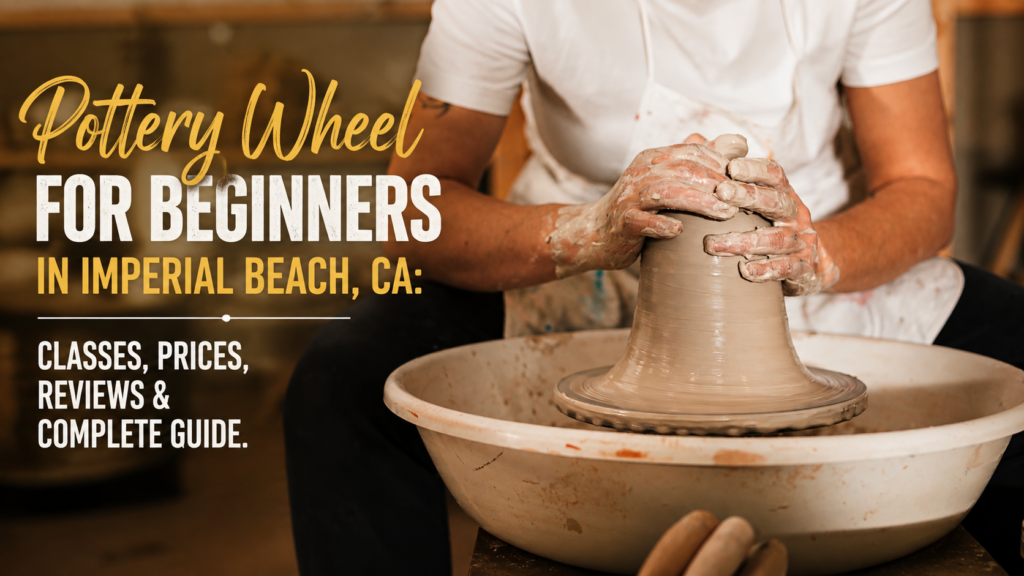
If you are searching for a pottery wheel for beginners in Imperial Beach, CA, you are in the right place. Pottery is a fun and hands-on way to explore your creativity.
With a pottery wheel, you can turn a simple piece of clay into a bowl, cup, vase, or other ceramic piece. You do not need to be an artist to get started. Instead, you can learn the basic skills step by step.
At Art Wheel, beginners can explore pottery in a creative studio environment. The experience allows you to work with clay, learn basic pottery skills, and enjoy the process of making something by hand.
Whether you are trying pottery for the first time or looking for a new hobby, this guide will help you understand pottery wheels, beginner classes, prices, projects, and open pottery studios.
What Is a Pottery Wheel?
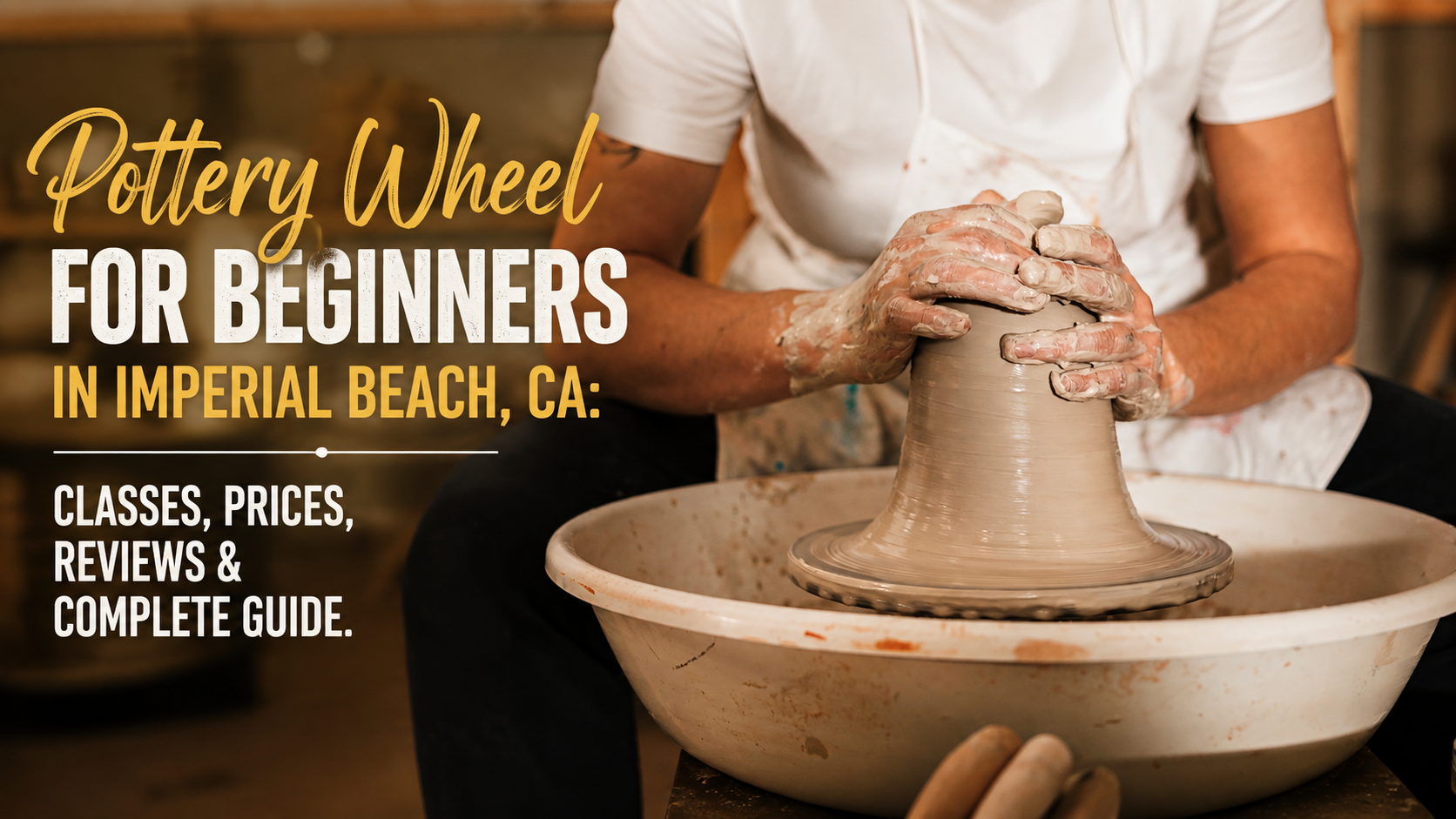
A pottery wheel is a rotating platform used to shape clay. It helps potters create round and balanced ceramic forms.
First, the clay is placed on the wheel. Next, the potter centers the clay. After that, the clay is opened and shaped with the hands.
With practice, beginners can make:
- Bowls
- Cups
- Mugs
- Small vases
- Planters
- Plates
- Decorative vessels
Although an experienced potter can make the process look simple, learning to use a wheel takes practice. However, beginners can learn the basic steps with proper instruction.
Pottery Wheel for Beginners in Imperial Beach, CA
Searching for a pottery wheel for beginners in Imperial Beach, CA often means you want a class that feels comfortable and easy to understand.
A beginner class should focus on basic skills. You should not be expected to make complex pottery during your first session.
Instead, you can learn skills such as:
Preparing the Clay
Clay must be prepared before it goes onto the wheel. Wedging can help create an even texture and remove unwanted air pockets.
Centering the Clay
Centering is one of the most important wheel skills. The clay needs to stay in the middle of the wheel as it spins.
At first, centering may feel difficult. With practice, however, your hands will become more comfortable with the movement.
Opening the Clay
Once the clay is centered, you create an opening in the middle. This opening becomes the inside of your pottery piece.
Pulling the Walls
Next, you slowly pull the clay upward. This creates the walls of your bowl, cup, or other vessel.
Shaping the Piece
After the walls are formed, you can shape the pottery. Your instructor can show you how to control the height, width, and curve.
Finishing the Pottery
Finally, the piece must dry before it can be trimmed, glazed, and fired. The complete process turns soft clay into a finished ceramic object.
Why Is Pottery Good for Beginners?
Pottery is a great starting point for people who want to try a hands-on creative activity.
You do not need drawing skills. You also do not need previous experience with clay.
Instead, you learn by practicing.
For example, your first bowl may not be perfectly round. Your first cup may have thick walls. That is normal.
Over time, you can improve your control and learn how the clay reacts to pressure.
What Should You Look for in Pottery Classes?
Choosing the right class can make your first pottery experience more enjoyable.
Before booking a class, consider the following:
- Is the class suitable for beginners?
- Does the instructor provide individual help?
- How long is the class?
- Is clay included?
- Are glazing and firing included?
- What equipment is provided?
- How many people are in the class?
- Are there additional fees?
- Can you keep your finished pottery?
These questions can help you compare different pottery experiences.
Pottery Wheel for Beginners in Imperial Beach, CA Reviews
Reviews can also help when you are choosing a pottery class.
However, do not look only at the star rating. Instead, read the comments and look for information about the actual experience.
Pay attention to reviews that mention:
- Instructor support
- Class atmosphere
- Studio cleanliness
- Equipment
- Beginner instruction
- Class size
- Glazing
- Firing
- Customer service
For a first-time student, reviews from other beginners can be especially helpful.
Furthermore, recent reviews can give you a better idea of the current experience.
Pottery Wheel for Beginners in Imperial Beach, CA Price
The pottery wheel for beginners in Imperial Beach, CA price can vary from one studio to another.
Several factors can affect the total cost. These may include:
- Class length
- Number of sessions
- Instructor
- Clay
- Glaze
- Firing
- Equipment
- Class size
- Private instruction
- Studio access
For that reason, compare what is included rather than looking only at the starting price.
For example, one class may have a lower price but charge extra for firing. Another class may include clay, glaze, and firing in the total cost.
Therefore, understanding the full price can help you make a better decision.
Is a Cheap Pottery Class the Best Choice?
Not always.
A lower price can be useful when you have a limited budget. However, good instruction and a comfortable studio are also important.
Consider these features when comparing classes:
| Feature | Why It Matters |
| Instructor | Helps you learn the correct techniques |
| Class size | Smaller groups may provide more guidance |
| Clay | Gives you material for practice |
| Glazing | Adds color and surface finish |
| Firing | Turns clay into ceramic |
| Equipment | Supports the learning process |
| Class time | Gives you more time to practice |
| Studio access | Can provide extra practice |
As a result, the best value is not always the lowest price.
Pottery Wheel Class in San Diego
People searching for a pottery wheel class in San Diego can find different types of pottery experiences.
For example, studios may offer:
- One-time pottery classes
- Beginner workshops
- Multi-week courses
- Private lessons
- Group classes
- Couples’ pottery experiences
- Open studio sessions
- Advanced pottery classes
A one-time class can be a good choice if you simply want to try pottery.
On the other hand, a multi-week course can provide more time to develop your skills.
One-Time Pottery Class vs. Multi-Week Course
One-Time Pottery Class
A single class may be ideal if you:
- Have never used a pottery wheel
- Want to try a new hobby
- Have limited free time
- Want a creative activity
- Are planning a date
- Want to enjoy pottery with friends
It gives you a chance to experience pottery without a long-term commitment.
Multi-Week Pottery Course
A longer course may be better if you want to improve your skills.
You can use repeated practice to learn:
- Centering
- Opening
- Pulling
- Shaping
- Trimming
- Glazing
In addition, regular practice can help you become more comfortable with the pottery wheel.
What Is the Easiest Pottery to Make on a Wheel?
Many beginners ask, what is the easiest pottery to make on a wheel?
A small bowl is often a good starting project. It does not require a very tall or narrow shape.
A simple bowl can teach you several basic skills:
- Centering
- Opening
- Pulling
- Controlling wall thickness
- Shaping
- Compressing the base
Small cylinders and simple cups can also be useful beginner projects.
Most importantly, focus on learning rather than creating a perfect piece.
Beginner Pottery Projects
There are many projects you can try after learning the basic wheel techniques.
Small Bowls
Bowls are popular beginner projects. They help you practice basic wheel control.
Cups
Cups can help you learn how to create even walls and consistent shapes.
Small Planters
Planters are practical projects that can be explored as your skills improve.
Simple Vases
Vases can be a good next step after you become comfortable with smaller forms.
Plates
Plates require a different approach, but they can be an interesting project for beginners.
Each project provides a new way to understand clay.
How Hard Is It to Learn the Pottery Wheel?
Learning the pottery wheel can be challenging at first.
You need to control the clay while the wheel is moving. At the same time, you must manage pressure, water, hand position, and wheel speed.
As a result, the first few attempts may feel difficult.
You might move the clay off-center. You may also make the walls too thin or collapse the form.
That is part of learning.
With regular practice, your hands begin to understand how much pressure to use. Eventually, movements that felt difficult can become more natural.
Why Is Centering Clay Important?
Centering is one of the first major skills you will learn.
When clay is not centered, the piece can move unevenly as the wheel spins. This makes shaping more difficult.
A centered piece provides a better starting point.
During a beginner class, an instructor can show you how to:
- Position your hands
- Brace your arms
- Apply steady pressure
- Control wheel speed
- Recognize centered clay
Do not worry if centering takes several attempts. It is a skill that improves with practice.
What Happens If Your First Pot Collapses?
A collapsed pot is a normal part of learning pottery.
For example, you may create a nice shape and then accidentally push too hard. The walls can become weak and fall inward.
Although this can be frustrating, it is also a learning opportunity.
You may learn more about:
- Pressure
- Clay thickness
- Moisture
- Hand position
- Timing
Then, you can use that experience on your next attempt.
Remember, pottery is a skill. Mistakes are part of the process.
What Is an Open Pottery Studio in San Diego?
An open pottery studio in San Diego usually allows students or members to work independently outside scheduled classes.
This type of studio access can be useful after you understand the basic pottery techniques.
Depending on the studio, open access may allow you to:
- Practice wheel throwing
- Trim pottery
- Work on personal projects
- Glaze pottery
- Experiment with shapes
- Improve your skills
However, every studio has different rules.
Some studios require students to complete a beginner course before using the equipment independently. Others may offer open studio access through a membership.
Therefore, check the studio’s current rules before joining.
Should Beginners Use an Open Pottery Studio?
For someone completely new to pottery, a structured class is usually a better starting point.
An instructor can explain the basics and correct mistakes as they happen.
Once you understand the main techniques, open studio practice can become more useful.
A simple learning path can look like this:
Beginner Class → Practice → Multi-Week Course → Open Studio
This approach allows you to build your skills before working independently.
How Do You Choose the Best Pottery Studio?
There is no single pottery studio that is perfect for everyone.
Your choice should depend on your goals, schedule, location, and experience.
For Complete Beginners
Look for:
- Beginner classes
- Helpful instructors
- Clear instructions
- Small or manageable class sizes
For Experienced Potters
Look for:
- Open studio access
- Advanced classes
- Quality equipment
- Flexible hours
For Social Activities
Consider studios that offer:
- Group classes
- Couples’ workshops
- Special events
- Beginner-friendly activities
For Long-Term Learning
Look for:
- Multi-week programs
- Experienced instructors
- Regular practice
- Advanced wheel classes
If you live near Imperial Beach, a convenient location can also make regular practice easier.
Is Pottery a Good Hobby for Adults?
Yes. Pottery can be a creative and rewarding hobby for adults.
It combines hands-on activity with artistic expression. In addition, pottery can be enjoyed at many different skill levels.
You can make pottery simply for fun. Alternatively, you can continue learning and develop more advanced skills.
Pottery Encourages Creativity
You can create your own shapes, textures, and designs.
Pottery Can Be Social
Classes can give you an opportunity to meet other people with similar interests.
Pottery Can Be Practical
You can create useful items such as mugs, bowls, and planters.
Pottery Can Be Challenging
Learning the wheel gives you a skill that improves with practice.
Pottery Can Be Rewarding
There is something special about turning a piece of clay into an object you made yourself.
Does Pottery Help With Arthritis?
Some people may wonder whether pottery is suitable for people with arthritis.
Pottery involves movements of the hands, fingers, and wrists. However, it should not be considered a treatment for arthritis.
Wheel throwing can involve:
- Gripping
- Pressing
- Pinching
- Repeated hand movements
- Wrist movement
If you have arthritis or another condition that affects your joints, speak with a qualified healthcare professional before starting pottery.
If you do take part, pay attention to how your body feels. Stop if an activity causes significant pain.
A beginner class can also help you learn controlled techniques instead of using unnecessary force.
Tips for Beginners With Hand or Joint Concerns
If pottery is suitable for you, a few simple habits may make the experience easier.
Take Regular Breaks
You do not need to work continuously. Short breaks can help reduce strain.
Use Controlled Pressure
Pottery usually requires steady pressure rather than excessive force.
Maintain Good Positioning
A comfortable body position can help you control the clay.
Start With Small Pieces
Small projects may require less effort than large forms.
Talk to Your Instructor
If a movement feels uncomfortable, ask your instructor for guidance.
Most importantly, do not ignore significant pain.
What Should You Wear to a Pottery Wheel Class?
Pottery can be messy. Clay and water may get onto your clothing.
Therefore, wear comfortable clothes that you do not mind getting dirty.
Good choices include:
- Comfortable pants
- Casual shirts
- T-shirts
- Closed-toe shoes
- Clothes that can handle clay and water
Also, avoid wearing expensive clothing or accessories.
Shorter fingernails can make some wheel techniques easier as well.
What Should You Bring to Pottery Class?
Most pottery studios provide the main equipment.
Depending on the class, the studio may provide:
- Pottery wheel
- Clay
- Basic tools
- Water
- Apron
- Glaze
- Kiln firing
However, requirements can vary.
Before attending, check what your studio provides.
You may want to bring:
- Comfortable clothing
- A towel
- Water
- A hair tie if needed
- Patience
- An open mind
You do not need to bring advanced pottery skills. Those are something you can develop over time.
What Happens After You Make Your Pottery?
Creating the shape is only the first part of the process.
Your pottery usually goes through several stages.
1. Drying
The clay must dry carefully before firing.
2. Trimming
Once the clay reaches the right stage, the bottom can be trimmed and refined.
3. Bisque Firing
The piece is fired in a kiln. This creates a stronger ceramic form.
4. Glazing
A glaze can add color and create a finished surface.
5. Final Firing
The glazed piece is fired again.
6. Finished Pottery
After the final firing, your pottery is ready to use or display, depending on the piece and its intended purpose.
The entire process takes time. However, seeing your finished piece makes the process worthwhile.
Pottery Is About the Process
One of the most important things beginners learn is that pottery is not only about the final product.
It is also about learning and experimenting.
Through pottery, you can:
- Slow down
- Focus
- Practice
- Experiment
- Accept mistakes
- Improve your skills
- Create something unique
Your first piece may not be perfect. Your next piece may be better.
With continued practice, you can develop greater control over the clay and the wheel.
Why Choose Art Wheel for Pottery in Imperial Beach?
If you are looking for a pottery wheel for beginners in Imperial Beach, CA, Art Wheel can be a place to explore the creative process of pottery.
A beginner-friendly pottery experience can be suitable for:
- First-time potters
- Adults
- Couples
- Friends
- Creative hobbyists
- People looking for a new activity
- Anyone interested in handmade ceramics
You do not need to call yourself an artist.
Instead, come with curiosity and a willingness to learn.
The goal is to enjoy the experience while developing your pottery skills.
Pottery as a Weekend Activity in Imperial Beach
Looking for something different to do around Imperial Beach?
A pottery class can offer a creative alternative to typical weekend activities.
For example, you could plan a day around pottery and other local activities:
Pottery → Lunch → Beach → Local Exploring
For couples, pottery can be a creative date activity.
For friends, it can become a fun group experience.
Likewise, individuals can use a pottery class as the first step toward a new hobby.
Pottery Wheel Beginner Checklist
Before booking your first class, use this simple checklist.
Before the Class
- Confirm the date
- Check the total price
- Ask what materials are included
- Confirm glazing and firing costs
- Check the class length
- Read recent reviews
- Confirm beginner requirements
- Check age requirements
- Wear comfortable clothing
During the Class
- Listen to your instructor
- Learn how to center the clay
- Keep your movements controlled
- Ask questions
- Do not rush
- Expect mistakes
- Enjoy the process
After the Class
- Ask when your pottery will be ready
- Confirm the glazing process
- Understand the firing process
- Ask about future classes
- Consider practicing again
Frequently Asked Questions About Pottery Wheels
What Is the Easiest Pottery to Make on a Wheel for Beginners?
Small bowls and simple cylinders are good beginner projects. They allow you to practice centering, opening, pulling, and shaping without creating a complicated form.
How Hard Is It to Learn Pottery Wheel Throwing?
It can be difficult during the first few sessions. Centering and controlling wall thickness often take practice. With regular instruction, however, beginners can gradually become more comfortable.
How Much Does a Pottery Wheel Class Cost in Imperial Beach?
Prices vary based on the class, instructor, materials, firing, and length. Always check the current price and confirm what is included.
Are There Pottery Wheel Classes in San Diego for Beginners?
Yes. San Diego has pottery studios and programs that may offer beginner classes and workshops. Schedules and availability can change, so check the current class options before booking.
What Is an Open Pottery Studio?
An open pottery studio allows eligible students or members to work independently outside regular classes. Each studio has its own rules.
Can Beginners Use an Open Pottery Studio?
It depends on the studio. Some require beginners to complete an introductory class before using the equipment independently.
Is Pottery a Good Hobby for Adults?
Yes. Pottery combines creativity, hands-on activity, learning, and social interaction. You can enjoy it casually or continue developing advanced skills.
Does Pottery Help With Arthritis?
Pottery involves hand and wrist movements, but it should not be considered a treatment for arthritis. If you have arthritis, speak with a qualified healthcare professional before starting pottery.
What Should I Wear to Pottery Class?
Wear comfortable clothes that can get dirty. Closed-toe shoes are also a good choice.
Can I Make a Mug During My First Pottery Class?
It depends on the class. Many beginners start with simple bowls or cylinders. Your instructor can recommend a project based on your experience.
How Long Does It Take to Get Good at Pottery?
There is no fixed timeline. Regular practice can help you improve. Most beginners become more comfortable with the wheel as they gain experience.
Start Learning Pottery in Imperial Beach
Finding a pottery wheel for beginners in Imperial Beach, CA can be the beginning of a rewarding creative hobby.
Perhaps you are comparing pottery wheel for beginners in Imperial Beach, CA reviews. Maybe you are researching pottery wheel prices. You may also be looking for a pottery wheel class in San Diego or an open pottery studio in San Diego.
Whatever your goal, choose an experience that fits your schedule, budget, and skill level.
Do not worry if you have never worked with clay.
Your first pot may not be perfect. It may even collapse. That is okay.
With guidance and practice, you can learn how to center clay, shape vessels, trim pottery, and explore different glazes.
At Art Wheel, beginners can discover the hands-on experience of working with clay and learn more about pottery in a creative environment.
So, if you are ready to try something new, start with a simple piece of clay.
Learn the wheel. Practice your skills. Create something that is uniquely yours.