
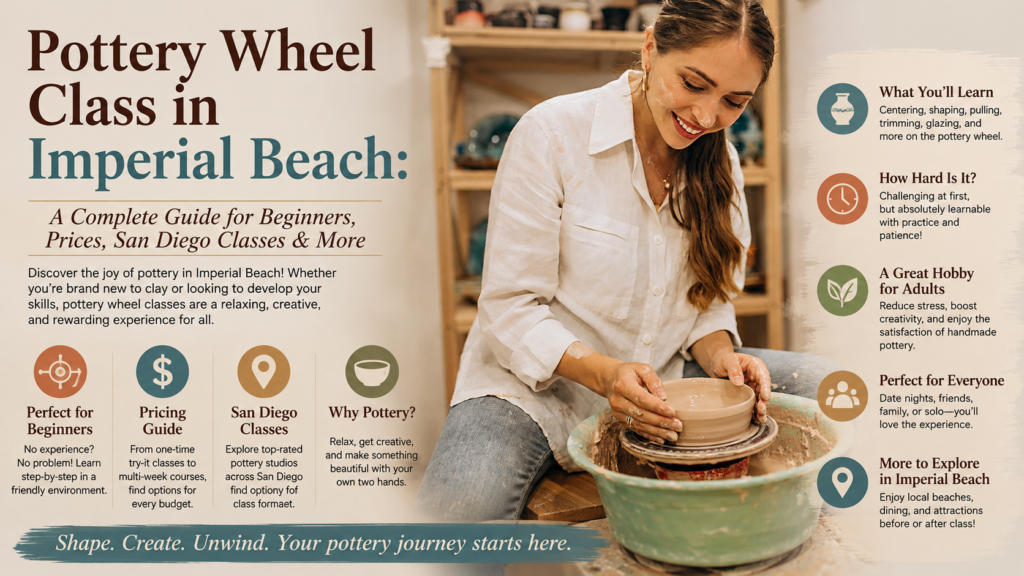
If you are searching for a pottery wheel class in Imperial Beach, you are not alone. Pottery is a fun, creative activity for adults, couples, families, and anyone who wants to try something new.
Working with clay gives you a chance to step away from screens and enjoy a hands-on activity. You can learn how to shape clay, create simple pottery, and develop a skill through practice.
Whether you are researching a pottery wheel class in Imperial Beach price, looking for a pottery wheel class in San Diego, comparing top-rated pottery classes in San Diego, or searching for cheap pottery classes in San Diego, it helps to understand what each option offers.
Art Wheel offers creative pottery experiences for people who want to explore clay and learn more about ceramics.
In this guide, you will learn what happens during a pottery wheel class, how much classes may cost, what beginners can make, how difficult wheel throwing can be, and how to choose the right pottery experience.
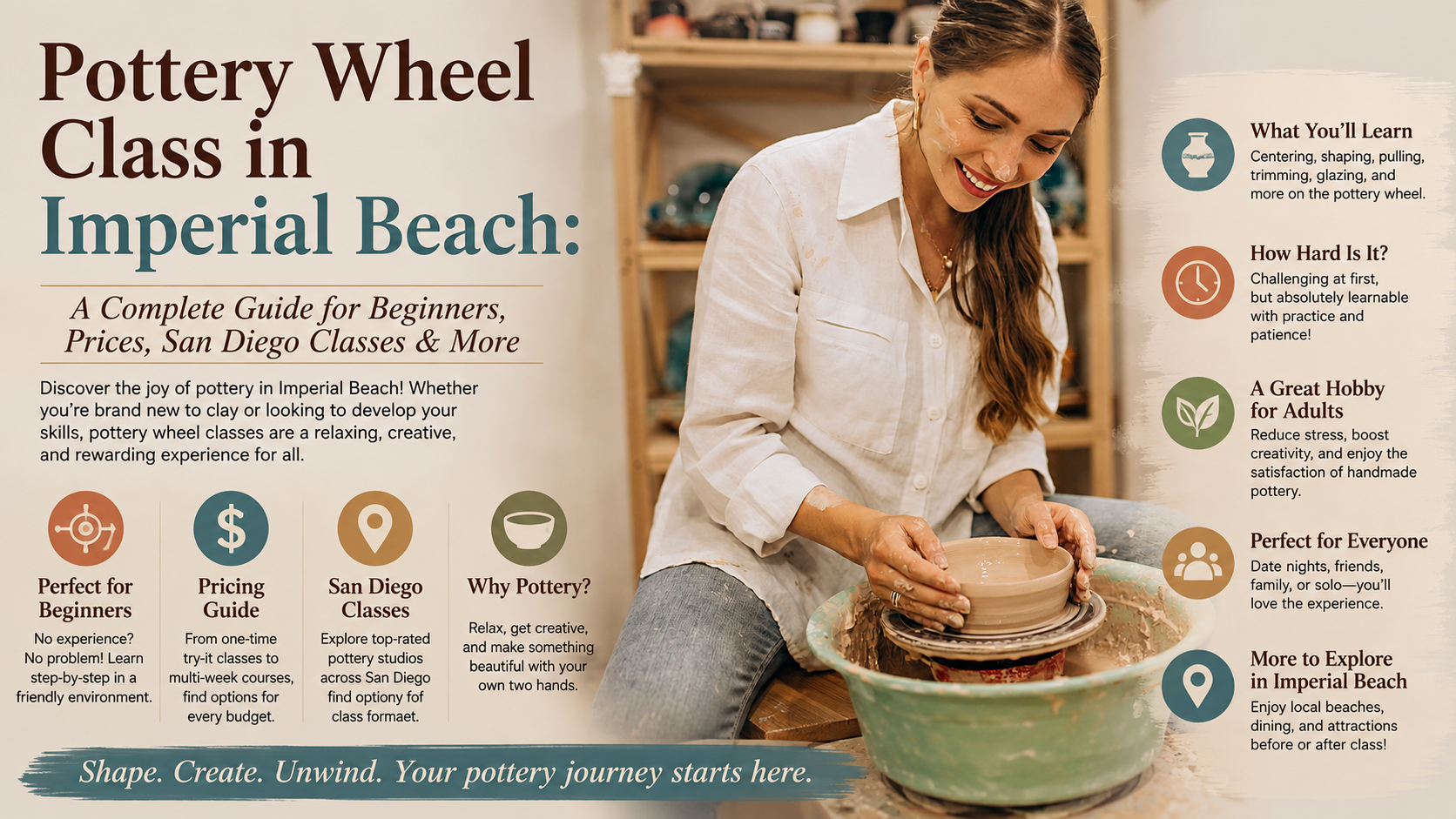
What Is a Pottery Wheel Class?
A pottery wheel class teaches you how to shape clay on a rotating wheel. Instead of forming the clay only with your hands, you learn to guide it while the wheel spins.
During a beginner class, you may learn several basic steps:
- Preparing the clay
- Wedging the clay
- Centering clay on the wheel
- Opening the clay
- Pulling the walls upward
- Shaping the piece
- Trimming the pottery
- Applying glaze
- Understanding the firing process
At first, the pottery wheel may look easy. However, controlling clay while it spins takes coordination and practice.
That is completely normal.
With proper guidance, beginners can gradually learn how to control their hands, pressure, and wheel speed.
Pottery Wheel Class in Imperial Beach
If you are looking for a pottery wheel class in Imperial Beach, taking a local class can be a convenient way to discover pottery.
A nearby class may be a good choice if you want to:
- Try pottery for the first time
- Learn a new hobby
- Enjoy a creative weekend
- Spend time with friends
- Plan a unique date
- Make handmade pottery
- Explore ceramics
- Enjoy a hands-on activity
For beginners, the learning environment matters just as much as the pottery equipment. A friendly instructor can make it easier to understand each step and feel comfortable making mistakes.
At Art Wheel, participants can explore pottery through hands-on creative experiences. Before booking, however, check the current schedule, class format, age requirements, pricing, and what is included.
What Happens During a Pottery Wheel Class?
A beginner pottery class usually follows a simple process. Although each studio may have its own teaching style, the basic steps are similar.
1. Preparing the Clay
First, the clay needs to be prepared for the wheel. Wedging can help create an even texture and remove unwanted air pockets.
As a result, the clay becomes easier to control.
2. Centering the Clay
Next, you place the clay on the wheel and work toward centering it.
Centering is one of the most important skills in wheel throwing. If the clay is not centered, shaping the piece can become much harder.
3. Opening the Clay
Once the clay is centered, you create an opening in the middle.
This opening becomes the inside of your bowl, cup, or other vessel.
4. Pulling the Walls
After opening the clay, you gradually pull the walls upward.
During this stage, you learn how much pressure to use. Too much pressure can damage the shape, while too little pressure may not move the clay enough.
5. Shaping the Pottery
Once the walls have been pulled, you can shape your piece.
For example, you might create a small bowl, cup, cylinder, vase, or planter.
6. Trimming and Finishing
After the clay becomes firm enough, the piece may be trimmed. This step helps refine the bottom and improve the overall shape.
Finally, the pottery can be glazed and fired.
Pottery Wheel Class in Imperial Beach Price
One of the most common questions from beginners is about the pottery wheel class in Imperial Beach price.
There is no single price for every pottery class. Instead, the cost depends on several factors.
For example, pricing can change based on:
- Class length
- Number of sessions
- Instructor
- Amount of clay
- Glazing
- Firing
- Equipment
- Class size
- Number of finished pieces
- Private or group instruction
A one-time pottery experience usually requires less time and commitment than a multi-week course. Therefore, it may also have a lower overall cost.
On the other hand, a longer course may include more instruction, practice, materials, and studio time.
Before booking, always check exactly what the listed price includes.
What Should Be Included in the Pottery Class Price?
A class may include some or all of the following:
| Feature | Why It Matters |
| Clay | Gives you material to practice with |
| Pottery wheel | Needed for wheel throwing |
| Tools | Help you shape and finish your work |
| Instructor | Provides guidance and demonstrations |
| Glaze | Adds color and surface finish |
| Firing | Turns dried clay into ceramic |
| Studio time | Gives you time to practice |
| Finished pieces | Determines what you can take home |
Therefore, comparing only the advertised price may not give you the full picture.
For example, one class may have a lower starting price but charge extra for firing. Another may cost more initially but include clay, glaze, and firing.
Are Cheap Pottery Classes in San Diego Worth It?
If you are searching for cheap pottery classes in San Diego, price is naturally important.
However, the cheapest option may not always provide the best value.
Before choosing a class, check whether the price includes instruction, clay, tools, glaze, and firing.
Also, consider the instructor’s experience and the amount of personal guidance available.
A low-cost introductory class can be a good choice if you simply want to try pottery. In contrast, a multi-week course may be more useful if your goal is to develop your wheel skills.
Therefore, think about your goal before comparing prices.
Pottery Wheel Class in San Diego: What Options Are Available?
People searching for a pottery wheel class in San Diego can find different types of pottery experiences.
Depending on the studio, options may include:
- One-time beginner classes
- Multi-week pottery courses
- Private lessons
- Group classes
- Couples’ experiences
- Ceramic workshops
- Open studio sessions
- Handbuilding classes
- Advanced pottery courses
A one-time class is useful when you want to experience pottery without making a long commitment.
Meanwhile, a multi-week course gives you more opportunities to practice.
For that reason, beginners who want to improve their skills may benefit from attending several sessions.
One-Time Pottery Class vs. Multi-Week Course
Choosing between these two options is easier when you know what you want.
One-Time Pottery Class
A single class may be ideal if you:
- Have never used a pottery wheel
- Want to try something new
- Have limited free time
- Want a creative date
- Are planning an activity with friends
- Are unsure whether pottery is right for you
You can experience the basics without committing to a longer course.
Multi-Week Pottery Course
A longer course may be better if you:
- Want regular practice
- Want to improve your technique
- Want to make several pieces
- Want more instructor support
- Are considering pottery as a long-term hobby
Because wheel throwing is a physical skill, repeated practice can make a major difference.
How Hard Is It to Learn the Pottery Wheel?
Many beginners ask, how hard is it to learn the pottery wheel?
The answer is simple: it can be challenging at first, but beginners can learn it with practice.
The wheel keeps moving while your hands control the clay. Therefore, you need to coordinate several things at once.
These include:
- Hand pressure
- Wheel speed
- Body position
- Clay moisture
- Clay thickness
- Timing
During your first class, your clay may collapse. Your bowl may become uneven. You might also struggle to center the clay.
That does not mean you are bad at pottery.
Instead, these mistakes are part of learning.
Why Is Centering Clay So Important?
Centering is one of the first major skills beginners learn.
The clay needs to sit evenly in the center of the wheel. When the wheel spins, you then use controlled pressure to bring the clay into position.
Once the clay is centered, opening and shaping it becomes easier.
Therefore, beginners should not rush through this step.
A good instructor can show you how to position your hands and arms. In addition, they can help you understand how much pressure to use.
With practice, centering can become much more natural.
What Is the Easiest Pottery to Make for Beginners?
A small bowl is often a good first project.
The shape is relatively simple, and it gives beginners a chance to practice several basic skills.
For example, you can learn:
- Centering
- Opening
- Pulling
- Shaping
- Controlling wall thickness
- Finishing the rim
Small cups and simple cylinders can also be useful beginner projects.
However, the best first project depends on your instructor and class format.
The goal should not be perfection. Instead, focus on learning how the clay responds to your hands.
What Can You Make on a Pottery Wheel?
Once you become more comfortable with the wheel, you can explore many different forms.
Bowls
Bowls are popular beginner projects because they teach you how to create an open shape.
Cups
Cups help you practice wall thickness and shaping.
Mugs
After learning the basic form, you can add a handle and create a functional mug.
Small Vases
Vases allow you to experiment with taller shapes.
Planters
Small planters can combine practical use with creative design.
Plates
Plates require a different approach but can be an interesting project for beginners.
As your skills improve, you can move from simple forms to more detailed designs.
Top-Rated Pottery Classes in San Diego: How Should You Choose?
When searching for top-rated pottery classes in San Diego, reviews can help. However, you should look beyond the star rating.
Instead, read what previous students say about the actual experience.
Pay attention to comments about:
- Instructor support
- Beginner friendliness
- Class size
- Studio cleanliness
- Equipment
- Materials
- Glazing
- Firing
- Scheduling
- Customer service
For beginners, comments about instructor support can be especially useful.
For example, a review that says an instructor patiently explained centering may be more helpful than a simple five-star rating.
Questions to Ask Before Booking a Pottery Class
Before registering, consider asking these questions:
Is the class suitable for beginners?
This is especially important if you have never used a pottery wheel.
Are clay and tools included?
Some studios include them, while others may charge separately.
Is glazing included?
Find out whether you will be able to glaze your finished piece.
Is firing included?
Firing is an important part of turning clay into finished ceramic pottery.
How many pieces can I make?
Some introductory classes focus on one main piece, while longer courses allow more projects.
When can I collect my finished pottery?
Clay needs time to dry, glaze, and fire. Therefore, you usually cannot take it home immediately.
Is Pottery a Good Hobby for Adults?
Yes, pottery can be a rewarding hobby for adults.
There are several reasons why people enjoy it.
Pottery Encourages Creativity
You can create your own shapes, designs, and decorative details.
Pottery Is Hands-On
Instead of spending another evening on a phone or computer, you can work directly with clay.
Pottery Takes Patience
Clay teaches you to slow down and work carefully.
Pottery Can Be Social
You can attend classes with friends, a partner, or other beginners.
Pottery Creates Something Tangible
Perhaps the most rewarding part is seeing a finished object that started as a simple lump of clay.
As a result, pottery can provide both a creative challenge and a sense of achievement.
Pottery as a Relaxing Adult Activity
Pottery requires attention.
You need to watch the clay, control your hands, and adjust your pressure. Because of this, your attention naturally moves away from everyday distractions.
The spinning wheel and soft clay create a very different experience from typical screen-based activities.
However, pottery should not be treated as medical therapy. Instead, think of it as a creative hobby that can be enjoyable and engaging.
Pottery Wheel Classes for Couples
Looking for an unusual date activity?
A pottery wheel class can be a fun alternative to dinner or a movie.
Couples can learn together while making their own pieces.
You can:
- Try the wheel together
- Encourage each other
- Laugh at mistakes
- Make individual pieces
- Take photos
- Compare your finished pottery
Even if the first pieces are not perfect, the experience can create a memorable day.
Pottery Classes for Friends and Groups
Pottery can also work well as a group activity.
For example, friends can attend a class together for:
- Birthdays
- Weekend activities
- Celebrations
- Team events
- Group outings
- Creative get-togethers
Everyone can create a different piece. Therefore, each person leaves with something personal.
Pottery Wheel vs. Handbuilding
Not sure whether to try wheel throwing or handbuilding?
Both techniques offer different experiences.
| Pottery Wheel | Handbuilding |
| Uses a rotating wheel | Uses hands and basic tools |
| Good for symmetrical forms | Good for organic shapes |
| Great for bowls and cups | Great for sculptures and decorative pieces |
| Requires wheel control | Does not require a wheel |
| Focuses on throwing skills | Offers more freedom with shape |
| Takes practice to master | Often approachable for beginners |
Neither method is automatically better.
Instead, choose based on the type of pottery you want to make and the experience you want to have.
If you enjoy symmetrical bowls and cups, wheel throwing may be appealing. On the other hand, handbuilding may be better if you prefer unusual shapes and sculptures.
Things to Do in Imperial Beach
A pottery class can also be part of a larger day in Imperial Beach.
After your class, you can explore the local area and enjoy other activities.
Depending on your interests, you might:
- Spend time near the beach
- Walk along the waterfront
- Watch the sunset
- Explore local businesses
- Enjoy a meal
- Take photographs
- Visit nearby attractions
- Try another creative activity
As a result, a pottery class can become more than an individual activity.
For couples, friends, and visitors, it can be one part of a full day in Imperial Beach.
Why Try Pottery in Imperial Beach?
Imperial Beach provides a coastal setting for people who want to combine creativity with local activities.
You can spend part of the day learning pottery and then enjoy the surrounding area.
For example:
Pottery Class → Lunch → Beach → Sunset
This simple plan can turn a pottery lesson into a memorable weekend experience.
What Should You Wear to a Pottery Wheel Class?
Pottery can be messy.
Clay and water may get on your clothes, so comfortable clothing is a smart choice.
Consider wearing:
- Comfortable pants
- A T-shirt
- Casual clothing
- Closed-toe shoes
- Clothes you do not mind getting dirty
Avoid expensive clothing that you want to keep spotless.
Also, shorter fingernails may make wheel throwing easier because your hands need to work closely with the clay.
What Should You Bring to Your First Pottery Class?
Most pottery studios provide the main equipment. Depending on the class, this may include the wheel, clay, tools, glaze, and firing.
Before attending, however, check the studio’s requirements.
You may want to bring:
- Comfortable clothing
- A towel
- Water
- A hair tie if needed
- Patience
- Creativity
- An open mind
Most importantly, do not worry about creating a perfect piece.
What Happens After You Make Your Pottery?
The pottery wheel is only the beginning.
Once your piece is shaped, it usually needs to go through several additional stages.
Drying
First, the clay needs to dry carefully.
Trimming
Next, the piece may be trimmed when the clay reaches the right firmness.
Bisque Firing
After drying, the pottery can be fired in a kiln.
Glazing
Next, glaze can be added to provide color and surface decoration.
Final Firing
The glazed piece is fired again.
Finished Pottery
Finally, the finished ceramic piece is ready to be collected, displayed, or used when appropriate.
Because there are several steps, you usually cannot take your pottery home immediately after class.
Common Beginner Pottery Mistakes
Making mistakes is part of learning pottery.
Here are some common problems beginners may experience.
The Clay Is Not Centered
When clay is off-center, shaping becomes more difficult.
The Walls Become Too Thin
Thin walls can make the piece unstable.
The Walls Are Too Thick
Thick walls can make pottery heavy and difficult to shape.
Too Much Water Is Used
Excess water can make clay soft and harder to control.
The Clay Is Pulled Too Quickly
Slow and controlled movements can provide better control.
The Project Is Too Complicated
Beginners should start with simple shapes before attempting advanced forms.
Expecting Perfection
Your first piece is part of the learning process.
Therefore, mistakes should be treated as lessons rather than failures.
How Can Beginners Improve at Pottery?
Regular practice is one of the best ways to improve.
Start by focusing on the basics rather than complicated shapes.
Practice Centering
Learn to center clay consistently before worrying about advanced forms.
Start Small
Small pieces can be easier to control.
Use Controlled Pressure
Your hands do not need to force the clay into shape.
Watch Your Wheel Speed
Different speeds can affect how the clay responds.
Use Water Carefully
Keep the clay workable without adding too much water.
Ask Your Instructor for Help
Small changes in hand position can make a big difference.
Practice Regularly
Like any hands-on skill, pottery improves through repetition.
How Long Does It Take to Learn Pottery?
There is no fixed timeline.
You may understand the basic process during your first class. However, becoming confident on the wheel can take many sessions.
During the first few classes, you may focus on centering and making simple shapes.
Later, you can work on:
- Taller forms
- Consistent wall thickness
- Handles
- Trimming
- Glazing
- More detailed designs
As your practice continues, your hands begin to understand the clay better.
That gradual improvement is one of the most rewarding parts of pottery.
One-Time Class or Multi-Week Course: Which Is Better?
The right option depends on your goals.
Choose a One-Time Class If You Want To:
- Try pottery
- Experience something new
- Enjoy a date
- Spend time with friends
- Learn the basic process
- Avoid a long commitment
Choose a Multi-Week Course If You Want To:
- Build stronger skills
- Practice regularly
- Make several pieces
- Improve wheel control
- Learn more advanced techniques
- Develop pottery as a hobby
Therefore, beginners can start with a one-time class and move into a longer course if they enjoy the experience.
Frequently Asked Questions About Pottery Wheel Classes
What is the easiest pottery to make on a wheel for beginners?
Small bowls and simple cylinders are good beginner projects because they teach basic skills such as centering, opening, pulling, and shaping.
How hard is it to learn the pottery wheel?
The first few sessions can be challenging. However, regular practice and good instruction can help beginners become more comfortable with wheel throwing.
How much does a pottery wheel class in Imperial Beach cost?
The price depends on the studio, class length, materials, firing, glazing, and instruction. Check the current class information to see exactly what is included.
Are there pottery wheel classes in San Diego for beginners?
Yes. San Diego has pottery studios and programs that offer beginner-friendly wheel classes, workshops, and longer courses. Availability and schedules can change, so check current class information before booking.
Are cheap pottery classes in San Diego worth it?
They can be, especially if you want a short introduction to pottery. However, compare the total cost, instruction, materials, glazing, and firing before choosing a class.
What should I look for in top-rated pottery classes in San Diego?
Look at instructor support, class size, equipment, cleanliness, materials, firing, scheduling, and comments from previous students. Reviews can help you understand the actual experience.
Is pottery a good hobby for adults?
Yes. Pottery combines creativity, hands-on activity, learning, and social interaction. Adults can enjoy it casually or continue developing their skills over time.
Can couples take pottery classes together?
Yes. Beginner pottery classes can be a fun activity for couples. You can learn together and create individual pieces during the same experience.
Can I take a pottery class if I have never worked with clay?
Yes. Many beginner classes are designed for people with no previous pottery experience.
What should I wear to a pottery class?
Wear comfortable clothing that you do not mind getting dirty. Closed-toe shoes are also a practical choice.
Do pottery classes include clay and firing?
It depends on the studio. Some classes include clay, glaze, and firing, while others charge additional fees. Always check before booking.
Can I take my pottery home immediately?
Usually, no. The clay may need to dry, be trimmed, glazed, and fired before it is ready.
What can I make during my first pottery class?
Depending on the class, you may create a small bowl, cup, cylinder, or another simple form. The instructor may recommend a project based on your experience level.
Start Your Pottery Journey in Imperial Beach
A pottery wheel class in Imperial Beach can be a great way to try something creative and learn a new skill.
Whether you are comparing pottery wheel class in Imperial Beach prices, searching for a pottery wheel class in San Diego, researching top-rated pottery classes in San Diego, or looking for cheap pottery classes in San Diego, take time to compare what each class includes.
Price matters, but it should not be the only factor.
Consider the instructor, class size, equipment, materials, glazing, firing, schedule, and overall experience. Most importantly, choose a class that matches your goals and experience level.
If you have never used a pottery wheel, do not worry.
Your first bowl may not be perfectly round. Your first attempt at centering may take time. A piece may even collapse while you are learning.
That is all part of the process.
With patience, instruction, and regular practice, you can become more comfortable with clay and gradually improve your wheel-throwing skills.
For beginners in Imperial Beach, Art Wheel provides an opportunity to explore pottery in a hands-on creative environment.
Start with a piece of clay, learn the wheel, and enjoy creating something that is uniquely yours.