
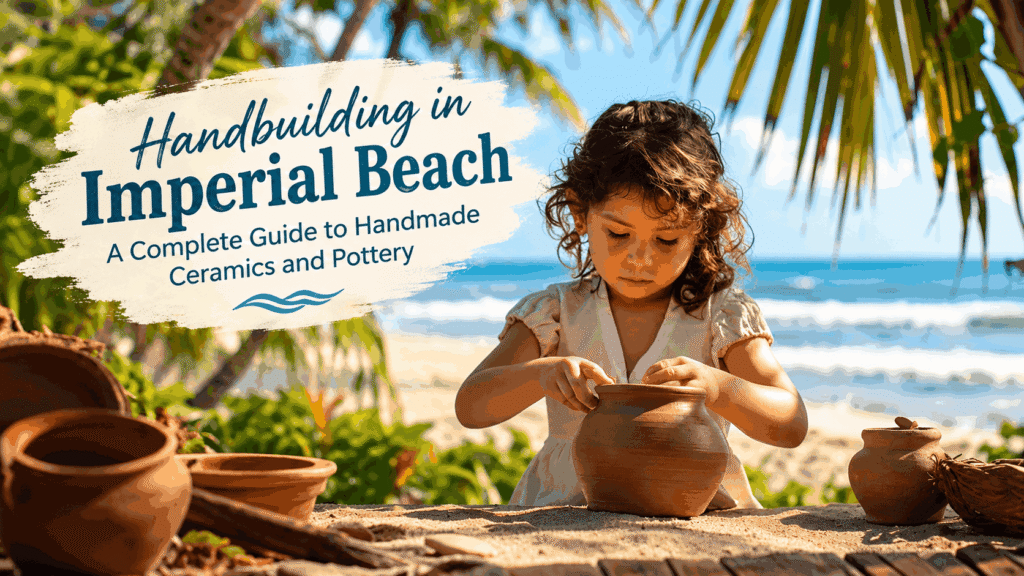
If you are looking for a creative way to work with clay, handbuilding in Imperial Beach is a wonderful place to start. Handbuilding allows you to create pottery using your hands and a few simple tools instead of relying on a pottery wheel. It is accessible to beginners, enjoyable for experienced artists, and flexible enough for creating functional pottery, decorative pieces, and unique works of art.
Imperial Beach and the surrounding San Diego area offer a vibrant creative environment for people interested in pottery and ceramics. Whether you want to make your first clay project, learn more about handmade pottery, or explore ceramics as a long-term hobby, handbuilding provides an approachable way to begin.
At ArtWheel, pottery is about more than simply shaping clay. It is an opportunity to slow down, experiment, learn new techniques, and create something with your own hands.
What Is Handbuilding in Pottery?
Handbuilding is a pottery-making technique in which clay is shaped by hand rather than primarily using a pottery wheel.
Artists can use their fingers, palms, simple pottery tools, molds, and textured objects to shape the clay. Some of the most common handbuilding methods include:
- Pinch pottery
- Coil building
- Slab building
- Sculpting
- Texturing
- Carving
- Combining different handbuilding techniques
Each technique creates a different look and feel.
For beginners, handbuilding is especially appealing because you do not need to master a spinning wheel before you can start creating pottery.
Why Choose Handmade Handbuilding in Imperial Beach?
Handmade handbuilding in Imperial Beach offers a relaxing and creative experience for people of different ages and skill levels.
Unlike mass-produced objects, handmade ceramics often have small variations that make each piece unique. Finger marks, textures, shapes, and subtle imperfections can become part of the character of the finished work.
Handbuilding also gives you considerable freedom.
You can make:
- Mugs
- Bowls
- Plates
- Vases
- Planters
- Sculptures
- Wall decorations
- Candle holders
- Jewelry dishes
- Decorative tiles
- Personalized gifts
Because you are building the object by hand, you can experiment with shapes that may be difficult to create on a traditional pottery wheel.
Handbuilding vs. Wheel Throwing
Handbuilding and wheel throwing are both popular pottery techniques. However, they provide different experiences.
Handbuilding
Handbuilding involves manually shaping clay. It is often easier for beginners to understand because the process is direct and tactile.
You can pinch, roll, flatten, carve, join, and shape the clay according to your design.
Wheel Throwing
Wheel throwing involves placing clay on a rotating pottery wheel and shaping it while the wheel spins.
It requires practice to control the clay, maintain symmetry, center the clay, and create consistent forms.
Neither technique is necessarily better than the other. Your choice depends on the type of pottery you want to create and the experience you prefer.
For many beginners, handbuilding is a comfortable introduction to ceramics.
Do You Wedge Clay Before Handbuilding?
One common beginner question is: Do you wedge clay before handbuilding?
In many cases, yes.
Wedging is a process used to prepare clay before shaping it. It helps create a more consistent clay body and can reduce problems associated with uneven moisture or trapped air.
However, the exact preparation process can depend on the clay type and the studio’s procedures.
Before beginning a handbuilding project, your instructor can show you how to prepare the clay properly.
Good clay preparation is important because it can make the material easier to work with and help reduce problems during drying and firing.
What Is Pinch Pottery?
Pinch pottery is one of the simplest handbuilding techniques.
You begin with a ball of clay. Then, you use your thumb and fingers to gradually press and shape the clay.
By rotating the clay and applying controlled pressure, you can create a bowl, cup, small planter, or decorative object.
Pinch pottery is popular with beginners because the technique requires relatively few tools.
It also teaches important fundamentals, including:
- Controlling clay thickness
- Creating walls
- Smoothing surfaces
- Maintaining form
- Understanding moisture
- Joining and refining clay
What Is Coil Building?
Coil building involves rolling clay into long, rope-like pieces called coils.
The coils are then stacked and joined together to create a larger form.
Coil building is useful for creating:
- Vases
- Planters
- Sculptures
- Bowls
- Large decorative forms
One advantage of coil building is that it gives artists considerable control over the shape and size of the finished object.
You can build upward gradually and adjust the form as you work.
What Is Slab Building?
Slab building involves rolling clay into flat sheets.
These slabs can then be cut, shaped, folded, and joined to create pottery.
Slab techniques are particularly useful for making objects with flatter surfaces or more geometric designs.
Examples include:
- Plates
- Trays
- Boxes
- Tiles
- Wall pieces
- Planters
- Decorative containers
Texture can also be added to slabs before they are assembled.
Adding Texture to Handmade Ceramics
One of the most enjoyable parts of handbuilding is experimenting with texture.
Artists can use pottery tools and everyday objects to create patterns and impressions in wet clay.
You might use:
- Leaves
- Fabric
- Carved tools
- Stamps
- Natural textures
- Found objects
- Handmade texture tools
Texture can transform a simple clay form into a visually interesting ceramic piece.
This is another reason handbuilding works so well for creative workshops. There are many opportunities to experiment without needing to follow a strict design.
Is Handbuilding Good for Beginners?
Yes. Handbuilding is one of the most beginner-friendly ways to learn pottery.
You do not need previous ceramics experience to begin.
A beginner can learn basic techniques and gradually develop confidence with clay.
The most important things to remember are patience and practice.
Clay can sometimes behave differently than expected. A wall may become too thin, a joint may separate, or a piece may crack while drying.
These experiences are part of learning ceramics.
What Can You Make in a Handbuilding Class?
A handbuilding class can include many different projects.
Depending on the class and instructor, you might create:
Functional Pottery
Functional pottery is designed to be used.
Examples include:
- Cups
- Mugs
- Bowls
- Plates
- Serving dishes
- Spoon rests
- Soap dishes
Decorative Ceramics
Decorative pieces are designed primarily for visual enjoyment.
These may include:
- Sculptures
- Wall art
- Decorative vessels
- Figurines
- Textured tiles
- Seasonal decorations
Personalized Gifts
Handmade pottery can also make a thoughtful gift.
A personalized mug, planter, bowl, or decorative object can have more sentimental value than a mass-produced item.
Exploring San Diego Ceramics
If you are interested in San Diego ceramics, Imperial Beach provides a great starting point for exploring clay-based art.
The broader San Diego creative community includes artists, makers, galleries, studios, classes, and workshops covering many different ceramic techniques.
Ceramics can be both a social activity and an individual creative practice.
You can attend a class to learn the basics, continue practicing at a studio, or eventually develop your own artistic style.
Finding a Ceramics Studio in San Diego
When searching for a ceramics studio in San Diego, consider more than just location.
A good studio experience should match your goals and experience level.
Consider asking:
- Does the studio offer beginner classes?
- Are handbuilding techniques included?
- What clay is provided?
- Are firing services included?
- Are tools available?
- Does the studio offer glazing instruction?
- How large are the classes?
- What types of projects can students make?
- Are private or group sessions available?
The right environment can make learning pottery much more enjoyable.
Pottery Classes and Creative Experiences
Pottery classes are not only about learning technical skills.
They can also provide an opportunity to disconnect from screens and focus on a hands-on activity.
Working with clay requires concentration. You have to observe the material, adjust pressure, refine the shape, and think about how the piece will behave as it dries.
That process can be rewarding even when the finished piece is not perfect.
Pottery Class East Village and San Diego Pottery Options
People searching for a pottery class in East Village or other parts of San Diego may find a variety of ceramics experiences.
However, it is important to compare the class format with what you actually want to learn.
For example, some classes may focus heavily on wheel throwing, while others may emphasize handbuilding and sculptural techniques.
If your primary interest is handmade pottery, look specifically for classes that provide dedicated handbuilding instruction.
How Much Does a Pottery Class Cost?
Another common question is: How much does a pottery class cost?
The answer varies depending on the studio, class length, materials, firing, instruction, project type, and whether the class is a single workshop or a multi-session course.
Some classes may be short introductory workshops, while others may run for several weeks.
Before registering, check what is included in the price.
Ask whether the fee covers:
- Clay
- Glazes
- Firing
- Studio tools
- Instruction
- Finished pieces
- Additional studio time
Understanding these details can help you compare pottery classes more accurately.
What Is the Most Sought-After Pottery?
The answer depends on the buyer, artist, design, age, condition, craftsmanship, and cultural significance of the piece.
Some pottery styles become highly desirable because of their artistic value, rarity, maker, historical importance, or distinctive design.
For contemporary handmade ceramics, buyers may look for pieces with:
- Unique forms
- Handmade character
- Interesting textures
- Quality craftsmanship
- Distinctive glazing
- Artist signatures
- Limited production
- Functional design
For vintage pottery, the maker, age, condition, rarity, provenance, and authenticity can strongly influence demand.
Handmade Pottery vs. Mass-Produced Ceramics
Handmade pottery has a distinct character.
Mass-produced ceramics are generally manufactured using standardized processes. Handmade pieces, on the other hand, often contain subtle differences from one item to another.
Those differences can make handmade pottery feel more personal.
A handmade bowl may have slight variations in its rim. A handbuilt vase may have an unusual shape. A textured piece may contain marks created directly by the artist.
These characteristics are not necessarily flaws. They can be part of what makes handmade ceramics special.
Where Is the Best Place to Sell Vintage Pottery?
If you have vintage pottery to sell, the best marketplace depends on what you own and who is likely to buy it.
Potential options include:
- Local antique shops
- Consignment stores
- Art and vintage markets
- Estate sales
- Online marketplaces
- Auction platforms
- Specialty pottery communities
- Local collectors
Before selling an older piece, research the maker and identify any markings on the bottom.
Look for:
- Artist signatures
- Studio marks
- Manufacturer stamps
- Country of origin
- Model numbers
- Date markings
Condition is also important.
Chips, cracks, repairs, fading, or missing pieces can affect the value of vintage pottery.
How to Care for Handmade Ceramics
Once you create or purchase handmade ceramics, proper care can help preserve them.
Always follow the care instructions provided by the studio or artist.
Depending on the clay and glaze, some pieces may be dishwasher or microwave safe, while others may require hand washing.
For valuable or delicate ceramics, gentle hand washing is often a sensible approach.
Avoid exposing pottery to sudden temperature changes unless the piece is specifically designed to withstand them.
Why Handbuilding Is a Great Creative Activity
Handbuilding provides more than a finished ceramic object.
It provides an experience.
You get to start with a simple piece of clay and gradually turn it into something functional or artistic.
The process encourages:
- Creativity
- Patience
- Experimentation
- Problem-solving
- Fine motor skills
- Artistic expression
You also learn to accept imperfections.
That is one of the unique qualities of working with clay. Sometimes the unexpected result becomes the most interesting part of the piece.
Handbuilding as a Social Activity
Pottery can also be a great activity to share with other people.
Friends, couples, families, and groups can enjoy creating pottery together.
Instead of simply purchasing an object, participants get to experience the process of making it.
A handbuilding class can therefore be a creative outing, a group activity, or a memorable way to celebrate a special occasion.
Why Choose ArtWheel for Handbuilding?
ArtWheel provides a creative environment for people interested in pottery and handmade ceramics.
Whether you are completely new to clay or looking for a new way to explore your creativity, handbuilding can be an approachable and enjoyable place to start.
At ArtWheel, the focus is on creating, experimenting, and enjoying the process.
You can learn basic handbuilding techniques while developing your own ideas and working toward a finished ceramic piece.
Start Your Handbuilding Journey With ArtWheel
If you have always wanted to try pottery but were unsure where to begin, handbuilding in Imperial Beach can be an excellent introduction to ceramics.
You do not need to be an experienced artist. You simply need curiosity and a willingness to work with clay.
From pinch pots and coil-built vessels to slab projects and textured ceramics, handbuilding gives you countless ways to explore your creativity.
If you are searching for handmade handbuilding in Imperial Beach, exploring San Diego ceramics, or looking for a creative pottery experience, ArtWheel can help you discover the enjoyment of making pottery by hand.
Create something unique. Work with clay. Explore your creativity with ArtWheel.
Frequently Asked Questions About Handbuilding and Pottery
What is handbuilding in pottery?
Handbuilding is a pottery technique where clay is shaped primarily by hand rather than using a pottery wheel. Common methods include pinch, coil, and slab building.
Do you wedge clay before handbuilding?
Clay is commonly prepared before handbuilding, and wedging can help create a more consistent material. The exact preparation method depends on the clay and studio.
Is handbuilding easier than wheel throwing?
Many beginners find handbuilding easier to start because it does not require learning how to center and control clay on a spinning wheel. Both techniques require practice.
How much does a pottery class cost?
Pottery class prices vary depending on the studio, class length, materials, firing, instruction, and project type. Always check what is included before registering.
What can beginners make with handbuilding?
Beginners can make bowls, cups, trays, planters, decorative objects, sculptures, candle holders, and many other clay projects.
What is the most sought-after pottery?
Demand varies based on the type of pottery. Factors such as rarity, maker, age, craftsmanship, condition, provenance, and design can influence the desirability of vintage or collectible pottery.
Where is the best place to sell vintage pottery?
Vintage pottery can be sold through local antique stores, consignment shops, vintage markets, online marketplaces, auctions, and specialty collector communities. Researching the maker and condition first can help determine the best selling option.
Can I make functional pottery using handbuilding?
Yes. Handbuilding can be used to create functional items such as mugs, bowls, plates, trays, spoon rests, and planters, provided the clay and glaze are appropriate for their intended use.
Is handbuilding suitable for children?
Handbuilding can be an engaging creative activity for children when offered in an age-appropriate studio environment with proper supervision and instruction.
Final Thoughts
Handbuilding brings together creativity, craftsmanship, and the simple pleasure of working with your hands. You can begin with a piece of clay and gradually transform it into something meaningful.
For anyone interested in handbuilding in Imperial Beach, handmade ceramics, or the wider San Diego pottery community, learning the basics is an exciting first step. Whether you want to make functional pottery, create decorative artwork, spend time with friends, or simply try something new, ArtWheel provides an opportunity to explore the creative possibilities of clay.