
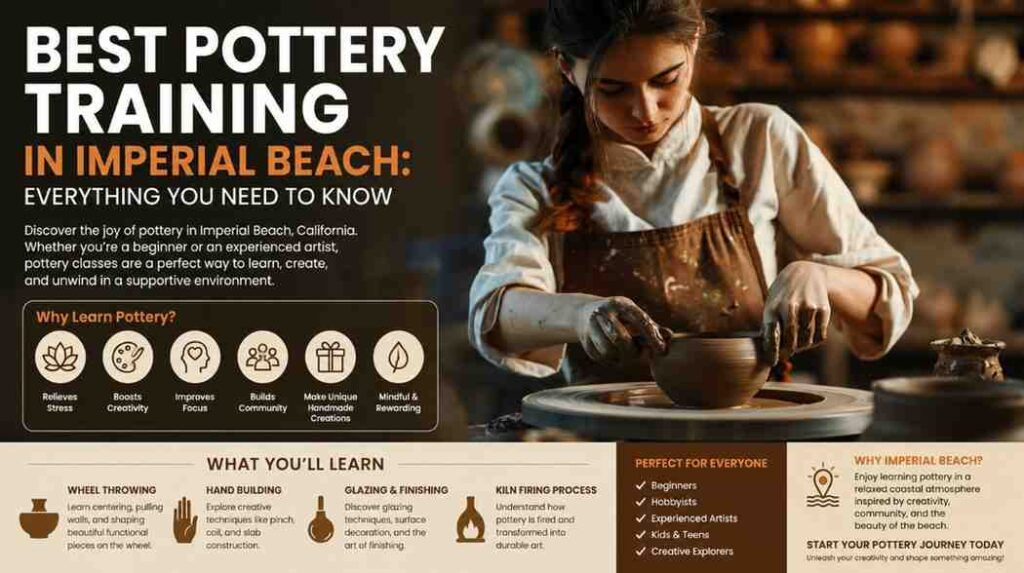
Pottery is more than shaping clay—it’s a creative journey that combines art, patience, craftsmanship, and self-expression. Whether you’re looking for a relaxing hobby, hoping to improve your artistic skills, or dreaming of becoming a ceramic artist, enrolling in a pottery class is one of the best ways to begin.
Imperial Beach, California, offers a welcoming environment for artists of all experience levels. Located near San Diego’s vibrant creative community, the city has become an excellent destination for pottery enthusiasts looking for quality instruction and studio access.
At Art Wheel, we believe pottery should be enjoyable, educational, and accessible to everyone. Our hands-on classes are designed to help beginners build confidence while giving experienced artists the opportunity to refine their techniques in a supportive studio environment.
In this guide, we’ll answer some of the most common questions about pottery training, explain what to expect from classes, discuss costs, and help you choose the best pottery training in Imperial Beach.
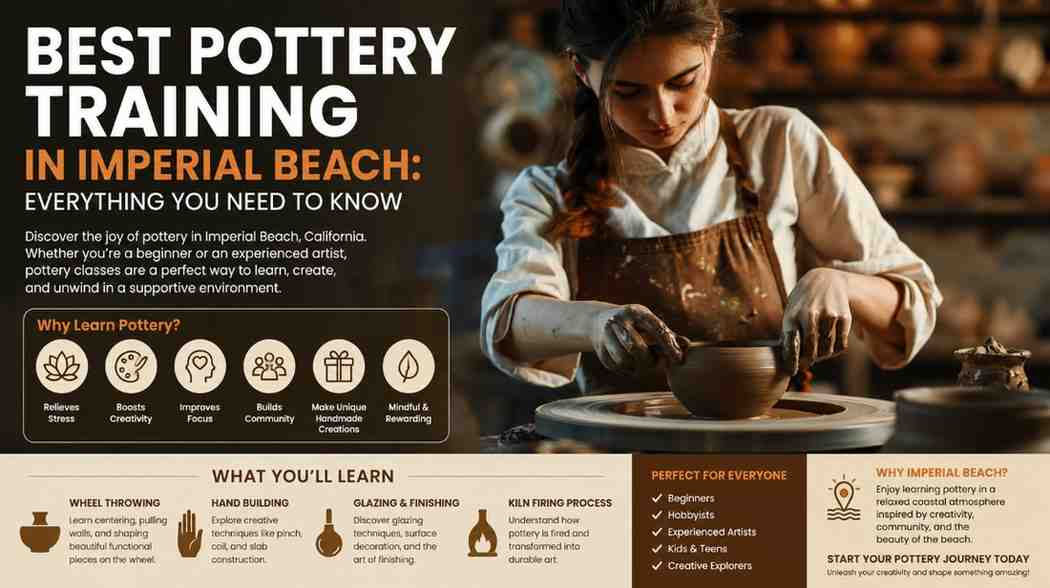
Why Pottery Has Become So Popular
Over the past several years, pottery has experienced tremendous growth in popularity. Social media, wellness trends, and the desire for creative hobbies have inspired thousands of people to discover ceramics.
Unlike many hobbies that involve screens, pottery encourages people to slow down, focus, and work with their hands. Every piece is unique, making the process both rewarding and therapeutic.
People choose pottery for many reasons:
- Stress relief
- Creative expression
- Handmade home décor
- Personalized gifts
- Building artistic skills
- Meeting new people
- Mindfulness and relaxation
- Professional ceramic careers
Whether you’re creating your first mug or learning advanced wheel throwing, pottery offers lifelong opportunities for creativity.
Why Choose Pottery Training in Imperial Beach?
Imperial Beach provides an ideal setting for learning pottery. The coastal atmosphere, thriving arts community, and easy access to nearby San Diego make it a great location for creative learning.
Benefits of learning pottery in Imperial Beach include:
- Relaxed learning environment
- Professional instructors
- Access to pottery wheels and kilns
- Small class sizes
- Community workshops
- Beginner-friendly programs
- Beautiful coastal inspiration
Many students find that learning pottery near the beach provides a calming environment that enhances creativity.
Best Pottery Training in Imperial Beach
Choosing the right pottery studio can make a significant difference in your learning experience.
At Art Wheel, students receive personalized instruction designed for every skill level.
Our pottery training focuses on:
Beginner-Friendly Classes
No prior experience is required.
Students learn:
- Understanding different clay types
- Preparing clay
- Centering on the pottery wheel
- Basic wheel throwing
- Hand-building techniques
- Drying and trimming
- Glazing basics
- Kiln firing process
Every lesson builds confidence while allowing students to create functional ceramic pieces.
Intermediate Pottery Training
Once students become comfortable with the basics, they can begin learning more advanced techniques such as:
- Taller cylinders
- Bowls
- Plates
- Pitchers
- Lidded containers
- Surface decoration
- Texture techniques
- Colored slips
- Underglazes
Students gradually improve consistency, precision, and artistic creativity.
Advanced Ceramic Workshops
Experienced potters can continue developing skills through specialized workshops covering:
- Large vessel construction
- Sculptural ceramics
- Advanced glazing
- Porcelain techniques
- Production pottery
- Custom finishing methods
These sessions help artists push their creative boundaries.
Best Pottery Training in Imperial Beach Near Me
When searching online for:
“Best pottery training in Imperial Beach near me”
consider more than just location.
A quality pottery studio should provide:
Experienced Instructors
Learning directly from experienced ceramic artists accelerates progress and builds proper techniques from the beginning.
Modern Equipment
Professional studios should include:
- Pottery wheels
- Kilns
- Hand-building tools
- Worktables
- Glazing stations
- Quality clay materials
Small Class Sizes
Smaller groups allow instructors to provide personalized guidance.
Flexible Scheduling
Many students appreciate evening and weekend classes that fit around work or school commitments.
Creative Community
One of the greatest benefits of pottery is joining a community of artists who encourage and inspire one another.
Art Wheel combines all of these elements into one welcoming learning environment.
Best Pottery Training in Imperial Beach, California
California has a rich tradition of ceramic arts, and Imperial Beach is no exception.
Students often choose local pottery classes because they offer:
- Hands-on instruction
- Access to professional equipment
- Structured learning
- Studio memberships
- Community events
- Open studio hours
- Seasonal workshops
Instead of learning through trial and error at home, professional instruction helps students build strong foundational skills much faster.
Top Rated Pottery Classes in San Diego
The greater San Diego area offers a variety of pottery programs for beginners and experienced artists.
Top-rated pottery studios typically provide:
- Wheel throwing
- Hand building
- Glazing instruction
- Open studio access
- Children’s pottery classes
- Private lessons
- Group workshops
- Team-building events
When comparing pottery studios, look beyond pricing. Consider:
- Instructor experience
- Student reviews
- Studio cleanliness
- Equipment quality
- Class structure
- Project variety
- Overall learning environment
A supportive instructor often makes the biggest difference in a student’s experience.
Pottery Classes in Encinitas
Encinitas has also become a popular destination for ceramic arts.
Students living in North County San Diego often explore pottery classes in Encinitas because of the area’s active art community.
Whether you choose classes in Encinitas or Imperial Beach, the most important factors remain:
- Instructor quality
- Studio environment
- Equipment
- Learning pace
- Creative support
Many students even explore workshops across different studios to experience various teaching styles and ceramic techniques.
How Much Do Pottery Classes Usually Cost?
One of the most common questions beginners ask is about pricing.
The cost of pottery classes varies depending on several factors.
These include:
- Studio reputation
- Class length
- Instructor experience
- Materials included
- Kiln firing
- Glazing supplies
- Studio access
- Location
Typical Pricing
While prices vary, many pottery studios offer:
Single introductory classes
Ideal for beginners wanting to experience wheel throwing before committing.
Multi-week courses
These provide structured learning and better value over several sessions.
Studio memberships
Perfect for students who want ongoing access to equipment and open studio hours.
Some classes include clay, glazing, and firing costs, while others charge separately. Always review what is included before enrolling.
Where Can I Learn How to Do Pottery Near Me?
If you’re searching:
“Where can I learn pottery near me?”
consider these options:
Local Pottery Studios
The best choice for structured instruction and professional equipment.
Community Art Centers
Many cities offer affordable ceramics classes.
Colleges
Some colleges provide continuing education ceramic programs.
Private Workshops
Excellent for personalized instruction.
Art Wheel
Art Wheel offers beginner-friendly and advanced pottery training designed to help students grow at their own pace in a welcoming creative environment.
What Is the Best Way to Learn Pottery?
There are many ways to begin learning ceramics, but some methods are more effective than others.
Learn From Experienced Instructors
Professional guidance helps students avoid common mistakes and build proper techniques from day one.
Practice Consistently
Pottery improves through repetition.
Even experienced ceramic artists continue refining:
- Centering
- Pulling walls
- Shaping
- Trimming
- Glazing
Every project teaches something new.
Start With Simple Projects
Instead of attempting complex sculptures immediately, begin with:
- Cups
- Bowls
- Plates
- Small vases
Mastering the basics builds confidence.
Study Different Techniques
Pottery includes many styles:
- Wheel throwing
- Hand building
- Slab construction
- Coil building
- Sculptural ceramics
- Surface decoration
Exploring different techniques helps students discover their artistic preferences.
Join a Creative Community
Learning alongside other artists provides encouragement, inspiration, and valuable feedback.
Many lifelong friendships begin inside pottery studios.
Where to Learn Pottery in NYC?
Although this guide focuses on Southern California, many readers also search for pottery opportunities in New York City.
NYC offers numerous pottery studios featuring:
- Wheel throwing
- Ceramic sculpture
- Beginner workshops
- Membership studios
- Professional artist programs
The same advice applies regardless of location:
Choose a studio that offers experienced instructors, supportive learning, quality equipment, and opportunities to practice regularly.
Why Choose Art Wheel?
At Art Wheel, our goal is to make pottery enjoyable for everyone, whether you’re touching clay for the first time or expanding years of experience.
Our students benefit from:
Professional Instruction
Experienced instructors provide personalized guidance throughout every class.
Hands-On Learning
Students spend more time creating and less time watching demonstrations.
High-Quality Equipment
Our studio includes professional pottery wheels, kilns, glazing materials, and ceramic tools.
Welcoming Environment
We believe creativity grows best in a supportive and encouraging community.
Classes for Every Skill Level
From complete beginners to advanced ceramic artists, our programs are designed to help every student continue growing.
Pottery Learning Comparison
| Learning Method | Pros | Cons |
| YouTube Tutorials | Free, flexible schedule | No hands-on feedback, limited guidance |
| DIY Home Pottery | Learn at your own pace | High equipment costs, no kiln access |
| Community Workshops | Affordable introduction | Limited project variety and availability |
| Art Wheel Pottery Training | Professional instruction, studio equipment, structured lessons, creative community | Requires scheduled class attendance |
Tips Before Your First Pottery Class
To get the most out of your first session:
- Wear comfortable clothes that can get dusty.
- Keep your fingernails trimmed for easier wheel work.
- Bring an apron if your studio recommends one.
- Arrive a little early to get familiar with the workspace.
- Don’t worry about perfection—every potter starts with the basics.
- Ask questions and enjoy the creative process.
Conclusion
Learning pottery is one of the most rewarding creative experiences you can pursue. It combines artistic expression, technical skill, mindfulness, and community in a way few hobbies can match.
Whether you’re searching for the best pottery training in Imperial Beach, exploring top-rated pottery classes in San Diego, comparing pottery classes in Encinitas, or simply wondering where to learn pottery near you, choosing a studio with experienced instructors and a welcoming environment is the key to success.
At Art Wheel, we’re passionate about helping students discover the joy of ceramics through hands-on learning, expert instruction, and a supportive creative community. From your very first bowl to advanced wheel-thrown pieces, every class is an opportunity to build confidence, develop new skills, and create something truly unique.
Frequently Asked Questions (FAQs)
How much do pottery classes usually cost?
Costs vary by studio, class length, and what’s included. Introductory sessions are generally less expensive than multi-week courses, while memberships offer ongoing studio access.
Where can I learn how to do pottery near me?
You can learn pottery at dedicated ceramic studios like Art Wheel, community art centers, colleges, and private workshops that offer beginner-friendly instruction.
What is the best way to learn pottery?
The most effective approach is to take hands-on classes with experienced instructors, practice regularly, start with simple projects, and gradually learn advanced techniques.
Are pottery classes suitable for beginners?
Yes. Most studios, including Art Wheel, offer beginner classes that require no previous experience and teach the fundamentals step by step.
What’s the difference between wheel throwing and hand building?
Wheel throwing uses a pottery wheel to create symmetrical pieces such as bowls and mugs, while hand building involves shaping clay by hand using slab, coil, or pinch techniques.
How long does it take to learn pottery?
Most beginners become comfortable with basic wheel throwing after several weeks of consistent practice, while mastering advanced techniques can take months or years.