
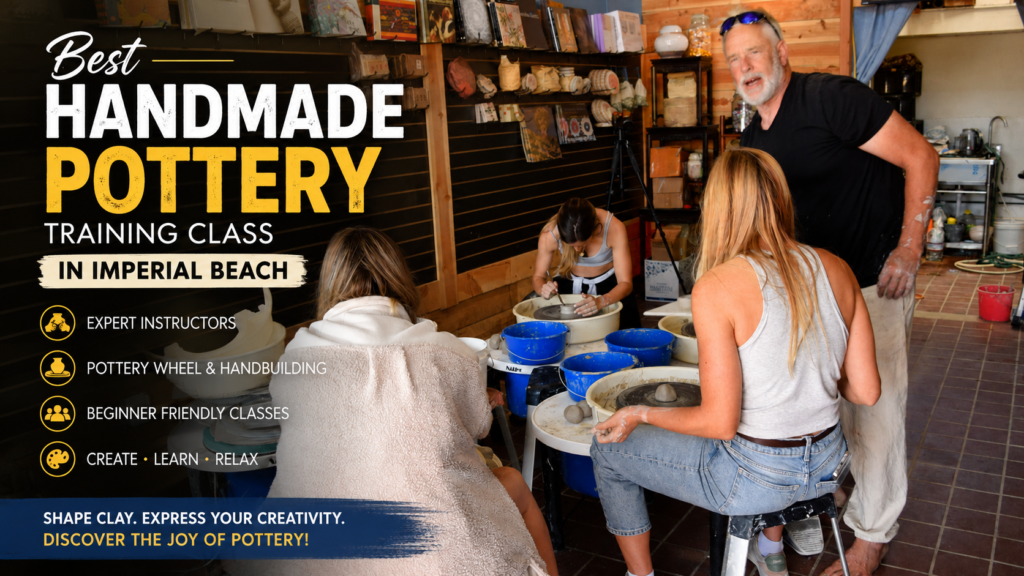
Pottery is more than just shaping clay—it’s a creative experience that helps you relax, develop new skills, and create something meaningful with your own hands. Whether you’ve never touched clay before or want to improve your techniques, joining a pottery class is one of the best ways to begin.
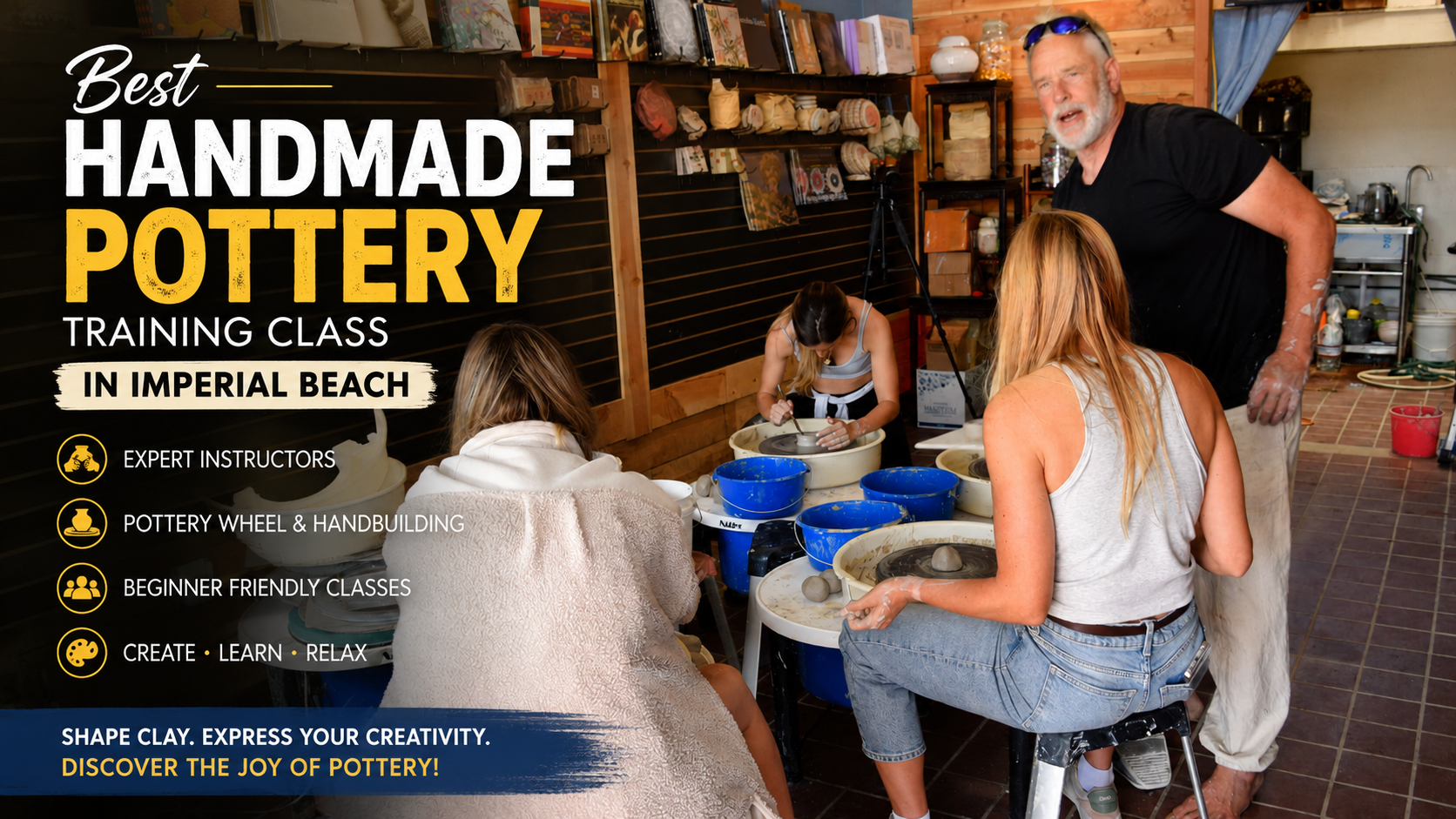
If you’re searching for the best handmade pottery training class in Imperial Beach, you’ll find several opportunities to learn. However, choosing a studio that offers beginner-friendly instruction, experienced teachers, and a welcoming environment can make all the difference. Art Wheel Studio is one such option, offering guided pottery wheel and handbuilding experiences for beginners in Imperial Beach.
In this guide, you’ll learn about pottery classes in Imperial Beach and San Diego, private pottery lessons, beginner ceramics, class costs, and practical tips to help you start your pottery journey with confidence.
Why Learn Pottery?
Learning pottery offers much more than creating bowls or mugs. It combines creativity, focus, and hands-on craftsmanship in a way that many people find both enjoyable and relaxing.
Many beginners choose pottery because it helps them:
- Reduce stress
- Improve creativity
- Build patience
- Learn practical artistic skills
- Create handmade gifts
- Meet people with similar interests
- Develop confidence through art
Additionally, pottery encourages mindfulness because each project requires attention, balance, and careful shaping.
Why Choose a Handmade Pottery Training Class?
Handmade pottery allows you to experience every step of the creative process.
Instead of relying on machines, you shape each piece yourself. As a result, every mug, bowl, vase, or sculpture becomes completely unique.
A quality handmade pottery class teaches you:
- Clay preparation
- Handbuilding techniques
- Pottery wheel basics
- Trimming and finishing
- Glazing methods
- Kiln firing process
These skills provide a strong foundation for future ceramic projects.
Best Handmade Pottery Training Class in Imperial Beach
Imperial Beach has become a growing destination for creative workshops and pottery experiences.
If you’re looking for a beginner-friendly studio, choose one that offers:
Experienced Instructors
Learning becomes much easier when instructors explain every step clearly and provide individual guidance.
Small Class Sizes
Smaller groups allow instructors to spend more time helping each student improve.
Beginner-Friendly Environment
The best classes welcome students with no previous pottery experience.
Complete Materials
Many studios include clay, pottery tools, glazing, and kiln firing in the class experience.
Art Wheel Studio offers beginner pottery wheel and handbuilding sessions designed to help students create their first ceramic pieces in a relaxed, creative setting. Art Wheel Studio
Top Rated Pottery Classes in San Diego
San Diego offers a wide variety of pottery classes for beginners, hobbyists, and experienced ceramic artists.
Popular class options include:
- Beginner pottery workshops
- Pottery wheel classes
- Handbuilding workshops
- Open studio memberships
- Private pottery lessons
- Family pottery experiences
Because San Diego has a thriving arts community, students can continue learning as their skills develop.
Private Pottery Classes Near Me
Some students prefer one-on-one instruction.
Private pottery classes offer several advantages.
Personalized Learning
Your instructor focuses entirely on your goals and learning pace.
Flexible Scheduling
Private lessons often allow more flexible dates and times than group classes.
Faster Progress
With individual feedback, many students learn pottery techniques more quickly.
Private classes are an excellent choice for beginners who want additional confidence before joining larger workshops.
Pottery Wheel Class in San Diego
Pottery wheel throwing remains one of the most popular ceramic experiences.
During a beginner pottery wheel class, you’ll typically learn how to:
- Prepare clay
- Center the clay
- Open the clay
- Pull the walls
- Shape bowls and cups
- Trim finished pieces
- Apply glaze
Although wheel throwing takes practice, beginners often create their first small bowl or cup during their first class with guidance from an instructor.
Adult Pottery Classes in San Diego
Pottery isn’t just for professional artists.
Many adults enroll simply to:
- Learn a new hobby
- Relax after work
- Spend quality time with friends
- Celebrate birthdays
- Enjoy creative weekends
Adult pottery classes usually focus on learning in a supportive environment rather than achieving perfection.
As a result, students of all experience levels feel comfortable participating.
Ceramics Beginner Class
If you’re completely new to pottery, a beginner ceramics class is the best place to start.
These classes usually introduce:
Clay Basics
Learn about different clay types and how to prepare them properly.
Handbuilding
Create pottery using pinch, coil, and slab techniques.
Pottery Wheel
Practice shaping clay on a spinning wheel with instructor guidance.
Glazing
Discover how different glazes create color and texture.
Firing
Understand how pottery becomes durable inside a kiln.
By learning these fundamentals first, you’ll build confidence before moving on to more advanced techniques.
Where Is the Best Place to Learn Pottery?
The best pottery studio isn’t always the biggest one.
Instead, choose a studio that offers:
- Friendly instructors
- Small class sizes
- Beginner programs
- Quality equipment
- Clean workspace
- Positive student reviews
- Flexible scheduling
Many beginners also appreciate studios that encourage creativity rather than perfection.
What’s the Average Cost of a Pottery Class?
The price of pottery classes depends on several factors.
These include:
- Class length
- Group or private lessons
- Included materials
- Kiln firing
- Studio location
Generally, beginner workshops cost less than long-term pottery courses, while private lessons cost more because they provide individual instruction.
Before enrolling, check whether the class includes:
- Clay
- Studio tools
- Glazing
- Firing
- Finished pottery pickup
Knowing what’s included helps you compare overall value rather than price alone.
What Is the Most Sought-After Pottery?
Many ceramic artists eventually create pieces that are both beautiful and functional.
Popular handmade pottery includes:
- Coffee mugs
- Dinner bowls
- Serving plates
- Tea sets
- Planters
- Decorative vases
- Handmade sculptures
- Ceramic home décor
Handmade mugs and bowls remain among the most popular choices because people enjoy using unique, handcrafted items every day.
How Can I Learn Pottery for Free?
Although most structured classes charge a fee, there are several affordable ways to begin learning pottery.
You can:
- Watch beginner pottery tutorials
- Read pottery blogs
- Join local pottery communities
- Attend studio demonstrations
- Visit art museums
- Practice sketching pottery designs
- Volunteer at community art events
However, hands-on instruction from experienced teachers usually helps beginners learn faster while avoiding common mistakes.
Tips for Choosing the Right Pottery Class
Before registering, compare several options.
Consider these important factors:
Instructor Experience
Experienced instructors explain techniques clearly and encourage beginners.
Class Size
Smaller classes provide more personal attention.
Course Content
Look for classes that include wheel throwing, handbuilding, glazing, and firing.
Studio Atmosphere
A welcoming environment makes learning more enjoyable.
Student Reviews
Positive reviews often reflect consistent teaching quality and customer satisfaction.
What Should You Bring to Your First Pottery Class?
Most beginner pottery studios provide the necessary equipment.
However, you may want to bring:
- Comfortable clothes
- Closed-toe shoes
- Small towel
- Water bottle
- Notebook for tips
- Positive attitude
Most importantly, don’t worry about making mistakes. Every experienced potter started as a beginner.
Why Choose Art Wheel?
Art Wheel offers beginner-friendly pottery experiences designed to help students learn in a relaxed and supportive environment.
Students can enjoy:
- Pottery wheel classes
- Handbuilding workshops
- Private pottery experiences
- Adult pottery classes
- Small group instruction
- Creative studio atmosphere
- Guidance from experienced instructors
Whether your goal is learning a new hobby or developing long-term ceramic skills, Art Wheel provides a welcoming place to begin your pottery journey. Art Wheel Studio
Frequently Asked Questions
Where is the best place to learn pottery?
Look for a studio with experienced instructors, beginner-friendly classes, quality equipment, and positive student reviews. A supportive learning environment is just as important as the facilities.
What’s the average cost of a pottery class?
Costs vary based on class length, location, and whether materials are included. Single workshops are generally less expensive than multi-week courses, while private lessons typically cost more than group sessions.
What is the most sought-after pottery?
Handmade mugs, bowls, serving dishes, tea sets, decorative vases, and planters remain some of the most popular pottery items because they combine beauty with everyday functionality.
How can I learn pottery for free?
You can start by watching instructional videos, reading beginner guides, attending community art events, and visiting local studios for demonstrations. Once you’re comfortable with the basics, enrolling in a beginner class provides valuable hands-on experience.
Are pottery classes suitable for complete beginners?
Yes. Most beginner pottery classes require no previous experience and teach every step, from preparing clay to glazing and firing finished pieces.
Is handbuilding easier than wheel throwing?
Yes. Many beginners find handbuilding easier because it doesn’t require balancing clay on a spinning wheel. It also allows more creative freedom while teaching the fundamentals of working with clay.