
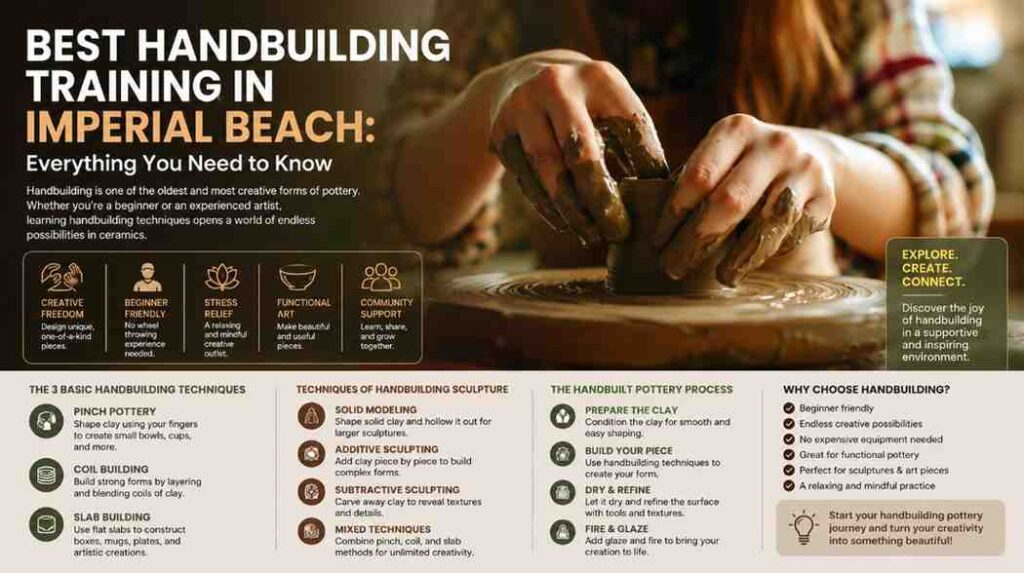
Handbuilding is one of the oldest and most expressive forms of pottery. Long before the invention of the pottery wheel, artists around the world created beautiful bowls, sculptures, decorative pieces, and functional pottery entirely by hand. Today, handbuilding remains one of the most popular ceramic techniques because it offers unlimited creative possibilities and is accessible to beginners and experienced artists alike.
Whether you want to create personalized home décor, handmade gifts, artistic sculptures, or simply enjoy a relaxing creative hobby, handbuilding is an excellent place to start.
If you’re looking for the best handbuilding training in Imperial Beach, this guide covers everything you need to know—from beginner classes and techniques to costs, local ceramic communities, and why Art Wheel is a trusted destination for hands-on pottery education.
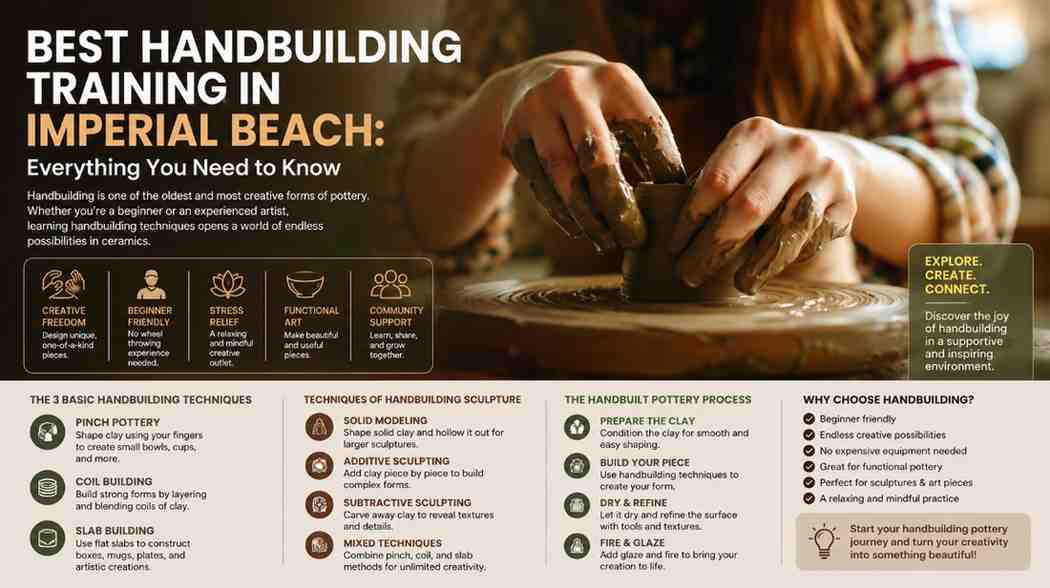
What Is Handbuilding in Pottery?
Handbuilding is the process of creating ceramic pieces without using a pottery wheel. Instead of spinning clay, artists shape it using their hands and simple tools.
Because it doesn’t require mastering wheel throwing, handbuilding is often the easiest way for beginners to learn pottery.
Handbuilding allows artists to create:
- Bowls
- Plates
- Cups
- Vases
- Sculptures
- Decorative art
- Garden pottery
- Jewelry dishes
- Wall art
- Custom ceramic pieces
Each project is unique, giving students complete creative freedom.
Why Learn Handbuilding?
Handbuilding combines creativity with mindfulness.
Many students choose handbuilding because it offers:
Creative Freedom
Unlike wheel throwing, handbuilding isn’t limited by circular shapes.
You can create:
- Organic forms
- Geometric designs
- Sculptures
- Animal figures
- Abstract art
- Decorative home accessories
Beginner-Friendly Learning
No previous pottery experience is required.
Students quickly learn:
- Clay preparation
- Basic construction
- Surface decoration
- Texture techniques
- Drying methods
- Glazing
This makes handbuilding one of the most approachable forms of ceramics.
Stress Relief
Working with clay encourages focus and relaxation.
Many students describe pottery as a creative form of meditation that helps reduce stress while improving concentration.
Functional Artwork
Students create pieces they can actually use, including:
- Coffee mugs
- Serving bowls
- Planters
- Soap dishes
- Candle holders
- Decorative trays
Every finished piece becomes a lasting reminder of their creativity.
Best Handbuilding Training in Imperial Beach
Imperial Beach has become a wonderful destination for ceramic artists thanks to its relaxed coastal atmosphere and growing creative community.
At Art Wheel, our handbuilding classes are designed for every skill level.
Students receive guided instruction in:
- Clay preparation
- Pinch pottery
- Coil construction
- Slab building
- Sculptural techniques
- Texture creation
- Surface decoration
- Glazing
- Kiln firing
Whether you’re taking your first pottery class or expanding your ceramic skills, our instructors provide personalized guidance throughout every session.
Free Handbuilding Training in Imperial Beach
Many people search for free handbuilding training in Imperial Beach when they’re exploring pottery for the first time.
While full pottery courses usually require tuition to cover materials, kiln firing, studio equipment, and instructor time, there are several ways to experience handbuilding at a lower cost:
- Community art demonstrations
- Library creative workshops
- Local art festivals
- Introductory studio events
- School or nonprofit art programs
- Promotional beginner sessions
These opportunities are great for trying ceramics before enrolling in a comprehensive training program.
For students who want structured instruction and access to professional equipment, enrolling in a dedicated pottery studio provides the most complete learning experience.
Best Handbuilding Training in Imperial Beach
Choosing the right pottery studio can significantly improve your learning experience.
Look for a studio that offers:
Experienced Ceramic Instructors
Learning proper techniques from skilled artists helps students avoid common mistakes and develop confidence more quickly.
Small Class Sizes
Personalized instruction allows students to receive feedback throughout each project.
Professional Equipment
A quality ceramic studio should provide:
- Premium clay
- Pottery tools
- Texture rollers
- Slab rollers
- Worktables
- Kilns
- Glazing supplies
Creative Environment
A welcoming atmosphere encourages experimentation and artistic growth.
At Art Wheel, we strive to create a supportive community where students can explore their creativity while learning professional ceramic techniques.
San Diego Ceramic Classes
The San Diego area is home to a thriving ceramics community.
Students throughout Southern California enjoy access to:
- Beginner pottery classes
- Handbuilding workshops
- Wheel throwing courses
- Glazing seminars
- Ceramic sculpture programs
- Family pottery events
- Open studio memberships
Imperial Beach offers the added benefit of a quieter, more relaxed setting while remaining close to San Diego’s larger arts community.
Clay Society Pottery Classes
Many ceramic enthusiasts also search for Clay Society pottery classes when exploring learning opportunities.
Whether you’re joining a local pottery society, community studio, or private ceramics workshop, the most important factors include:
- Qualified instructors
- Structured lessons
- Hands-on practice
- Access to quality equipment
- Creative community
- Opportunities to continue learning
Consistent practice and supportive instruction are the keys to long-term success in ceramics.
What Are the Three Handbuilding Techniques in Ceramics?
The foundation of handbuilding consists of three classic techniques.
1. Pinch Pot Technique
Pinch pottery is often the first technique beginners learn.
Students begin with a ball of clay and gently pinch it into shape using their fingers.
Common projects include:
- Small bowls
- Cups
- Planters
- Decorative dishes
Although simple, pinch pots teach valuable lessons about wall thickness, balance, and form.
2. Coil Building
Coil building involves rolling long ropes of clay and stacking them to create larger forms.
Artists use coils to build:
- Vases
- Large bowls
- Sculptures
- Decorative vessels
The coils are blended together to create smooth, durable walls.
This technique allows for taller and more complex designs.
3. Slab Building
Slab building uses flat sheets of clay cut into different shapes.
Students assemble slabs to create:
- Boxes
- Mugs
- Plates
- Houses
- Wall art
- Modern sculptures
Slab construction offers exceptional precision and geometric possibilities.
What Are the California Pottery Brands?
California has a rich history of ceramic production and artistic pottery.
Some well-known California pottery brands include:
- Heath Ceramics
- Bauer Pottery
- Catalina Pottery
- Vernon Kilns
- Metlox Pottery
- Gladding McBean
- Pacific Pottery
- Brayton Laguna Pottery
These brands helped shape California’s reputation as one of America’s leading centers for ceramic art and design.
Studying their work can inspire students to explore different glazing styles, forms, and decorative techniques.
What Are the Techniques of Handbuilding Sculpture?
Ceramic sculpture combines traditional handbuilding with artistic creativity.
Common sculpture techniques include:
Solid Modeling
Artists sculpt directly from solid clay before hollowing larger pieces to reduce stress during firing.
Hollow Construction
Large sculptures are often built hollow to improve drying and firing performance.
Additive Sculpting
Clay is added piece by piece to build complex forms.
This method is common for figurative sculptures.
Subtractive Sculpting
Artists carve away clay to reveal the final design.
This technique creates texture, depth, and fine details.
Mixed Handbuilding
Many ceramic artists combine pinch, coil, and slab methods in a single sculpture.
This approach provides maximum creative flexibility.
What Is the Technique of Handbuilt Pottery?
Handbuilt pottery refers to creating ceramic objects entirely by hand without a pottery wheel.
The process typically includes:
Preparing the Clay
Removing air bubbles and conditioning the clay.
Building the Form
Using pinch, coil, slab, or combined techniques.
Refining the Surface
Smoothing, carving, or adding textures.
Drying
Allowing pieces to dry evenly before firing.
Bisque Firing
The first kiln firing strengthens the clay.
Glazing
Applying decorative finishes and protective coatings.
Final Firing
The second firing completes the ceramic piece.
Each stage contributes to the beauty and durability of the finished artwork.
Why Choose Art Wheel for Handbuilding Training?
At Art Wheel, we believe every student should feel inspired to create.
Our ceramic programs offer:
Experienced Instructors
Learn from skilled ceramic artists who provide personalized guidance.
Hands-On Learning
Spend more time creating and less time watching demonstrations.
Professional Studio
Students have access to quality clay, tools, kilns, and glazing materials.
Creative Community
Join fellow artists in a welcoming and encouraging environment.
Flexible Programs
Whether you’re exploring ceramics for fun or pursuing advanced artistic skills, we offer classes suited to every experience level.
Comparison: Learning Handbuilding at Home vs. Professional Studio
| Learning Method | Advantages | Limitations |
| Online Videos | Free and convenient | No instructor feedback or kiln access |
| DIY at Home | Flexible schedule | Requires buying tools, clay, and firing solutions |
| Community Workshops | Affordable introduction | Limited class availability and project scope |
| Art Wheel Handbuilding Classes | Expert instruction, professional equipment, structured learning, creative community | Requires scheduled attendance |
Tips for Your First Handbuilding Class
Before your first session:
- Wear comfortable clothes that can get messy.
- Keep your nails trimmed for easier clay shaping.
- Stay hydrated during longer workshops.
- Be patient with yourself—every artist starts somewhere.
- Focus on enjoying the process rather than achieving perfection.
- Ask questions and experiment with different techniques.
Frequently Asked Questions (FAQs)
What are the three handbuilding techniques in ceramics?
The three primary handbuilding techniques are pinch pottery, coil building, and slab building. These methods form the foundation of most handbuilt ceramic projects.
Is handbuilding easier than wheel throwing?
Yes. Many beginners find handbuilding easier because it doesn’t require balancing clay on a spinning wheel and offers more flexibility in shaping designs.
How long does it take to learn handbuilding?
Most students can learn the basics within a few classes, while developing advanced techniques and artistic confidence takes regular practice over several months.
Are handbuilding classes suitable for beginners?
Absolutely. Handbuilding is one of the best ways for beginners to start learning pottery because it requires no prior experience.
Can I make functional pottery using handbuilding techniques?
Yes. Handbuilding can be used to create mugs, bowls, plates, planters, trays, vases, and many other functional ceramic items.
Do I need my own tools for a handbuilding class?
Most professional studios, including Art Wheel, provide the essential tools and materials needed for beginners, making it easy to start without purchasing your own equipment.