
Have you ever wanted to create your own ceramic mug, bowl, or vase using a pottery wheel? A pottery wheel class is a fun way to explore your creativity, learn a new skill, and experience the process of making pottery by hand. Whether you are a complete beginner or have tried working with clay before, a guided class can help you understand the basics and build confidence.
If you are searching for a pottery wheel class in Imperial Beach, comparing pottery wheel class prices in Imperial Beach, or looking for the best pottery wheel class in Imperial Beach, choosing the right studio is an important first step.
Art Wheel Studio offers pottery experiences for people interested in learning how to work with clay. Located in the Imperial Beach area, the studio provides an opportunity to explore pottery through hands-on instruction.
This guide covers what to expect from a pottery wheel class, how much a class may cost, what affects the price, and how to choose a pottery experience in San Diego.
What Is a Pottery Wheel Class?
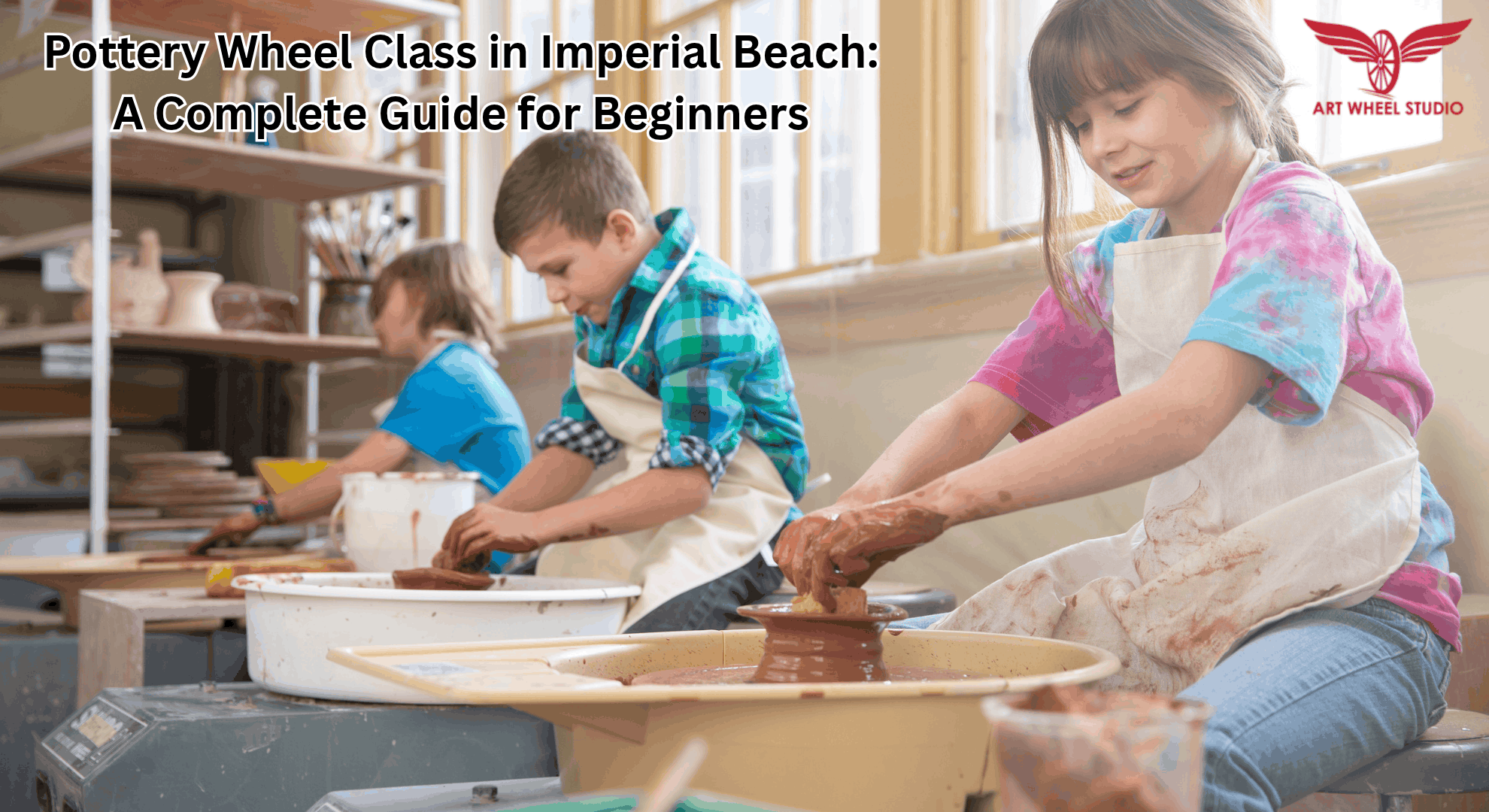
A pottery wheel class teaches you how to shape clay using a spinning pottery wheel. As the wheel turns, you use your hands to form the clay into different shapes.
This technique is commonly used to make:
- Ceramic bowls
- Coffee mugs
- Drinking cups
- Small plates
- Decorative vases
- Planters and other ceramic pieces
During a beginner class, an instructor usually demonstrates the basic steps before you try them yourself. You learn how to prepare the clay, center it on the wheel, open the middle, and shape the sides.
Pottery wheel throwing takes practice. At first, the clay may move out of shape or become uneven. However, with guidance and patience, you can begin to understand how your hands control the final design.
A pottery wheel class is not only about making an object. It is also about enjoying the creative process and learning something new.
Why Try a Pottery Wheel Class in Imperial Beach?
Imperial Beach offers opportunities to enjoy creative activities and explore local art experiences. If you are looking for something different to do, a pottery wheel class can be a rewarding choice.
Instead of spending your free time on another routine activity, you can work with clay and create something with your own hands.
Here are a few reasons to consider taking a pottery class.
1. Learn a New Creative Skill
Pottery introduces you to a different form of art. You learn how to control clay, understand its texture, and shape it into useful or decorative objects.
You do not need drawing or painting experience to begin. Most beginner sessions focus on simple techniques that anyone can try with proper instruction.
2. Enjoy a Hands-On Experience
Watching pottery videos can be interesting, but working with clay yourself is a different experience. You can feel the material, test different movements, and see how the shape changes as the wheel spins.
A guided class gives you time to practice instead of only watching someone else demonstrate the process.
3. Take a Break From Your Daily Routine
Pottery requires attention and patience. As you work with the clay, you naturally focus on the task in front of you.
This can make pottery a relaxing way to spend time, enjoy a creative break, and try something outside your usual routine.
4. Create Something Personal
One of the best parts of pottery is making an object that reflects your own ideas. Even if you follow the same basic steps as other students, your finished piece may have a different shape or design.
A handmade ceramic item can become a personal keepsake or a thoughtful gift.
What Happens During a Beginner Pottery Wheel Class?
If you have never used a pottery wheel, you may wonder what happens during your first session. While each studio has its own teaching style, a beginner class generally covers several basic steps.
Step 1: Get Familiar With the Clay and Equipment
The instructor introduces you to the clay, pottery wheel, and tools used during the session.
You learn how to prepare the clay and why it needs the right consistency before shaping begins.
Step 2: Center the Clay
Centering is one of the most important pottery wheel techniques. You place the clay in the middle of the spinning wheel and use your hands to make it stable.
This step can be difficult for beginners because the clay may move as the wheel spins. An instructor can demonstrate how to apply steady pressure and control the movement.
Step 3: Open the Clay
Once the clay is centered, you press into the middle to create an opening. This creates the base of your pottery piece.
The opening needs to be deep enough to form the inside of the object without making the bottom too thin.
Step 4: Shape the Walls
Next, you use your fingers and hands to pull the clay upward. This creates the walls of your bowl, cup, or other ceramic form.
You gradually adjust the shape while keeping the clay balanced on the wheel.
Step 5: Refine the Shape
After forming the basic structure, you can smooth the surface and make small adjustments.
The final shape depends on your technique, the amount of clay, and the design you want to create.
Step 6: Drying, Firing, and Glazing
A pottery piece usually needs more work after it is shaped. Depending on the class, the studio may handle drying, trimming, kiln firing, and glazing.
Ask the studio whether these steps are included in your session and when you can expect to collect your finished piece.
Pottery Wheel Class in Imperial Beach Price: What Should You Expect?
One of the common questions people ask before booking is: How much does a pottery wheel class in Imperial Beach cost?
The price depends on the studio, class length, materials, instructor support, and what is included in the experience. There is no single price that applies to every pottery class.
Instead of comparing prices alone, it helps to understand what you receive for the fee.
Factors That Affect Pottery Class Prices
Class duration: A longer session may provide more time to practice and learn different techniques.
Clay and materials: Some classes include clay and basic materials in the booking fee, while others may charge separately.
Instructor guidance: A guided session with individual support may have a different price from an open studio session.
Kiln firing and glazing: The cost may depend on whether firing and glazing are included in the class.
Group size: Private lessons and small-group classes may cost more per person than larger group sessions.
Finished pottery: Some classes include one finished piece, while others may have separate charges based on the number or size of items.
What Should Be Included in the Price?
Before booking a pottery wheel class, check whether the listed price includes:
- Access to a pottery wheel
- Clay and basic tools
- Instructor guidance
- Time to practice
- Drying and kiln firing
- Glazing and finishing
- Collection or pickup of the finished piece
These details help you compare classes fairly. A lower advertised price may not include every part of the pottery-making process.
How to Find the Right Class for Your Budget
Start by deciding what kind of experience you want. If you are trying pottery for the first time, a beginner session may be enough.
Next, compare the class duration, included materials, and instructor support. You should also ask about additional charges before making a reservation.
For current class details and pricing, visit Art Wheel Studio or contact the studio directly. Prices and availability can change, so check the latest information before booking.
How to Choose the Best Pottery Wheel Class in Imperial Beach
Searching for the best pottery wheel class in Imperial Beach can bring up different options. However, the right class is not always the one with the lowest price or the most advanced equipment.
A good pottery experience should match your interests, skill level, and expectations.
Here are some points to consider.
Look for Beginner-Friendly Instruction
If you have never used a pottery wheel, choose a class that welcomes beginners.
The instructor should explain the process in simple steps and give you enough time to practice. You should also feel comfortable asking questions when you need help.
Check the Class Duration
Pottery requires time and attention. A session should provide enough time for an introduction, demonstration, and hands-on practice.
Check the class length before booking so you know what to expect.
Understand What Is Included
Review the class description carefully. Check whether clay, tools, firing, glazing, and finished pottery collection are included.
This helps you avoid unexpected costs and understand the full experience.
Read Recent Customer Reviews
Reviews can help you understand what other students think about a studio.
Look for comments about:
- Instructor support
- Class organization
- Studio atmosphere
- Beginner experience
- Quality of instruction
- Overall value
Focus on recent and detailed reviews rather than relying only on star ratings.
Check the Studio’s Class Options
Some people want a one-time pottery experience, while others want to continue learning. A studio with different class formats can give you more ways to explore pottery as your interests grow.
Pottery Wheel Class in San Diego: What Are Your Options?
If you are also searching for a pottery wheel class in San Diego, you may find different types of pottery experiences.
Some classes focus on beginner wheel throwing, while others offer handbuilding, ceramic decoration, or longer learning sessions.
Understanding the differences can help you choose the right activity.
Beginner Pottery Wheel Classes
Beginner classes introduce you to the basic process of shaping clay on a spinning wheel.
You may learn how to center clay, open it, pull the walls, and create a simple form. These classes are a good starting point if you have never worked with a pottery wheel.
Intermediate Pottery Classes
Once you understand the basics, you may want to improve your technique.
Intermediate sessions can focus on better control, consistent shapes, taller forms, and more detailed designs. The class requirements vary, so check whether previous experience is needed.
Private Pottery Lessons
Private lessons provide a more focused learning experience. They may be useful if you prefer individual instruction or want to work on a specific pottery technique.
Ask about lesson length, availability, and what materials are included.
Group Pottery Classes
Group sessions let you learn alongside other people. They can be a good option for friends, couples, or anyone who enjoys a shared creative activity.
You can practice your own work while learning from the instructor and seeing how other students approach the same technique.
Pottery Wheel Classes vs. Handbuilding Classes
Not every pottery class uses a wheel. Handbuilding is another popular way to create ceramic objects.
The main difference is how you shape the clay.
Pottery Wheel
With wheel throwing, you use a spinning wheel to create round and balanced forms.
It is often used for:
- Bowls
- Cups
- Mugs
- Vases
- Plates
This technique requires practice because you need to keep the clay centered while shaping it.
Handbuilding
Handbuilding uses your hands and simple tools instead of a spinning wheel.
Common techniques include pinch pottery, coil building, and slab building. These methods are useful for making both functional and decorative objects.
Handbuilding can also give you more freedom to create unusual shapes and designs.
If you are not sure which technique you prefer, consider trying both. Each offers a different way to understand clay and explore ceramic art.
Is a Pottery Wheel Class Good for Beginners?
Yes. A beginner pottery wheel class can be a good way to learn the basics without needing previous experience.
However, it is important to have realistic expectations. Making a perfect mug or bowl during your first session is not always easy.
You may need time to learn how to:
- Keep your hands steady
- Center the clay
- Control the pressure
- Maintain an even shape
- Avoid making the walls too thin
- Work at a comfortable speed
Mistakes are part of the learning process. The goal of your first class should be to understand the technique and enjoy working with clay.
With practice, you can improve your control and create more consistent ceramic pieces.
What Should You Wear to a Pottery Wheel Class?
Pottery can be messy, especially when you are learning how to shape clay. Wearing comfortable clothes can make the experience easier.
Here are a few simple tips:
- Wear clothes that you do not mind getting dirty.
- Choose comfortable clothing that allows you to move your arms freely.
- Keep your nails short if possible.
- Tie back long hair.
- Wear practical shoes.
- Avoid loose accessories that may get in the way.
Most importantly, follow the studio’s instructions before your session.
Who Can Enjoy Pottery Wheel Classes?
Pottery is an activity that people with different interests and experience levels can enjoy.
Adults: A pottery class can be a creative way to spend free time, learn a new skill, or enjoy a different type of activity.
Beginners: You can start without previous pottery or art experience.
Couples: A shared pottery session can be a fun way to spend time together and create something personal.
Friends: Group classes offer an opportunity to enjoy a creative activity together.
Teens: Pottery can help young people explore artistic ideas and develop hands-on skills, depending on the studio’s age requirements.
Families: Some pottery experiences may be suitable for families. Check the studio’s age rules and class format before booking.
Tips for Getting Better at Pottery Wheel Throwing
Your first pottery class is only the beginning. If you enjoy the experience, you may want to keep practicing and improve your technique.
These tips can help you build a stronger foundation.
Practice Centering First
Centering is the foundation of wheel throwing. If the clay is not centered, shaping the walls becomes more difficult.
Spend time understanding this step before trying to create complex forms.
Use Steady Pressure
Avoid pushing too hard or making sudden movements. Gentle and steady pressure helps you control the clay.
Your instructor can show you how to position your hands and apply pressure correctly.
Keep Your Hands Supported
Stable hand positioning makes it easier to control the shape. Resting your hands against each other or the wheel can help reduce unwanted movement.
Work Slowly
Moving too quickly can cause the clay to lose its shape. Take your time and focus on each stage.
Learn From Each Attempt
Not every piece will turn out as expected. Instead of becoming frustrated, look at what happened and ask how you can improve next time.
Pottery is a skill that develops through regular practice.
Why Choose Art Wheel Studio for a Pottery Experience?
If you are looking for a pottery wheel class in Imperial Beach, Art Wheel Studio is a local option to explore.
The studio focuses on creative pottery experiences where students can work with clay and learn through hands-on activities.
Whether you are a beginner or simply want to try something different, a guided pottery session can introduce you to the basic techniques of wheel throwing.
Before booking, review the available class details and confirm the current schedule, price, materials, and finished-piece arrangements.
You can visit Art Wheel Studio to explore its pottery experiences and learn more about booking a session.
Frequently Asked Questions
How much does a pottery wheel class in Imperial Beach cost?
The price depends on the studio, session length, materials, and instructor guidance. Some classes include clay and tools, while others may charge separately for firing or glazing. Contact the studio for current pricing and details.
Where can I take a pottery wheel class in Imperial Beach?
You can explore pottery experiences at Art Wheel Studio. Visit its website to check current class information, availability, and booking details.
Is a pottery wheel class suitable for beginners?
Yes. Many pottery wheel classes welcome beginners and explain the basic steps. You do not need previous experience to learn how to work with clay.
What will I make during my first pottery wheel class?
Your first project may be a simple bowl, cup, or other basic ceramic form. The final result depends on the class, your progress, and the techniques covered.
How long does a pottery wheel class take?
Class length varies by studio and session type. Check the class description before booking to understand how much time is available for instruction and practice.
Are pottery wheel classes available in San Diego?
Yes. People searching for pottery wheel classes in San Diego can explore local studios and compare beginner sessions, private lessons, and group experiences.
What is the difference between pottery wheel throwing and handbuilding?
Wheel throwing uses a spinning pottery wheel to shape clay into round forms. Handbuilding uses your hands and simple tools to create different shapes without a wheel.
Do pottery classes include clay and tools?
Many beginner classes provide the basic materials and tools needed during the session. However, what is included varies by studio. Confirm these details before booking.
Can I take home the pottery I make?
This depends on the studio’s process. Pottery often needs to dry and go through kiln firing before it is ready. Ask whether your class includes firing, glazing, and collection of the finished piece.
What should I look for when choosing the best pottery wheel class in Imperial Beach?
Consider the instructor’s guidance, class duration, beginner support, materials, reviews, and total price. Also check whether firing and glazing are included.
Start Your Pottery Journey at Art Wheel Studio
Learning pottery is a chance to explore creativity, develop a new skill, and make something with your own hands. Whether you want to try wheel throwing for the first time or continue improving your technique, a guided class can make the experience easier and more enjoyable.
If you are searching for a pottery wheel class in Imperial Beach, comparing pottery wheel class prices in Imperial Beach, or exploring top-rated pottery classes in San Diego, take time to find a session that matches your needs.
Visit Art Wheel Studio to explore available pottery experiences and take your first step toward creating handmade ceramics.