
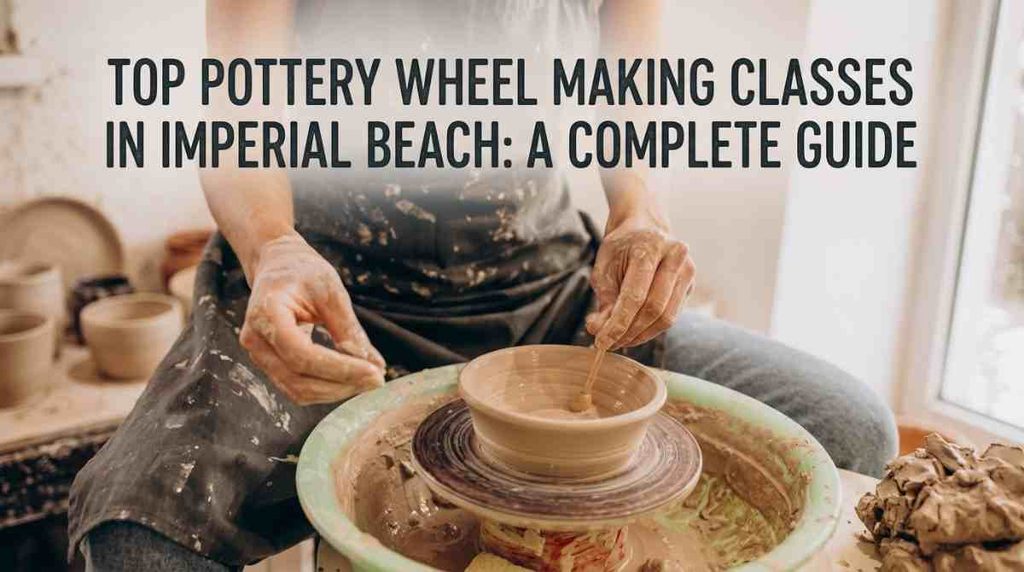
Have you been searching for top pottery wheel making classes in Imperial Beach? Learning to work with clay can be a relaxing way to spend your free time while building a real hands-on skill.
Pottery is more than shaping a piece of wet clay. On a pottery wheel, you learn how to control pressure, balance the clay, guide its shape, and turn a simple lump of clay into something useful. With practice, you can make bowls, cups, vases, planters, and other ceramic pieces.
For people in Imperial Beach and nearby San Diego communities, a local pottery class can also be an easy way to try ceramics without buying expensive equipment for home use.
Art Wheel Studio offers instructor-led pottery experiences that introduce students to wheel throwing and clay forming. Its current pottery experience is designed as a 90-minute guided session, making it an accessible starting point for people who want to try the pottery wheel.
This guide explains what to expect from a pottery wheel class, how to choose a studio, how much a pottery class may cost, how long it takes to learn wheel throwing, and answers common questions that beginners often ask.
What Is Pottery Wheel Making?
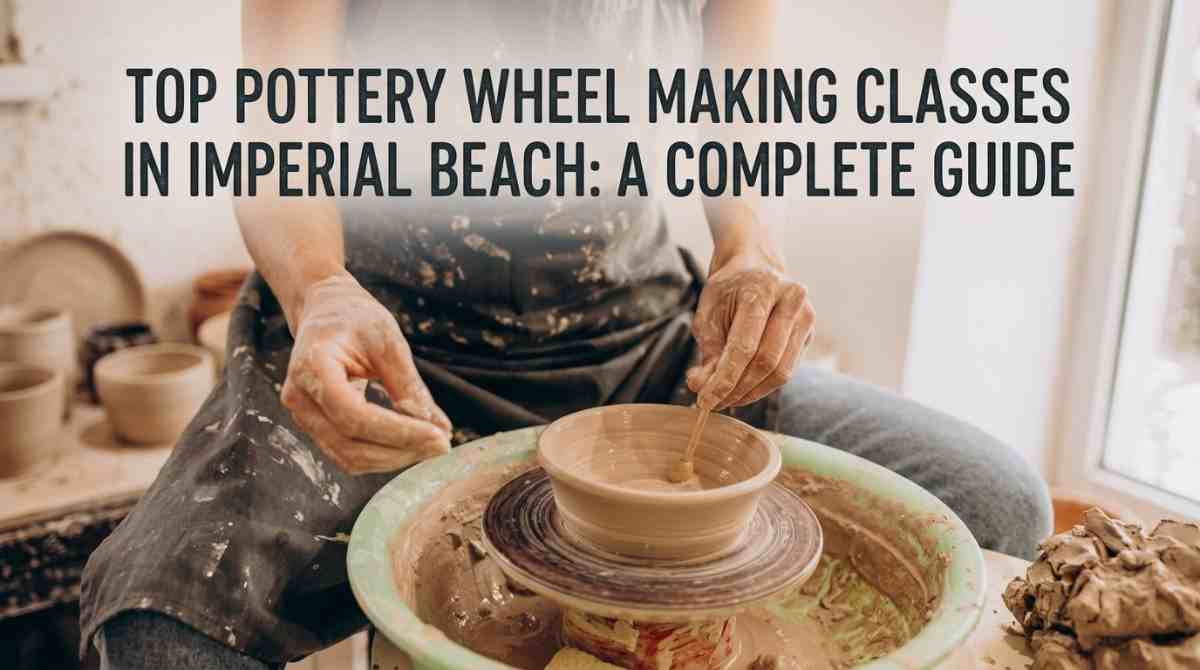
Pottery wheel making, often called wheel throwing, is a ceramic technique in which clay is placed on a rotating wheel and shaped by hand.
The process looks simple when an experienced potter does it. However, there are several skills involved.
You need to learn how to:
- Prepare and wedge the clay
- Place the clay correctly on the wheel
- Center the clay
- Open the clay
- Pull the walls upward
- Control the thickness
- Shape the form
- Smooth the surface
- Remove the finished piece safely
The wheel keeps the clay moving in a circle while your hands control its form.
At first, the clay may feel difficult to control. That is normal. With guidance and repeated practice, your hands begin to understand how much pressure to use.
Why Take Pottery Wheel Classes in Imperial Beach?
Learning pottery from an instructor can make the first few sessions much easier.
A beginner may know that clay needs to be centered but still have trouble getting it to stay in place. An instructor can watch your technique, identify the problem, and show you how to correct it.
A class also gives you access to equipment and materials without requiring a large investment at the beginning.
You Can Learn in a Structured Environment
A good class follows a clear learning process.
Instead of trying random techniques from videos, you can build your skills in a logical order.
For example, you may first learn how to center clay. Once you understand centering, you can move on to opening and pulling the clay. Later, you can learn trimming, shaping, glazing, and other techniques.
You Can Ask Questions Immediately
Videos can demonstrate pottery, but they cannot watch your hands in real time.
An instructor can help when:
- Your clay becomes off-center
- Your walls become too thin
- Your piece collapses
- Your hands move too quickly
- Your clay becomes too dry
- Your shape becomes uneven
That personal feedback can save a lot of frustration.
You Do Not Need to Buy a Pottery Wheel
A quality pottery wheel can be a significant purchase. Beginners may not know whether pottery will become a long-term hobby.
Starting with classes lets you experience wheel throwing before investing in your own equipment.
That makes a class a practical first step for many new students.
Top Pottery Wheel Making Classes in Imperial Beach: What Should You Look For?
Searching for top pottery wheel making classes in Imperial Beach is only the first step. The next question is how to decide whether a class is right for you.
Not every pottery experience is structured in the same way.
Before booking, consider the following factors.
1. Instructor Guidance
For your first class, instructor support matters.
Look for a studio where students can receive direct guidance instead of simply being given clay and equipment.
A teacher should explain the basic process and help you understand what your hands should be doing.
2. Class Size
Smaller groups can make it easier to ask questions and receive personal feedback.
This is especially useful when learning wheel throwing because beginners often need help with centering and hand placement.
Art Wheel currently describes its pottery experience as instructor-led and also promotes small-group creative experiences.
3. Quality Equipment
The pottery wheel is an important part of the experience.
A stable wheel with smooth speed control can make learning easier. However, equipment is only one part of the experience. Instruction, workspace, clay, tools, and firing arrangements also matter.
4. What Is Included?
Before booking a class, ask what is included in the price.
Depending on the studio, the fee may or may not include:
- Clay
- Tools
- Instructor time
- Glazing
- Firing
- Finished pottery
- Studio cleanup
- Additional practice time
Understanding the package beforehand helps you compare prices fairly.
5. Beginner-Friendly Instruction
You do not need to be naturally artistic to learn pottery.
A beginner-friendly class should allow you to make mistakes and learn at your own pace.
Your first bowl may not look perfect. That is part of learning.
Pottery Wheel Class San Diego: Is It Worth Traveling for?
People searching for a pottery wheel class San Diego may find options across the wider San Diego area.
Your closest studio is not always the only option worth considering.
You may want to compare:
- Location
- Instructor experience
- Class format
- Group size
- Equipment
- Session length
- Materials included
- Finished pieces
- Reviews
- Overall experience
A short drive can be worthwhile when you find a class that better fits your schedule and learning goals.
For students near Imperial Beach, Art Wheel provides a hands-on pottery experience focused on wheel throwing and clay forming.
Top Rated Pottery Classes San Diego: What Makes a Class Great?
People often search for top rated pottery classes San Diego because they want reassurance before spending money on an activity.
Ratings can be helpful, but they should not be the only factor.
A class can have many positive reviews while still being a poor fit for your needs. For example, one person may enjoy a social group class while another person may prefer individual attention.
Look beyond the overall star rating.
Read reviews for comments about:
- Instructor support
- Ease of booking
- Studio atmosphere
- Quality of the experience
- Equipment
- Finished pottery
- Whether beginners felt comfortable
- Whether the class matched its description
Art Wheel’s website currently displays an average customer rating of 4.8 out of 5 based on 42 reviews.
That kind of information can be useful when comparing local options, but your own goals should still guide the final choice.
What Happens During a Pottery Wheel Class?
If you have never used a pottery wheel, knowing what happens during the session can make the experience less intimidating.
A typical beginner session may follow a process like this.
Step 1: Prepare the Clay
Clay needs to be prepared before it goes onto the wheel.
This helps remove air pockets and gives the clay a more even texture.
Your instructor will normally explain how to handle the clay safely and efficiently.
Step 2: Place the Clay on the Wheel
The clay is attached to the wheel head.
This part may look easy, but placement matters. If the clay is not secured properly, it can shift while the wheel is turning.
Step 3: Center the Clay
Centering is one of the most important skills in wheel throwing.
The wheel spins while you use your hands to bring the clay into a stable, centered position.
Many beginners struggle with this step at first.
Do not become discouraged.
Centering takes practice because you are learning to coordinate pressure, speed, posture, and hand movement at the same time.
Step 4: Open the Clay
Once the clay is centered, you create an opening in the middle.
This begins the basic form of your pot.
The depth and width of the opening depend on what you are making.
Step 5: Pull the Walls
After opening the clay, you gradually pull the walls upward.
This is where your bowl, cup, or vase begins to take shape.
The goal is to create walls that are strong enough to hold their form without becoming too thick.
Step 6: Shape the Piece
Once the walls are developed, you can shape the piece.
Small changes in hand pressure can create very different forms.
You may make:
- A rounded bowl
- A simple cup
- A small vase
- A planter
- A decorative form
Step 7: Finish the Piece
The final stages can include smoothing, trimming, glazing, and firing.
The exact process depends on the studio and class.
The finished ceramic piece may be available after the necessary drying and firing process is complete.
How Long Does It Take to Learn the Pottery Wheel?
One of the most common beginner questions is:
How long does it take to learn the pottery wheel?
There is no single answer.
You can learn the basic steps during an introductory class. However, becoming comfortable with wheel throwing takes repeated practice.
A rough learning path may look like this:
First Session
You learn the basic workflow and get a feel for the wheel.
Your main goal is understanding how the clay behaves.
First Few Sessions
You begin to improve your centering and hand control.
You may be able to make simple forms with guidance.
Several Weeks of Regular Practice
Your movements can become more consistent.
You may start producing bowls and cups with better shape and thickness.
Several Months
With regular practice, you can become much more confident with different forms and techniques.
The important thing is not how quickly you master the wheel. Progress comes from repetition.
Even experienced potters continue learning.
Can Beginners Really Learn Pottery?
Yes.
You do not need previous art experience to start.
Pottery combines technical skill and creative decision-making. You learn the technical side through practice, while the creative side develops as you experiment.
A beginner does not need to create a perfect piece during the first class.
The better goal is to understand the process.
Once you understand how the clay reacts to pressure, the wheel becomes easier to control.
Can I Use Crayola Air Dry Clay on a Pottery Wheel?
This is an important question for beginners who want to practice at home.
Crayola Air-Dry Clay is not a substitute for standard pottery-wheel clay used in a ceramic studio.
Air-dry clay is designed to harden without a kiln. Traditional pottery clay is normally designed to be fired in a kiln after drying.
Wheel throwing works best with clay that has properties suited to the technique. Studio pottery clay is formulated for shaping, drying, and firing as part of a ceramic process.
Air-dry clay can also behave differently during wheel work.
For that reason, beginners who want to learn wheel throwing should ask their instructor which clay is appropriate for the wheel and follow the studio’s material guidelines.
Using the right clay from the beginning can make the learning process much easier.
What Clay Is Used for Pottery Wheel Throwing?
Potters use different types of clay depending on the intended result.
Common ceramic clay bodies include:
Stoneware
Stoneware is widely used for functional pottery such as bowls, mugs, and plates.
Porcelain
Porcelain is fine and smooth but can be more demanding to work with.
Earthenware
Earthenware can be used for certain decorative and functional ceramic pieces and is often fired at a lower temperature than stoneware.
Each clay body behaves differently.
The studio instructor can recommend the most suitable material for your class.
For a beginner, the most important thing is to use clay that is appropriate for the pottery wheel and the studio’s firing process.
How Much Should a Pottery Class Cost?
Another common search is:
How much should a pottery class cost?
There is no universal pottery class price.
The cost depends on the type of class and what is included.
A short introductory experience will usually be priced differently from a multi-week course.
Pricing may depend on:
- Class length
- Instructor involvement
- Number of students
- Amount of clay
- Studio equipment
- Glazing
- Kiln firing
- Number of pieces
- Open studio access
- Additional practice time
- Location
That is why comparing only the advertised price can be misleading.
A cheaper class may not include firing or materials. A higher-priced class may include more instructor time and a complete ceramic process.
How to Compare Pottery Class Prices
Before deciding, ask:
What am I actually receiving for the price?
For example, a class that includes the instructor, clay, tools, glazing, and firing may offer better overall value than a cheaper class that requires additional fees.
Also consider the experience itself.
A pottery class is not simply the cost of clay. You are paying for instruction, studio equipment, time, expertise, and the opportunity to create something with your hands.
Why Are Ceramic Classes So Expensive?
The question “Why are ceramic classes so expensive?” is common among people who are new to pottery.
The answer becomes clearer when you look at everything involved.
A ceramic studio has ongoing costs for:
- Pottery wheels
- Kilns
- Clay
- Glazes
- Hand tools
- Shelving
- Work tables
- Studio space
- Electricity
- Cleaning
- Equipment maintenance
- Instructor time
- Firing and storage
Kilns are especially important because ceramic pieces normally need controlled firing to become finished pottery.
There is also a lot of labor behind each finished piece.
The instructor has to prepare the studio, guide students, clean equipment, manage clay, handle finished pieces, and manage the firing process.
So, while a pottery class may look like a simple creative activity, it involves much more infrastructure than many people realize.
Free Pottery Classes San Diego: Are They Really Free?
People searching for free pottery classes San Diego should look carefully at what the offer includes.
Completely free wheel-throwing classes can be difficult to find because pottery requires equipment, materials, studio space, instruction, and firing.
However, free or low-cost opportunities may sometimes appear through:
- Community programs
- Public events
- Art demonstrations
- Educational organizations
- Special promotions
- Introductory events
- Community centers
Availability can change, so it is important to check the current terms before making plans.
A free event may also be different from a full pottery wheel class. For example, a free demonstration may let you watch pottery being made but may not provide hands-on wheel time.
Is a Pottery Wheel Class Good for a Complete Beginner?
Absolutely.
In fact, a guided class can be one of the easiest ways to begin.
The biggest challenge for beginners is often not creativity. It is coordination.
Your hands need to work together while the wheel rotates. You also need to control pressure without pushing the clay too quickly.
An instructor can break this process into smaller steps.
At Art Wheel, the pottery experience is presented as beginner-friendly and introduces core skills such as wheel throwing and clay forming.
What Should I Wear to a Pottery Class?
Wear clothing that you do not mind getting dirty.
Clay can get onto your hands, arms, and clothing while you work.
Comfort is also important because you may sit at the wheel for a period of time.
Practical choices include:
- Comfortable clothing
- Short or secured sleeves
- Closed-toe shoes
- Clothing that allows easy movement
Keep fingernails reasonably short as well. Long nails can make it harder to work with clay and maintain control.
What Should I Expect After My First Class?
Your first pottery piece may not look exactly like the one you imagined.
That is completely normal.
You may experience:
- Clay collapsing
- Uneven walls
- Off-center forms
- Cracks
- Thick bases
- Misshapen bowls
These are normal parts of learning.
The first class is mainly about understanding the process.
With each session, you become more comfortable with the wheel and learn how your hands affect the clay.
The goal is progress rather than perfection.
Pottery Wheel Making vs. Handbuilding
Wheel throwing is only one type of ceramic art.
Another popular method is handbuilding.
With handbuilding, you shape clay without a rotating wheel. You can use techniques such as pinching, coiling, and slab building.
Handbuilding can be especially appealing if you want to create unusual shapes or decorative pieces.
Wheel throwing, by contrast, is ideal for people who enjoy the movement and rhythm of a spinning wheel.
Neither method is better for everyone.
The right option depends on your interests.
Art Wheel currently offers both pottery wheel and handbuilding experiences, giving students different ways to explore ceramics.
Why Pottery Can Be a Great Creative Hobby
Pottery offers a physical connection to the creative process.
Instead of working only with a screen or digital tools, you use your hands to create something tangible.
Many people enjoy pottery because it gives them an opportunity to:
- Slow down
- Focus on one activity
- Experiment creatively
- Learn through practice
- Make useful objects
- Create handmade gifts
- Spend time with friends
- Explore a new artistic skill
The process itself can be rewarding, even when the finished piece is imperfect.
Choosing a Pottery Studio Near Imperial Beach
When searching for top pottery wheel making classes in Imperial Beach near me, convenience matters, but it should not be the only factor.
A nearby studio can save travel time. Still, you should also look at the quality of instruction and what the class provides.
Consider these questions:
Is the class beginner-friendly?
You want clear instructions and patient guidance.
How much wheel time do I get?
Some experiences provide more hands-on practice than others.
Are materials included?
Check whether clay, tools, glazing, and firing are part of the fee.
Can I take my finished piece home?
Ask when and how finished work can be collected.
What is the class size?
Smaller groups may provide more personal instruction.
What do previous students say?
Read recent reviews and look for comments about the actual learning experience.
Why Choose Art Wheel for Pottery in Imperial Beach?
Art Wheel Studio presents its pottery experience as a welcoming, hands-on introduction to ceramics.
The studio offers an instructor-led pottery wheel session where participants can explore wheel throwing, clay forming, and the process of creating a ceramic piece. Its website describes the experience as suitable for beginners and people who want a relaxed creative activity.
This approach can be useful for people who are not ready to commit to a long pottery course.
You can begin with an introduction, learn the basics, and decide whether you want to continue developing your skills.
Art Wheel also offers other creative experiences, including handbuilding and gift-oriented pottery experiences.
Tips for Your First Pottery Wheel Class
A little preparation can make your first class more enjoyable.
Do Not Expect Perfection
Your first piece may be uneven.
That does not mean you are bad at pottery.
Every skilled potter started somewhere.
Listen to Your Instructor
Small changes in hand position can make a big difference.
Pay attention to the instructions and ask questions when something feels unclear.
Keep Your Hands Relaxed
Beginners often use too much force.
Clay responds better to controlled, steady pressure.
Be Patient With Centering
Centering is one of the biggest early challenges.
Once you become comfortable with it, many other techniques become easier.
Enjoy the Process
Pottery is a skill that develops over time.
Try to focus on learning rather than making one perfect piece.
Is Pottery Worth Learning?
For many people, yes.
Pottery can become a long-term hobby, a creative outlet, or even a serious artistic practice.
You can begin with one class and later explore:
- Wheel throwing
- Handbuilding
- Glazing
- Surface decoration
- Sculptural ceramics
- Functional pottery
- Advanced forms
- Independent studio practice
The possibilities grow as your skills improve.
That is one of the reasons pottery continues to attract both beginners and experienced artists.
Final Thoughts on the Top Pottery Wheel Making Classes in Imperial Beach
Choosing among the top pottery wheel making classes in Imperial Beach is about more than finding the closest studio or the lowest price.
Look for an experience that provides good instruction, suitable equipment, clear pricing, and a comfortable learning environment.
A class can give you the opportunity to try wheel throwing without immediately purchasing a pottery wheel, kiln, clay, and other studio equipment.
For beginners, the most important thing is to start with realistic expectations. You probably will not master the wheel in one session. However, you can learn the basic process, make your first piece, and discover whether pottery is something you want to pursue.
For people searching for a pottery wheel class San Diego or a creative experience near Imperial Beach, Art Wheel offers a guided introduction to wheel throwing and clay forming in a hands-on studio environment.
The best time to learn pottery is often the first time you decide to give it a try. Start with the basics, stay patient, and let your skills develop with practice.
Frequently Asked Questions
How much should a pottery class cost?
The cost depends on the class length, instructor involvement, materials, firing, glazing, equipment, and whether the class is a one-time experience or part of a longer course. Always check what is included before comparing prices.
How long does it take to learn the pottery wheel?
You can learn the basic steps during an introductory class, but becoming comfortable with wheel throwing takes regular practice. Many beginners can make simple forms after several sessions, while developing strong wheel skills can take months or longer.
Can I use Crayola Air Dry Clay on a pottery wheel?
Air-dry clay is not the same as clay designed for traditional ceramic wheel throwing and kiln firing. For wheel work, use clay recommended by your pottery instructor or studio.
Why are ceramic classes so expensive?
Ceramic classes include more than instruction. Studios also pay for wheels, kilns, clay, glazes, tools, utilities, space, maintenance, cleaning, firing, and instructor time. These costs contribute to the class price.
Are there free pottery classes in San Diego?
Free pottery opportunities may occasionally be offered through community programs, demonstrations, special events, or promotions. However, a complete wheel-throwing class requires equipment, materials, instruction, and studio resources, so fully free classes may be limited.
Is a pottery wheel class suitable for beginners?
Yes. Beginner pottery classes are designed to introduce basic techniques such as centering, opening, pulling, and shaping clay. Instructor guidance can make the process easier for someone with no previous experience.
What should I bring to a pottery class?
Wear comfortable clothing that can get dirty and practical shoes. Your studio should tell you whether you need to bring anything else. Many classes provide the clay and basic tools.
Is wheel throwing difficult?
Wheel throwing can be challenging at first because it requires coordination and controlled pressure. However, regular practice and good instruction can make the process much easier.
What can I make on a pottery wheel?
Beginners often start with simple forms such as bowls and cups. As your skills improve, you can explore vases, planters, plates, pitchers, and more complex shapes.
Should I take a pottery class before buying a pottery wheel?
For many beginners, taking a class first is a smart option. It lets you learn the basics and decide whether you enjoy wheel throwing before investing in equipment for home use.