

Pottery is a wonderful way to explore creativity, learn practical skills, and make something unique with your own hands. Unlike many other art forms, pottery lets you turn a simple piece of clay into a useful or decorative object. If you are searching for the best handbuilding class in Imperial Beach, a pottery workshop can be an excellent place to begin.
Handbuilding is one of the most accessible ways to learn ceramics. You do not need a pottery wheel to get started. Instead, you use your hands and simple tools to shape clay into bowls, cups, trays, sculptures, and other creative pieces.
At Art Wheel, pottery experiences introduce participants to the process of working with clay in a welcoming, hands-on setting. Whether you are a beginner or an experienced art enthusiast, handbuilding offers an opportunity to experiment with shapes, textures, and personal designs.
This guide explains how handbuilding works, the three main handbuilding methods, how to prepare clay, and which surfaces work best for pottery. It also explores how to choose pottery classes in San Diego, including options to research around Del Mar and Balboa Park.
What Is Handbuilding in Pottery?
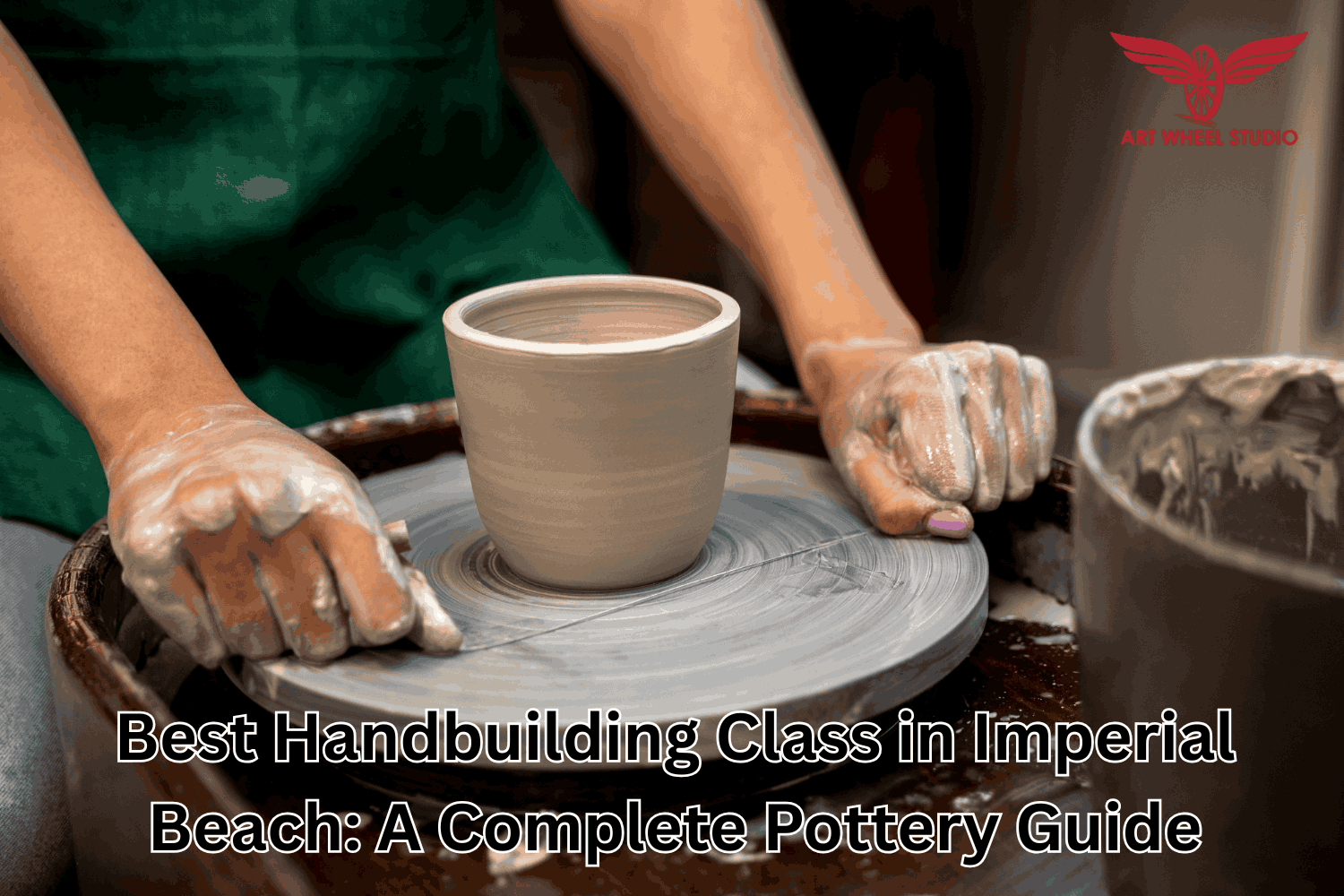
Handbuilding is a pottery technique in which you shape clay by hand instead of using a spinning pottery wheel. You can use your fingers, palms, simple tools, and a flat work surface to create different forms.
This method gives you considerable freedom over the shape and appearance of your work. You can make a simple pinch pot, build a textured decorative bowl, or create a sculptural piece with unusual forms.
Handbuilding is popular with beginners because it does not require mastering wheel control before making something useful. It also allows experienced ceramic artists to explore more detailed designs.
Why Try a Handbuilding Class?
A guided pottery class can help you understand the basic techniques and avoid common mistakes. An instructor can demonstrate how to prepare clay, join separate pieces, create even walls, and manage drying.
Here are some benefits of learning handbuilding:
- Creative freedom: Explore different shapes, patterns, and textures.
- Beginner-friendly learning: Start with basic techniques before moving to complex projects.
- Hands-on practice: Learn how clay responds to pressure and movement.
- Personal projects: Create pieces that reflect your own ideas.
- A relaxing activity: Focus on the process and enjoy working with a tactile material.
Handbuilding is not only about producing a finished object. It is also about understanding the material and learning through experimentation.
Finding the Best Handbuilding Class in Imperial Beach
Choosing the best handbuilding class in Imperial Beach starts with understanding what you want to learn. Some people want a short introduction to pottery, while others want to develop their skills through regular practice.
A good class should explain the process clearly and give students time to work with clay.
Look for Beginner-Friendly Instruction
If you have never worked with clay, choose a class that welcomes beginners. Look for instruction on preparing clay, forming basic shapes, joining clay pieces, and preventing cracks.
You should feel comfortable asking questions and experimenting with your design.
Check the Class Format
Different pottery experiences offer different learning opportunities. A short workshop may focus on one project, while a longer course may cover several techniques.
Before booking, confirm the session length, included materials, firing arrangements, and whether finished pieces can be collected later.
Consider the Studio Environment
A welcoming environment can make learning easier. Check whether the class provides appropriate tools, enough workspace, and guidance throughout the process.
Small-group instruction may also allow more opportunities to ask questions and receive feedback.
Explore Art Wheel
Art Wheel offers handbuilding experiences in Imperial Beach, where participants can explore clay through guided, hands-on pottery activities.
The studio’s handbuilding sessions focus on shaping clay at a table to create pottery, decorative objects, and simple sculptures. This makes them worth considering if you want to explore ceramics without starting on a pottery wheel.
Visit Art Wheel’s website to review the current experiences and confirm availability before booking.
What Are the Three Main Methods of Handbuilding?
The three main methods of handbuilding are pinching, coiling, and slab building. Each technique creates different forms and offers its own advantages.
1. Pinch Pottery
Pinching is one of the simplest ways to begin working with clay. You start with a ball of prepared clay and press your thumb into the center. Then, you gently pinch and rotate the clay to form an opening.
As you work, you gradually shape the walls and base.
Pinch pottery is useful for making small bowls, cups, miniature vessels, and sculptural forms. It also teaches beginners how to control clay thickness with their fingers.
Beginner tip: Rotate the clay as you pinch and use gentle, even pressure. This helps create more consistent walls and reduces the risk of tearing.
2. Coil Building
Coil building involves rolling clay into long, rope-like pieces. You stack these coils to build the walls of a vessel or sculpture.
After placing each coil, you join it to the clay below using pressure and, when appropriate, scoring and slip. You can leave the coils visible for texture or smooth them together for a more uniform surface.
Coil building works well for bowls, vases, planters, and sculptural objects. It is especially useful when you want to create forms that are larger or taller than a simple pinch pot.
Beginner tip: Keep your coils reasonably even in thickness. Join them carefully so the walls remain stable as you build upward.
3. Slab Building
Slab building uses flattened sheets of clay to construct pottery. You roll the clay into slabs, cut the shapes you need, and join the pieces to form the finished object.
Slabs can be used to make boxes, trays, plates, square containers, and geometric sculptures.
This method offers greater control over straight edges and flat surfaces. You can also press textures or patterns into the clay before assembling the piece.
Beginner tip: Roll the slab to an even thickness and support it while moving it. Uneven thickness can contribute to warping and inconsistent drying.
Which Handbuilding Method Should Beginners Learn First?
Pinching is often the easiest starting point because it requires very few tools. However, the best technique depends on the project you want to make.
Choose pinching for small rounded forms, coiling for taller vessels, and slab building for angular or geometric designs.
A handbuilding class can introduce these methods gradually and help you discover which one suits your creative style.
Do You Wedge Clay Before Handbuilding?
Yes, wedging is often recommended before handbuilding. It helps prepare clay for shaping by making its consistency more uniform and reducing trapped air pockets.
Clay can become uneven during storage or handling. Some areas may feel firmer than others, making the material more difficult to shape consistently.
Wedging involves repeatedly pressing and folding the clay using a controlled technique. This helps create a more even working consistency.
Why Is Wedging Important?
Properly prepared clay is easier to shape and handle. It can also help reduce problems caused by uneven moisture or poorly prepared material.
The main benefits include:
- More consistent texture: Clay becomes easier to work with.
- Improved workability: Even consistency helps with pinching, coiling, and slab building.
- Better preparation: Wedging helps identify and work out inconsistencies in the clay.
- More controlled shaping: Consistent clay is easier to manipulate during construction.
However, wedging does not guarantee that a finished piece will be free from cracks or air pockets. Drying, construction, clay type, and firing also affect the result.
How to Prepare Clay for Handbuilding
Start by checking that the clay is suitable for your project and has a workable moisture level.
Next, wedge it using the method recommended for that clay body. Keep your movements controlled and avoid allowing the clay to dry out while you work.
If you are using commercially prepared clay, follow your instructor’s guidance. Some clay may need little additional preparation, while reclaimed clay may require more attention.
For beginners, learning how to recognize properly prepared clay is an important part of building good pottery habits.
What Is the Best Surface to Use for Handbuilding Clay?
The best surface for handbuilding is one that supports the clay, allows controlled movement, and does not pull too much moisture from the material.
For many projects, a clean plaster-free canvas board, wooden board, or suitable pottery work board can work well. The ideal choice depends on the clay’s moisture level and the technique you are using.
1. Canvas-Covered Boards
Canvas-covered boards are useful for many handbuilding projects. The fabric provides a slightly textured surface and can help prevent sticky clay from adhering too strongly.
They are particularly helpful when rolling slabs or working with moderately soft clay.
Make sure the canvas is clean and free from debris. Any dirt or fibers pressed into the clay may leave unwanted marks.
2. Wooden Boards
Wooden boards provide a firm, stable work surface. They can be useful for building slab pieces and supporting pottery while it is being shaped.
However, untreated wood may absorb moisture. Depending on the clay and conditions, this can be helpful or may cause the clay to dry unevenly.
Use a smooth, clean board and monitor the clay as you work.
3. Plaster Bats
Plaster bats can absorb moisture from wet clay. They are useful in certain pottery processes, particularly when working with clay that is too soft or sticky.
However, plaster must be used carefully. Loose plaster particles can contaminate clay and create serious problems during firing, so plaster should never be allowed to mix into the clay body.
Choose a suitable, well-maintained surface and follow studio guidance.
4. Canvas or Fabric for Slab Rolling
Canvas can provide a useful barrier between the clay and the work surface. It can also reduce sticking while you roll clay into flat sheets.
Keep the fabric smooth and clean. Deep wrinkles can create unwanted impressions in the slab.
Which Surface Should You Choose?
For most beginners, a clean, stable work board or canvas-covered board is a practical starting point.
Avoid very slippery, dirty, or uneven surfaces. Also, do not leave wet clay on a surface for too long without checking it. Excessive moisture loss can make the clay difficult to join or shape.
Your instructor can recommend a suitable surface for the clay body and project you are using.
How to Prevent Cracks in Handbuilt Pottery
Cracks can occur when clay dries unevenly, joints are weak, or the material is handled before it is ready.
Although some cracking is part of learning, good preparation and careful construction can help reduce common problems.
Keep the Clay at a Consistent Moisture Level
Clay that is too wet may slump, while clay that is too dry can become difficult to shape and join. Use clay with a workable consistency for your chosen technique.
Join Pieces Properly
When attaching coils, slabs, handles, or decorative parts, make sure the joints are secure.
Scoring the surfaces and applying an appropriate amount of slip can help create a strong connection. Press the pieces together carefully without trapping gaps.
Avoid Sudden Drying
Allow pottery to dry gradually. Large differences in drying speed between thick and thin areas can cause stress.
Covering a piece loosely may help slow drying. The right approach depends on its size, shape, and clay body.
Make Wall Thickness More Even
Uneven thickness can contribute to uneven drying and structural weakness. Check the base, walls, and attached parts as you build.
Do not make every piece perfectly uniform if the design requires variation, but avoid abrupt changes in thickness.
Follow Proper Firing Guidance
Clay must be fired according to the requirements of its clay body and glaze. Improper firing or incompatible materials can cause defects.
A pottery instructor can help you understand the studio’s drying, firing, and finishing process.
How to Choose Pottery Classes in San Diego
If you are exploring pottery classes in San Diego, compare the learning experience rather than choosing based on a headline alone.
Different studios may specialize in wheel throwing, handbuilding, pottery painting, longer courses, or introductory workshops.
Consider these questions before booking:
- Does the class welcome beginners?
- Does it focus on handbuilding, wheel throwing, or both?
- Are clay and tools included?
- Is firing included in the session or charged separately?
- Will you be able to keep the finished piece?
- Is the class suitable for your schedule and experience level?
- Does the instructor explain the process and provide individual guidance?
Reading recent reviews can also help you understand the teaching style and overall experience. Look for comments about instruction, cleanliness, materials, and how the studio handles finished pottery.
What Makes a Pottery Class Worthwhile?
A worthwhile class should offer clear instruction, suitable materials, and enough time to practice.
It should also set realistic expectations. Pottery takes practice, and your first piece may not look exactly as you imagined. That is a normal part of learning.
The goal of an introductory class is to understand the process, explore a technique, and gain confidence working with clay.
Exploring Pottery Classes in Del Mar
People searching for pottery classes in Del Mar may be interested in a creative activity close to home or while visiting the coastal communities around San Diego.
When comparing classes, look for the type of pottery experience you want. Some workshops focus on wheel throwing, while others introduce handbuilding or decorative techniques.
If handbuilding is your priority, confirm that the class includes pinching, coiling, slab construction, or another technique you want to learn.
You can also consider traveling to a nearby community if a studio offers a format that better matches your goals.
Art Wheel in Imperial Beach is one option to investigate for hands-on pottery experiences. Check its website for current class details, location information, and booking availability before making plans.
Pottery Classes Around Balboa Park
Balboa Park is known for its museums, gardens, and cultural attractions. It is also home to the Spanish Village Art Center, where visitors can explore working art studios and see artists creating different types of work.
The San Diego Potters’ Guild is located in Spanish Village and provides a place to explore ceramic art and pottery. Its current class availability should be checked directly before planning a visit.
When searching for pottery classes around Balboa Park, confirm whether the experience is a guided class, an open studio session, a demonstration, or a gallery visit. These formats offer different ways to learn about ceramics.
If you prefer a structured introduction to handbuilding, ask the studio about beginner instruction and the techniques covered in the session.
What Is the Most Sought-After Vintage Pottery?
Vintage pottery attracts collectors because of its craftsmanship, history, distinctive designs, and cultural significance. However, there is no single vintage pottery style that is always the most sought-after. Collector demand varies according to condition, rarity, maker, design, provenance, and current trends.
Several categories have attracted interest among collectors over the years.
Studio Pottery
Studio pottery is made by individual ceramic artists or small studios rather than being produced entirely through large-scale manufacturing. Collectors may value pieces for their unique shapes, surface treatments, and evidence of the maker’s hand.
Mid-Century Modern Pottery
Pottery from the mid-20th century often features clean forms, earthy colors, and distinctive glazes. Certain pieces are sought after for their connection to modern interior design and design history.
Art Pottery
Art pottery can include decorative vessels, sculptural forms, and pieces associated with particular makers or artistic movements. The appeal often comes from the combination of craftsmanship and artistic expression.
Signed or Documented Pieces
Pottery with a clear maker’s mark or reliable provenance may be easier to research and authenticate. However, a signature alone does not guarantee high value.
What Affects Vintage Pottery Value?
Collectors generally consider several factors:
- The maker and the history of the piece
- Rarity and production numbers
- Condition, including chips, cracks, and repairs
- Original glaze and surface quality
- Documentation and provenance
- Demand among collectors
If you want to collect vintage pottery, research the maker and compare similar pieces from reliable sources. Be cautious of claims that a particular style is rare or valuable without supporting evidence.
For pottery students, vintage pieces can also provide inspiration. Their shapes, textures, and glazing techniques may suggest ideas for new handbuilt work without requiring you to copy an existing design.
Why Handbuilding Is a Great Creative Activity
Handbuilding offers more than a way to make pottery. It provides a structured opportunity to experiment, solve small problems, and develop a personal approach to design.
Each technique encourages a different way of thinking. Pinching teaches control through touch, coiling builds form gradually, and slab construction encourages planning and precision.
You can also explore surface decoration. Pressed textures, carved lines, and simple patterns can transform a basic shape into something personal.
A Creative Activity for Beginners
You do not need previous pottery experience to start learning handbuilding. A beginner-friendly workshop can introduce the tools, clay preparation, and basic construction methods.
Start with a manageable project rather than trying to make something complicated on your first day. A small bowl, simple tray, or decorative object can help you understand the material.
An Opportunity to Develop Your Skills
As you gain experience, you can explore more complex shapes, stronger joints, and detailed surface treatments.
You may also begin to understand how drying and firing affect your work. These lessons can help you improve the quality and consistency of future pieces.
A Way to Express Personal Style
Handbuilding gives you control over the final form. You can make symmetrical pieces, organic shapes, geometric designs, or sculptural objects.
With practice, you can develop a style that reflects your interests and creative ideas.
Start Your Pottery Journey with Art Wheel
Learning handbuilding is an accessible way to discover the possibilities of clay. From pinch pots and coils to carefully constructed slabs, each technique offers a different way to create functional and decorative pottery.
If you are searching for the best handbuilding class in Imperial Beach, consider the type of instruction you need, the projects you want to make, and the studio environment that suits you.
Art Wheel offers hands-on pottery and handbuilding experiences for people interested in exploring ceramics. Its classes provide an opportunity to work with clay, experiment with different forms, and learn through practice.
Visit Art Wheel to explore the available experiences and confirm current class details.
Whether you are comparing pottery classes in San Diego, researching options around Del Mar, or exploring ceramics near Balboa Park, start with a class that encourages curiosity and provides clear guidance.
With patience, practice, and the right instruction, you can turn a simple piece of clay into something uniquely your own.
Frequently Asked Questions
What are the three main methods of handbuilding?
The three main methods are pinching, coiling, and slab building. Pinching shapes clay with the fingers, coiling builds forms with rolled ropes of clay, and slab building uses flattened sheets to construct pottery.
Do you wedge clay before handbuilding?
Yes, wedging is often recommended to help create a more consistent clay texture and working consistency. Follow your instructor’s guidance, especially when using reclaimed clay.
What is the best surface for handbuilding clay?
A clean, stable work board or canvas-covered board is a practical choice for many beginners. The ideal surface depends on the clay’s moisture level and the project.
Can beginners join a handbuilding class?
Yes. Many introductory handbuilding workshops are designed for beginners. Check the class description to confirm its experience requirements and the techniques covered.
How do I find top-rated pottery classes in San Diego?
Compare recent reviews, class formats, instructor guidance, materials, and firing arrangements. Choose a class based on your goals rather than ratings alone.
Are there pottery classes in Del Mar?
People searching in Del Mar can compare local and nearby workshops. Confirm the studio location, current schedule, and whether the class teaches handbuilding or wheel throwing.
Can I find pottery experiences near Balboa Park?
Balboa Park’s Spanish Village Art Center is home to working artists, including the San Diego Potters’ Guild. Check directly with the organization for current classes and visitor information.
What vintage pottery is most valuable?
Value depends on the maker, rarity, condition, provenance, and collector demand. No single pottery style is consistently the most valuable, so research individual pieces before buying.